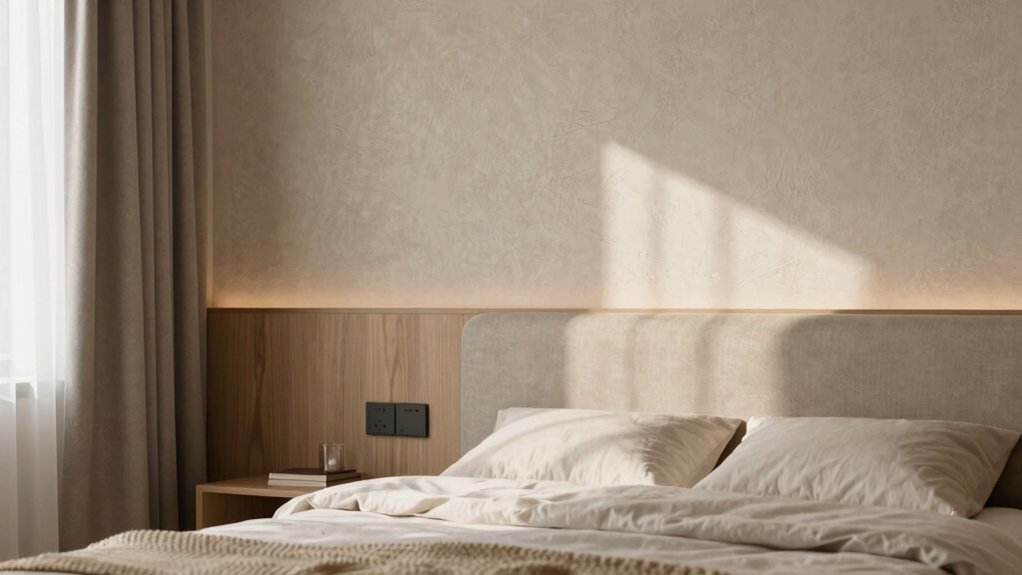
I’d start with a low oak or tatami bed, beige linen sheets, and a flat jute rug, because you want calm, not a showroom that screams at you. I like warm gray walls, a raw-wood nightstand, and one 2700K lamp with a fabric shade. Keep 30–40% of the room open, add one dried branch or olive plant, and stop at 3–5 objects. My family calls it “the quiet room,” and there’s a lot more to shape here.
Key Takeaways
- Choose a low platform bed in raw wood or tatami style to keep the room open, grounded, and visually calm.
- Use a neutral palette of beige, taupe, and warm gray, with only small sage or charcoal accents for depth.
- Layer washed linen bedding, sheer curtains, and one wool throw to add softness without clutter.
- Keep decor sparse: one ceramic vase, one branch, a small plant, and a single ritual tray are enough.
- Use warm 2700K lighting and leave 30–40% of walls and floor space empty for breathing room.
Low Bed with Simple Frame
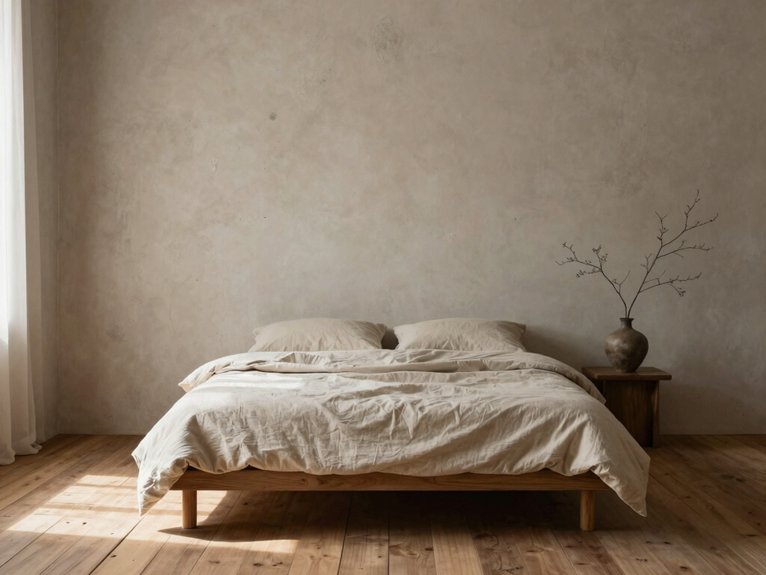
I keep coming back to a low bed because it instantly settles a room down. You’ll feel it too.
Choose a low profile platform, about 12–18 cm off the floor, in raw oak, walnut, or reclaimed wood so the earthy grain does the talking. Skip metal bits; Japanese joinery or simple slats keep setup easy, even if you rent.
I like a headboard-less frame, or one slim wood slat, because the space stays open and calm. Pair it with a natural-latex mattress, linen sheets, and one short nightstand. My family laughs, but the room breathes.
Neutral and Muted Color Palette
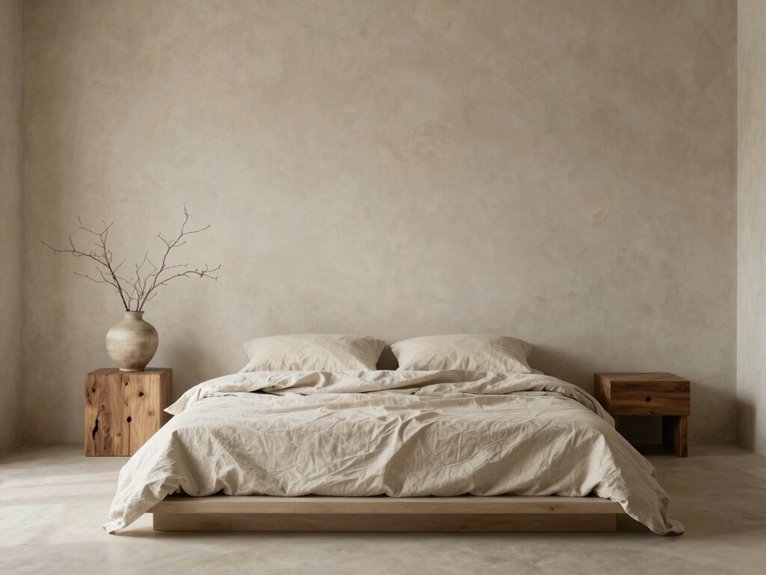
I like to start with beige, taupe, and warm gray because they make your bedroom feel calm right away, and in my own home they’ve been the easiest colors to live with when the laundry chair starts acting like it owns the place.
You can use warm neutrals on most walls, bedding, and rugs, then add a few muted accents like pale sage or dusty salmon so the room stays soft but not sleepy. I’d finish with small dark touches, like a charcoal lamp base or a black picture frame, since they help the space feel grounded without making it look bossy.
Beige, taupe, warm gray
When I want a Wabi-Sabi bedroom to feel calm right away, I start with beige, taupe, and warm gray. You can build beige gradients on the walls, add taupe accents in bedding, and let warm gray ground the room without drama.
These earth tones make raw oak, walnut, linen, and clay stand out, which is the whole point, really. I like warm gray walls, taupe bedding, and a beige linen throw, then one soft charcoal pillow, because too much contrast can act like it drank coffee.
Use 2700K bulbs, linen curtains, or budget-friendly slipcovers for easy, cozy belonging.
Natural Linen Bedding
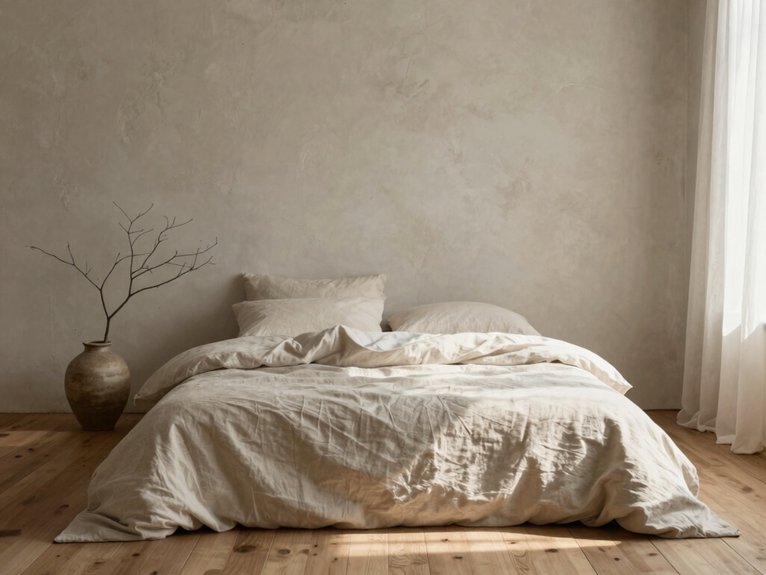
A rumpled linen duvet can make a bedroom feel calm in seconds, and I’m a big fan of that easy, lived-in look. In my home, I reach for washed flax linen in beige or soft gray, because it breathes, softens, and never tries too hard. For linen care, I skip the iron and let the wrinkles do their thing.
- Choose 100% European or Belgian flax.
- Pick undyed or low-impact dyed Morandi tones.
- Add one wool throw and 1–2 textured pillows.
That’s it. I also look for sourcing transparency, so your bed feels honest, warm, and like it belongs to you.
Raw Wood Nightstands
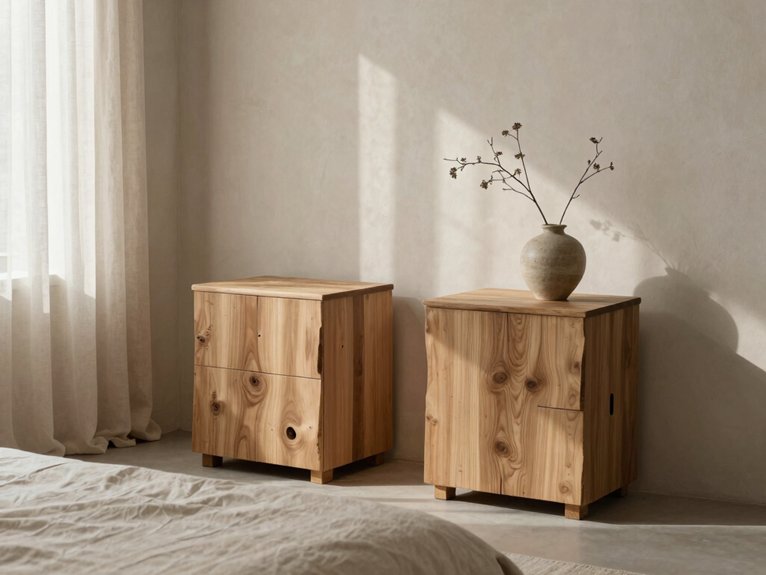
After the soft folds of linen, raw wood nightstands bring the room back down to earth. I love how oak or walnut shows grain, knots, and a tactile patina that feels lived-in, not loud. Choose a hand carved piece or one with exposed dovetails; it’s like the furniture knows good manners.
| Wood | Size | Look |
|---|---|---|
| Oak | 40–55 cm | Warm grain |
| Walnut | 35–45 cm | Deep tone |
| Rubberwood | Low-profile | Budget-friendly |
A live edge contrast can feel calm, too. I’d style mine with a vase, one book, and a 2700K lamp. My family calls that “decor, but make it sleepy.”
Empty Space as Design Element
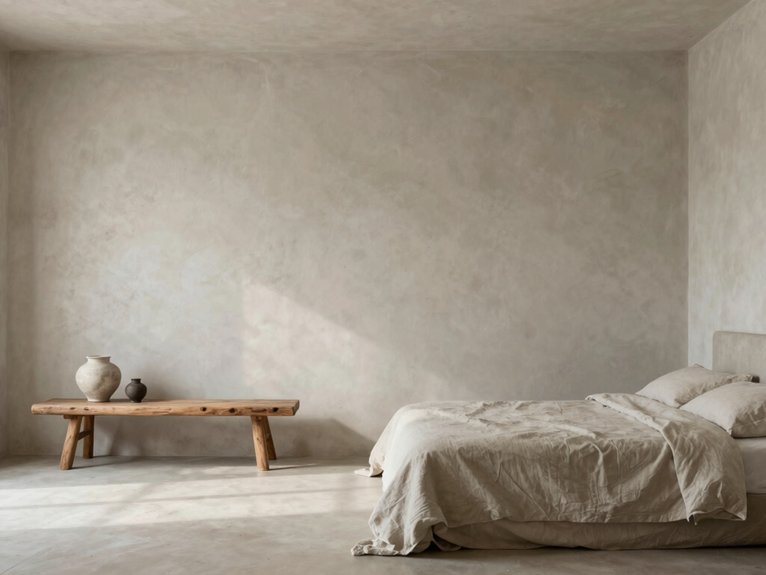
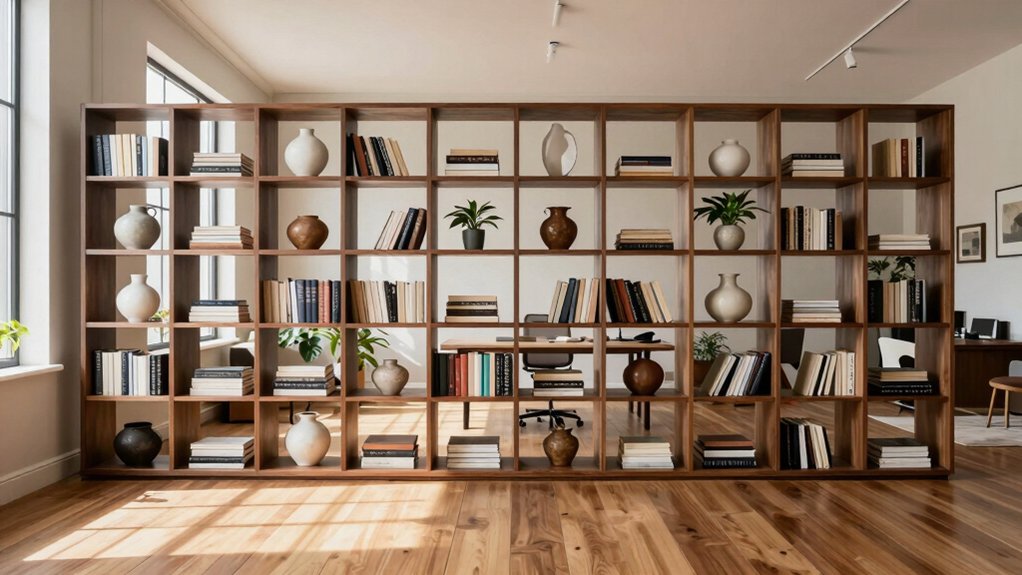
You’ll want to embrace negative space, because leaving 30–40% of your floor or wall open gives the room room to breathe—yes, even your socks appreciate it.
I’ve found that a low tatami or platform bed, a couple of lean pieces, and just 3–5 meaningful objects can make your limewash wall, raw wood, or concrete look like the star of the show instead of a crowded background.
When I use soft 2700K lighting with sheer linen curtains, the empty areas glow and shift with shadows, and the whole bedroom feels calm, intentional, and a little magical.
Embrace negative space
When I want a bedroom to feel calm instead of crowded, I start by giving it room to breathe. I leave 30-40% of the walls and floor open, so your wood, plaster, or limewash can shine.
Try this:
- Use a low platform bed and just one nightstand.
- Group a vase and two books, not a shelf avalanche.
- Hide socks and chargers in baskets or drawers.
Sheer linen curtains soften light and cast visual pauses across empty corners, almost like intentional silence.
I’ve seen my own family relax faster when the room stops shouting and starts listening.
Soft Indirect Lighting
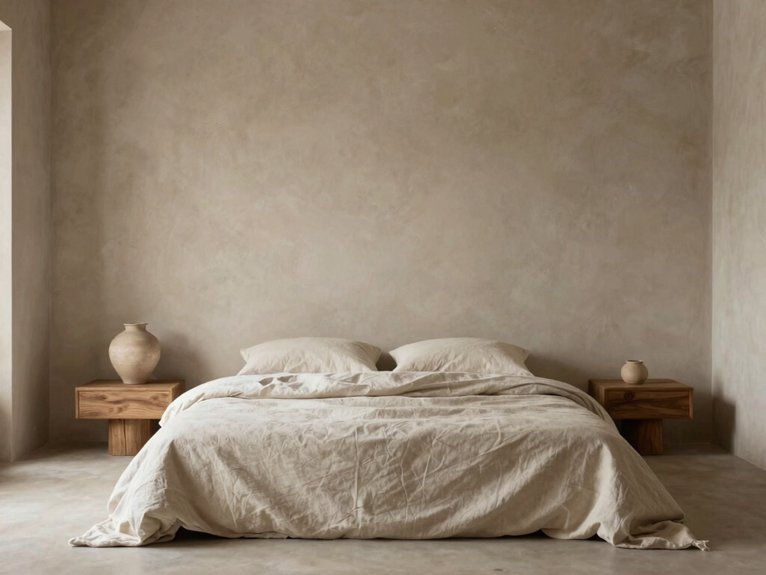
I often start with the lamps, because soft indirect lighting can change a bedroom faster than almost anything else. You can join me by choosing 2700K to 3000K bulbs, then pairing them with warm dimmers and paper lanterns for that cozy, shared feeling.
I like fabric shades, frosted glass, or linen curtains because they scatter light and stop harsh shadows from bossing everyone around. Set lamps low near a wooden headboard or linen bedding, and you’ll see the grain glow.
Add a candle or two in the evening, and you’ll get calm, imperfect warmth without turning your room into a spotlight.
Handmade Ceramic Decor
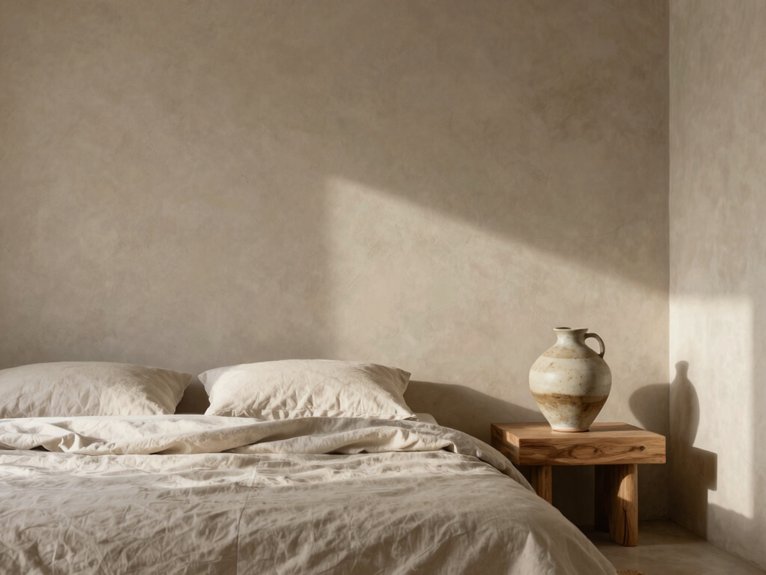
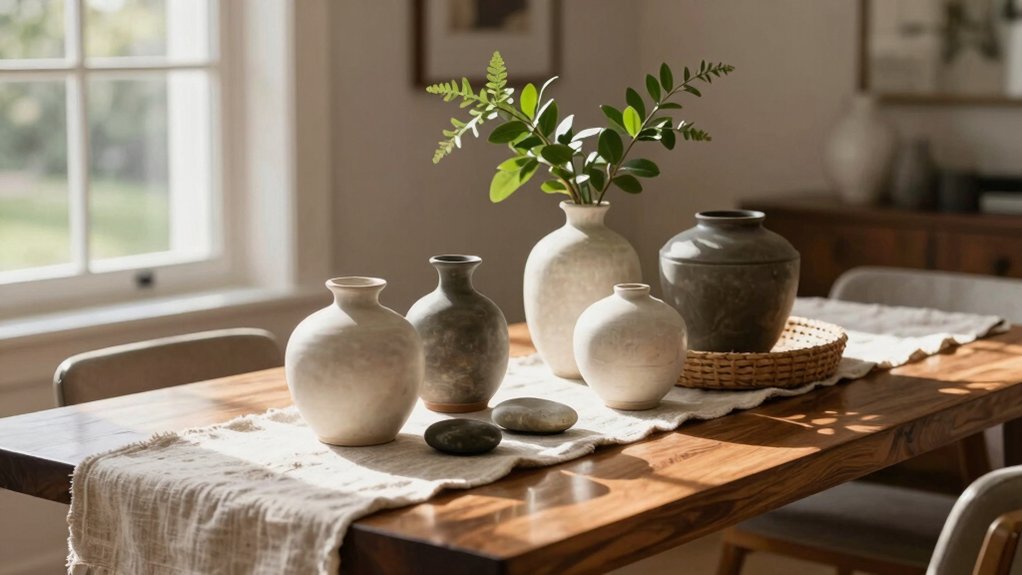
Next, I’d bring in handmade ceramic decor, because one small vase can quietly carry a whole room.
I’ve watched my family relax when a shelf feels chosen, not crowded.
Try this:
- A matte terracotta vase with a dried branch.
- A warm beige bowl with visible throwing rings.
- A muted green lamp base with handmade glazes.
I look for artisan sourcing at local markets or thrift shops, where kiln scars and patina tell a real story.
Place one piece on open space, not everywhere.
Under soft light, the imperfections glow.
Honestly, the room feels like it finally has a gentle voice.
Unfinished or Textured Walls
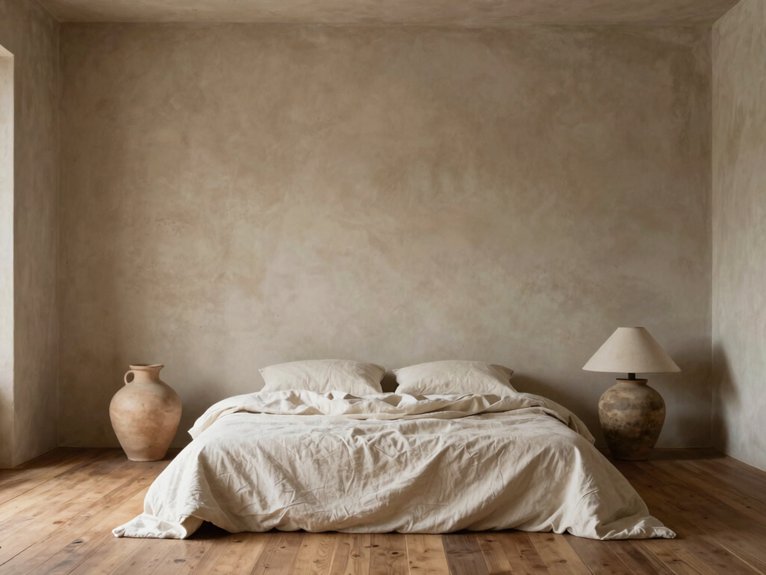
You can bring a calm, wabi-sabi feel to your bedroom with a plaster or limewash finish, and I’ve seen how soft beige, warm grey, or muted sage can make a room feel quiet without looking plain.
I like how limewash, diatomaceous earth, or a Venetian-style art paint lets the wall catch light softly and pick up a lived-in patina over time—basically, it ages better than my family’s throw pillows.
If you rent, peel-and-stick plaster-effect wallpaper or textured wall stickers can fake the look without drama, and leaving some wall space bare keeps the texture front and center.
Plaster or limewash finish
A plaster or limewash wall can quietly change the whole mood of a bedroom, and I love that it doesn’t try too hard.
You get a breathable surface with antibacterial properties, plus that soft, cloudy finish that feels lived-in, not flashy.
In my home, the wall shifts with daylight, and it honestly feels like a calm friend.
Try this:
- Brush on thin, uneven layers.
- Pick clay plaster in sage or warm grey.
- Use peel-and-stick panels for rentals.
Those tiny ridges and marks make your room feel human, like you belong there, not in a showroom.
Minimal Wall Art Selection
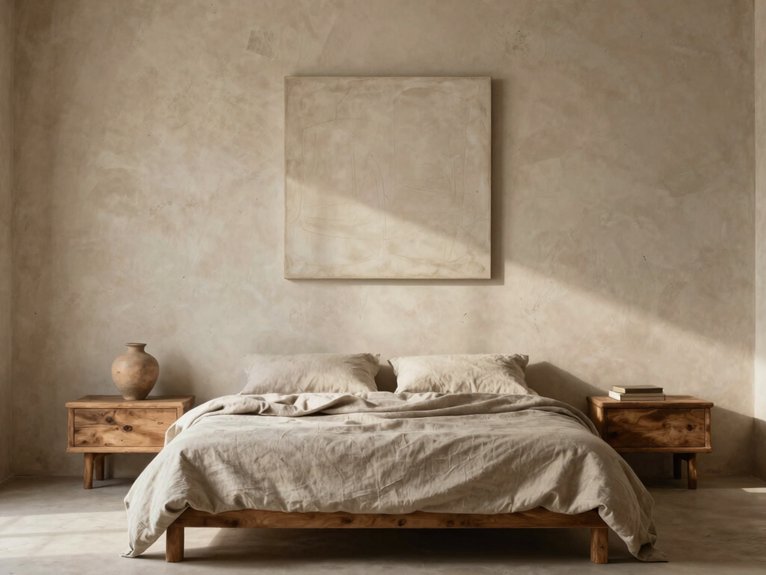
When I’m choosing wall art for a minimalist wabi-sabi bedroom, I keep it simple on purpose: one large handmade ceramic piece or an unframed linen canvas, usually around 24 to 36 inches, can carry the whole room without turning the wall into a busy little art fair.
I hang it off-center, maybe with rustic metalwork or calligraphy panels, and I leave 18 to 24 inches of calm space around it. I stick to sand, warm grey, and olive, using raw wood or matte metal. A woven piece or dried grasses adds soul, not clutter.
Organic Shapes in Furniture
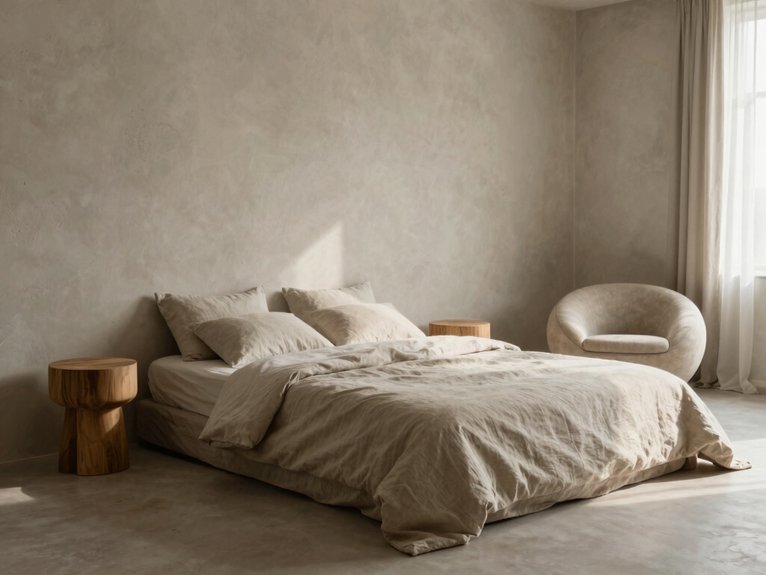
Soft curves do a lot of quiet work in a wabi-sabi bedroom. I’d choose low, natural pieces that feel like they belong with you: rounded silhouettes, curved bench legs, and a rattan chair that doesn’t try too hard. When I picked a hand-carved teak stool for my room, my family joked it looked like a pebble with opinions.
- A large rounded bed frame in raw oak
- A medium nightstand with hand-planed edges
- Small sculptural stools in bent bamboo
I like matte wood, Japanese joints, and tiny flaws. They keep things calm, warm, and wonderfully human.
Floor-Level Living Elements
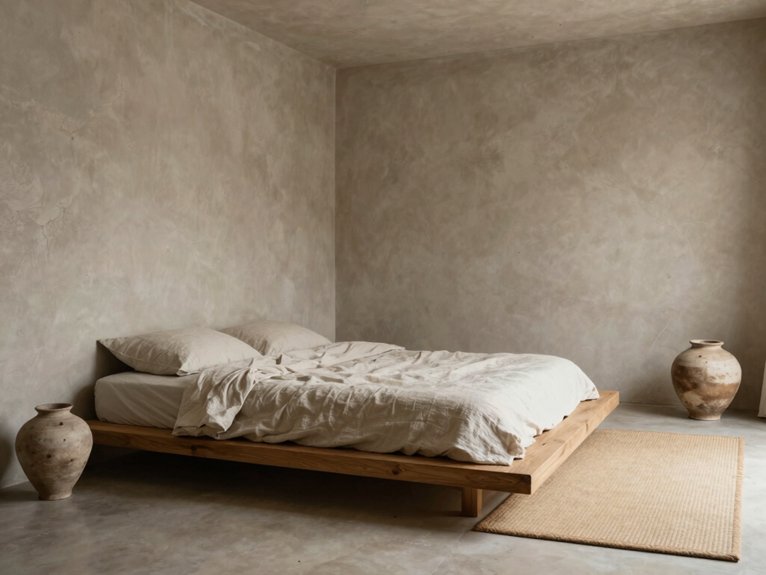
You can keep the room calm and grounded with cushions or low seating, like zabuton pads or a simple woven rattan stool, and I’ve found they make late-night reading feel oddly elegant without trying too hard.
Place them near a low platform bed or tatami-style mattress, and pair them with a flat jute rug so the floor still feels open, breathable, and easy to sweep when life gets a little crumbly.
I do this in my own home because it gives my family a cozy spot to sit, stretch, or toss a blanket down, and honestly, the floor gets more use than the couch some days.
Cushions or low seating
I like to ground a minimalist bedroom with one low seating piece, because it instantly makes the room feel calm and usable without turning it into a furniture parade.
In my home, I’d pick a zabuton cushion or a 60–80 cm floor pouf in beige linen, then let the wrinkles do their little wabi-sabi thing. Try this:
- A mismatched cushion for a meditation nook.
- A storage ottoman if you need hidden blankets.
- One raw-wood tray with a tea bowl.
If you rent, add a jute rug underneath. Keep it to one or two pieces, not a cushion kingdom.
Nature-Inspired Simplicity
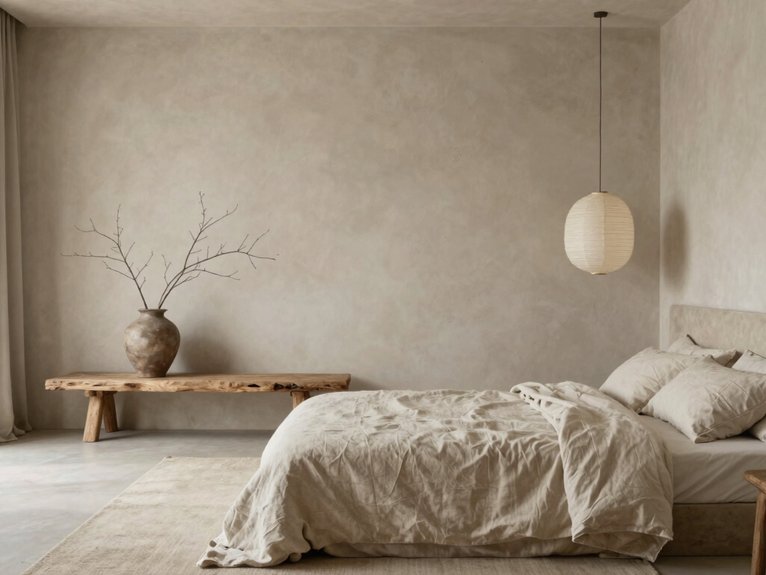
When I want a bedroom to feel calm and grounded, I start with nature’s quietest colors: sand, warm beige, taupe, soft grey, and a hint of sage.
You can keep the room steady with raw oak or walnut, linen sheets, and a jute rug that adds tactile contrasts without shouting. I like one dried branch or a small olive plant—no jungle, please.
Let filtered light in with sheer curtains, then switch on 2700K lamps at night. Leave some wall space empty. That breathing room supports seasonal rituals, and honestly, your bedroom stops acting like a cluttered storage unit.
Frequently Asked Questions
How Do I Maintain a Minimalist Bedroom Without It Feeling Cold?
You keep it warm by choosing soft lighting, layered textiles, and a few meaningful pieces. You’ll feel more at home when you mix natural textures, warm tones, and personal touches that invite comfort, not clutter.
Can Wabi-Sabi Work in a Small Apartment Bedroom?
Yes, you can make wabi-sabi work beautifully in a small apartment bedroom. You’ll use natural light, soft textures, and imperfect storage to create warmth, belonging, and calm while honoring your space’s honest simplicity.
What Budget-Friendly Updates Create a Wabi-Sabi Look?
You can create a wabi-sabi look with thrifted ceramics, salvaged wood, and soft linens. Keep finishes natural, mix imperfect pieces, and let empty space breathe. You’ll feel grounded, welcomed, and at home.
How Do I Blend Wabi-Sabi With Existing Modern Furniture?
You can blend it by softening sleek lines with natural imperfections, like linen, wood, and handmade ceramics. Keep your modern furniture, but layer muted textures, warm neutrals, and soft contrasts so your space feels welcoming and grounded.
Which Textures Help Add Warmth Without Visual Clutter?
You’ll warm the room with linen throws, wool rugs, and softly nubby cotton—enough texture to feel like a cozy mountain cabin, yet still calm. Choose muted, natural finishes, and you’ll belong instantly.