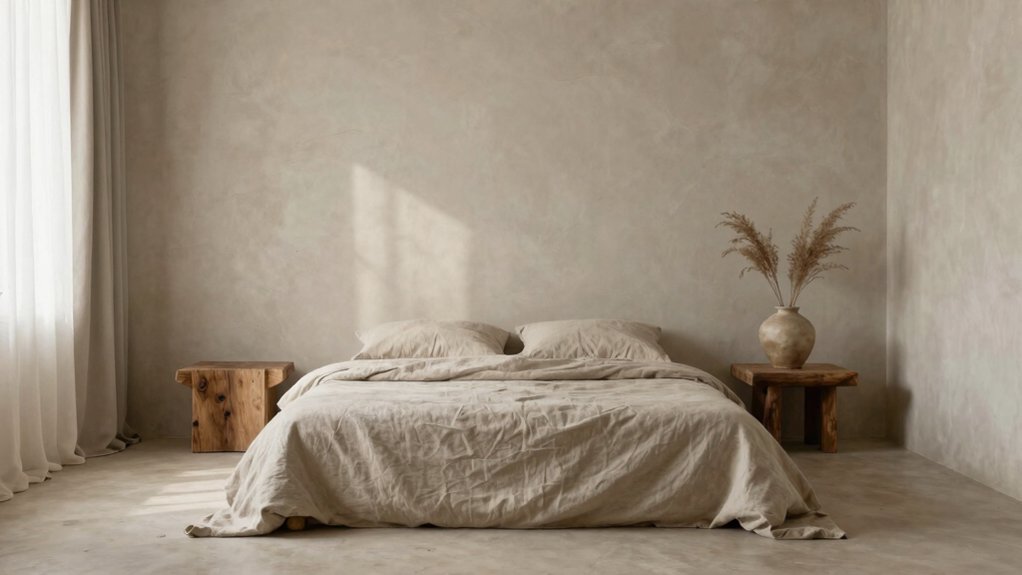
You can make your bedroom feel calm and natural with warm white or beige walls, a low oak bed, and linen bedding in taupe, sage, or soft gray. I’d keep the decor lean: one clay vase, a paper-shade lamp, and maybe a darker pillow so the room doesn’t float away. Add a wool throw, raw wood nightstand, and soft 2700K light. My family calls this “less mess, more home,” and there’s plenty more to shape from here.
Key Takeaways
- Use warm neutral earth tones like beige, taupe, soft gray, and sage to create a calm, friendly wabi-sabi bedroom mood.
- Choose natural materials such as linen, wool, raw wood, clay, and plaster for honest texture and visual softness.
- Keep furniture low, simple, and minimal, with open floor space and only a few purposeful objects on display.
- Layer bedding with coarse linen, cotton sheets, and one textured throw to add comfort without making the room feel busy.
- Use warm 2700K lighting, dimmers, and small handmade vignettes like pottery or dried stems to settle the space naturally.
Neutral Earth Tone Palette
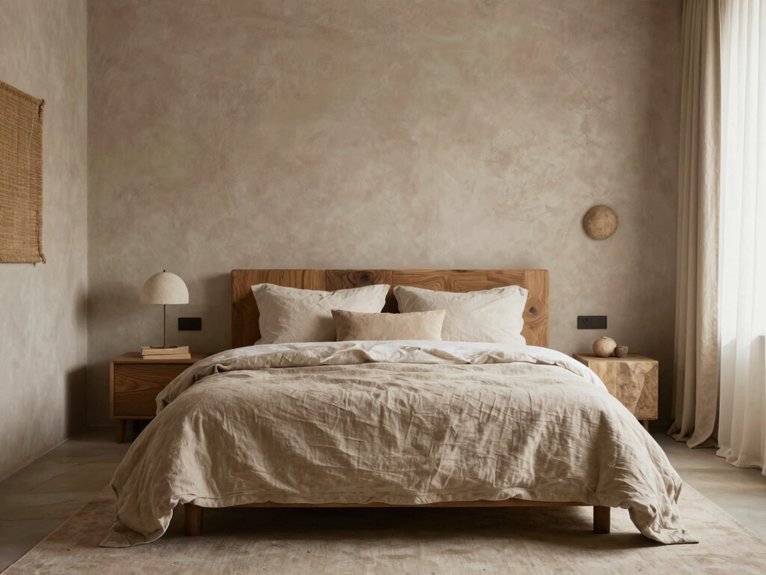
When I want a bedroom to feel calm instead of chaotic, I start with a neutral earth tone palette. I lean on warm white, sand, taupe, and warm grey, then add sage or olive sparingly.
My family laughs that I collect paint chips like souvenirs, but earth pigments from matte samples feel grounding. I keep 60% on walls and floors, 30% on a walnut dresser or linen bedspread, and 10% on charcoal or aged brass.
I choose eggshell paint, wool throws, raw wood, clay bowls, and dried florals. The room breathes, and so do I.
Low Platform Bed Design
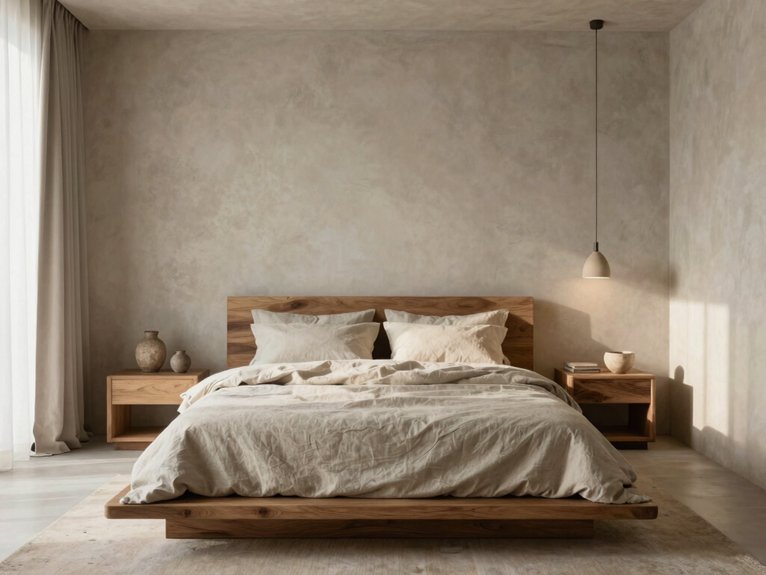
I like how a low platform bed, set just 8–12 inches off the floor in raw oak, walnut, or reclaimed wood, can make your room feel steady and calm—like the bed’s quietly doing its job without asking for applause.
I’ve found that simple joinery, a tatami-style slatted base, and barely-there headboards keep the look clean and grounded, and yes, my family has noticed when I stop piling on “just one more” pillow. Dress it in off-white linen or coarse cotton with one textured throw, and you’ll get that wabi-sabi, grounded minimalist feel without turning your bedroom into a design circus.
Grounded minimalist feel
A low-profile bed can change the whole mood of a bedroom, and I’ve seen that happen in my own home more than once. You’ll feel the grounded minimalist feel right away. I like a 10–18 cm platform in raw oak, walnut, or reclaimed wood, because the grain, knots, and earthen textures bring real warmth.
A simple Japanese frame or slatted rattan base keeps the meditative layout open, not fussy. I pair mine with linen bedding in beige or soft gray, plus a low ceramic stool and a woven lamp. Cozy, calm, no drama—just enough.
Linen and Cotton Bedding
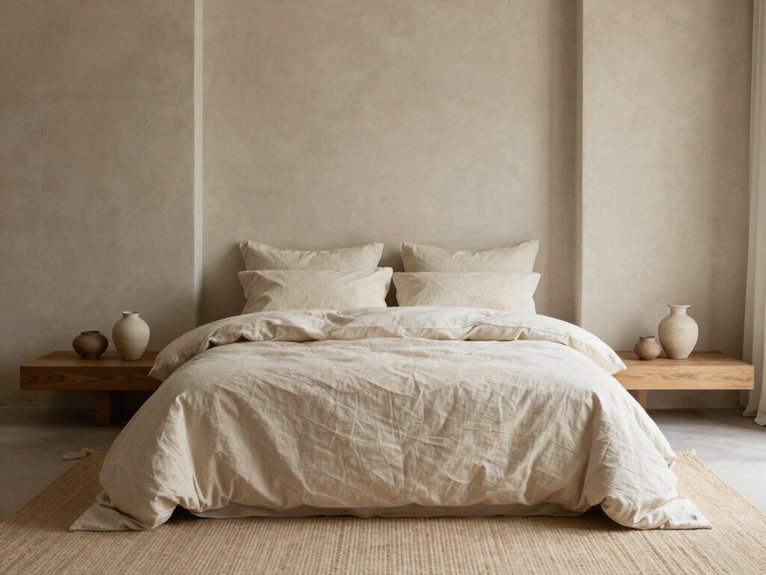
I layer a coarse linen duvet cover, a lightweight cotton sheet, and a handwoven throw; it looks lived-in, not fussy. My family likes natural-dyed or undyed Morandi tones, since bright colors shout too much. Wash cool, line-dry, and let the wrinkles do their cozy little job.
Raw Wood Furniture Pieces

Raw wood furniture brings the room down to earth in the best way. I’ve seen a raw oak bed frame calm a busy room fast. You’ll feel at home with grain, knots, and warm patina doing the talking.
- A live edge walnut nightstand looks like it came from a quiet forest nap.
- A rubberwood bench gives you durability, moisture resistance, and a friendly price tag.
- Rattan or bamboo pieces add airy curves, while low platform beds and simple joints keep things humble.
Choose unfinished planks or weathered lacquer for a lived-in feel that says, “you belong here,” without trying too hard.
Minimal Decor with Purpose
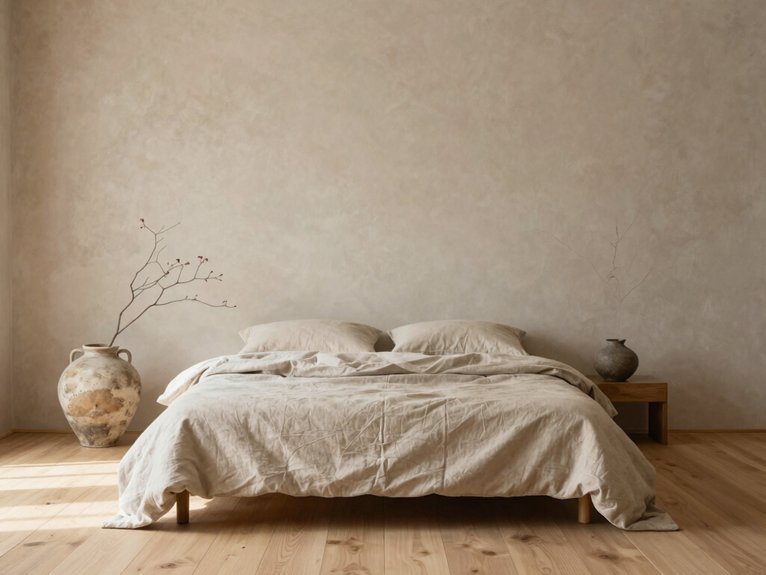
I’ve found that intentional styling works best when you keep only what you truly use: a low wooden bed, one small nightstand, and maybe a stool, with plenty of open floor left breathing room.
Choose pieces that do double duty too, like a clay vase that holds dried stems and your random bedtime stuff, because your room shouldn’t need a full-time babysitter for clutter.
I also stick to linen pillows in beige or sage, one weathered lamp or kintsugi bowl for character, and warm 2700K light so the room feels calm, lived-in, and just a little gloriously imperfect.
Intentional styling
When I style a wabi-sabi bedroom, I like to think of every object as having a job, because the moment a surface starts acting like a storage shelf for random extras, the calm disappears fast.
You can feel at home when each piece pulls its weight. I keep seasonal rotation simple and let curated imperfections do the talking.
- A clay vase with one dried stem
- A weathered tray with one book
- A coarse linen throw on a bench
I also leave roomy negative space, because your eyes need a breather, not a committee meeting. My family notices the peace right away.
Soft Natural Lighting
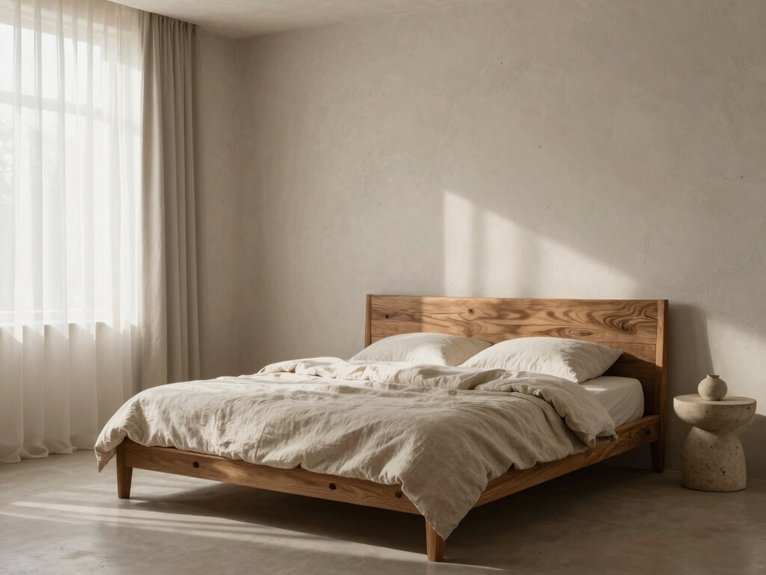
Soft light is the secret sauce here. In my house, I use warm white bulbs, 2700K to 3000K, so your room feels cozy, not clinical. Let filtered sunlight slip through bamboo shutters or sheer linen curtains, and you’ll get those lovely moving shadows everyone pretends they’re not staring at.
I keep paper shades, fabric lamps, and ceramic candle holders around for a calm candle glow. Dimmers help too—bright for reading, low for evening. Leave windows open, use warm off-white walls, and a wooden-framed mirror to bounce daylight. Your bedroom will feel welcoming, like it knows your name.
Imperfect Handmade Decor
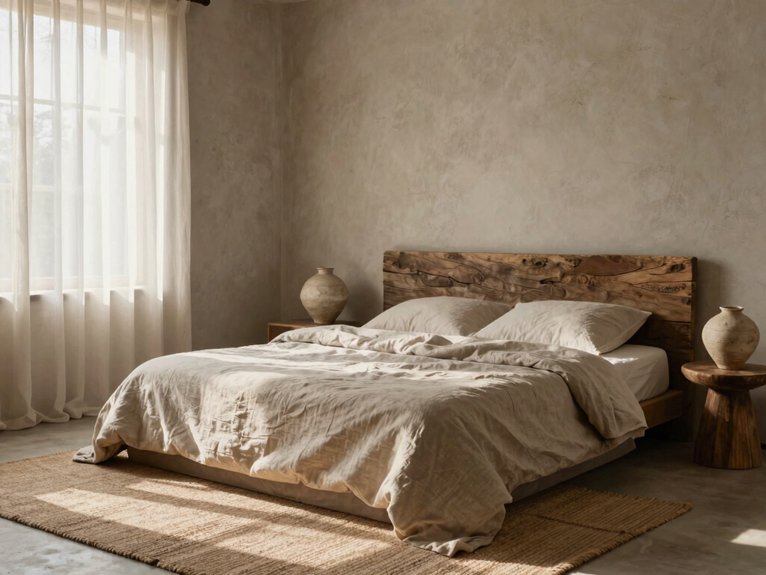
I love letting a few imperfect handmade pieces do the heavy lifting in a wabi-sabi bedroom. You’ll feel more at home when your room shows handmade blemishes instead of pretending to be flawless. Try:
- a wheel-thrown mug with a drippy glaze line
- a linen throw with frayed edges on your bed
- a reclaimed-wood bowl for rings and keys
I keep one dried branch in a rough stoneware vase, and it always calms my family’s busy evenings. Shop local makers, flea markets, and ceramics studios; artisan labels often hide small asymmetries, and that’s the charm. Your space can welcome you back, softly and honestly.
Textured Plaster Walls
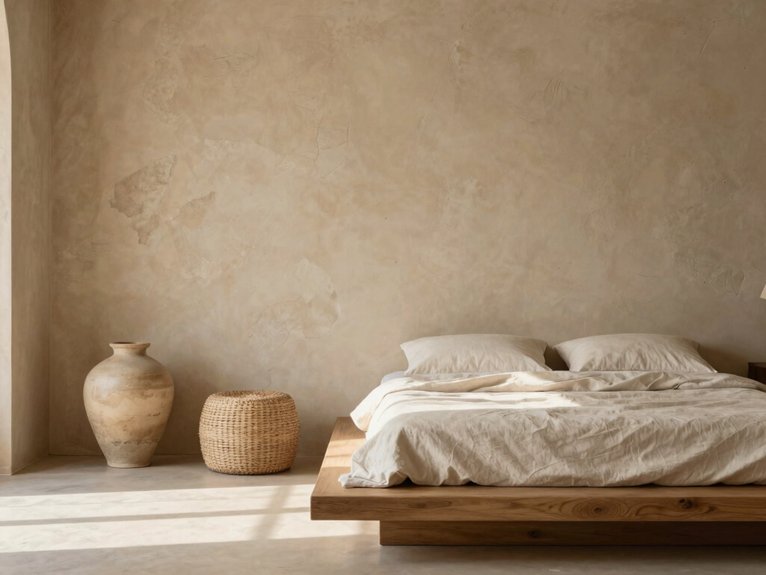
You can give your bedroom an organic wall finish with textured plaster, like limewash or clay plaster, and it’ll soften light in a way paint just can’t.
I’ve seen this work beautifully in my own home, where the walls picked up little ridges and color shifts that made the room feel lived-in instead of “perfect” in that suspicious, showroom way.
Pair it with soft beige, sand, or sage, keep the artwork simple, and let the wall do the talking.
Organic wall finish
When I want a bedroom to feel calm but still full of soul, I reach for textured plaster walls. I mix organic pigments into clay or lime plaster, so your room keeps its color and saves you from repainting later, which is one less weekend job, thankfully. These breathable surfaces feel soft, aged, and friendly, like they’ve already lived a good life.
- Warm sand, taupe, or pale olive
- Wide trowel marks with tiny ridges
- A matte wax finish for easy wiping
If you rent, try peel-and-stick wallpaper or uneven joint compound. Your space will feel like it belongs to you.
Stone and Ceramic Accents
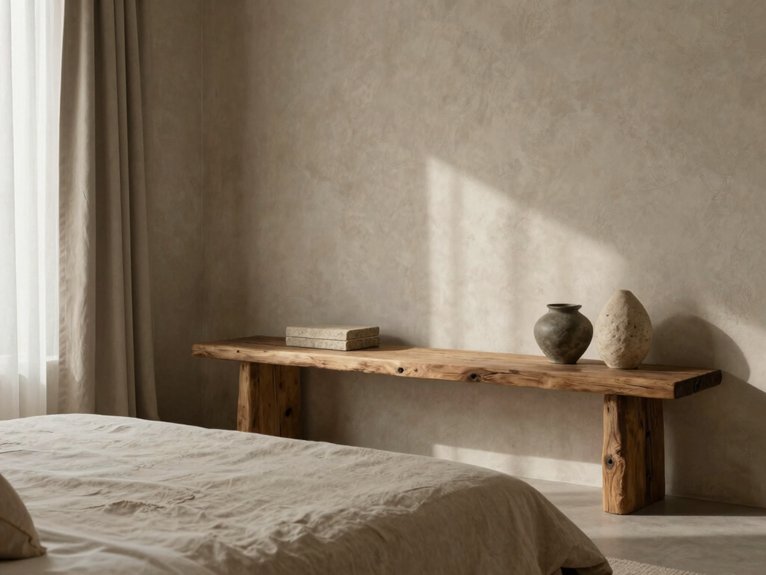
On my dresser, I’d tuck a slate tray or river stones for those calm mineral tones. Behind the bed, a strip of basalt or handmade tiles adds depth. I even like kintsugi repairs; they remind my family that cracks can still look beautiful.
Decluttered Open Space
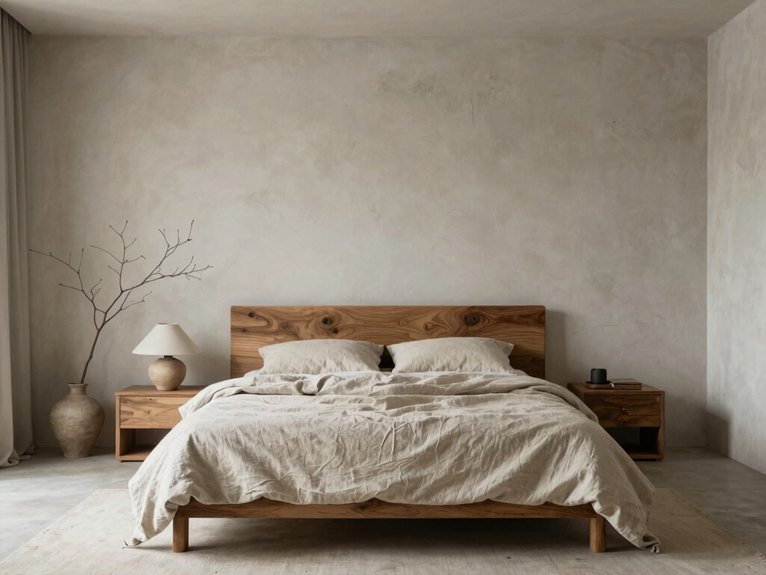
After those stone and ceramic touches, I’d let the room breathe a little more by clearing away anything that doesn’t earn its spot. In my own home, I keep just three things on view; that’s it, no pile-up drama.
Try:
- a handmade vase on the nightstand
- a single stack of books beside the bed
- a ceramic candle on a tray
Use open storage for the pretty stuff, and tuck daily clutter into woven baskets or built-in drawers. A tatami bed, narrow nightstand, and sheer linen curtains keep sightlines wide, with real visual breathing.
My family notices the calm right away.
Muted Color Layering
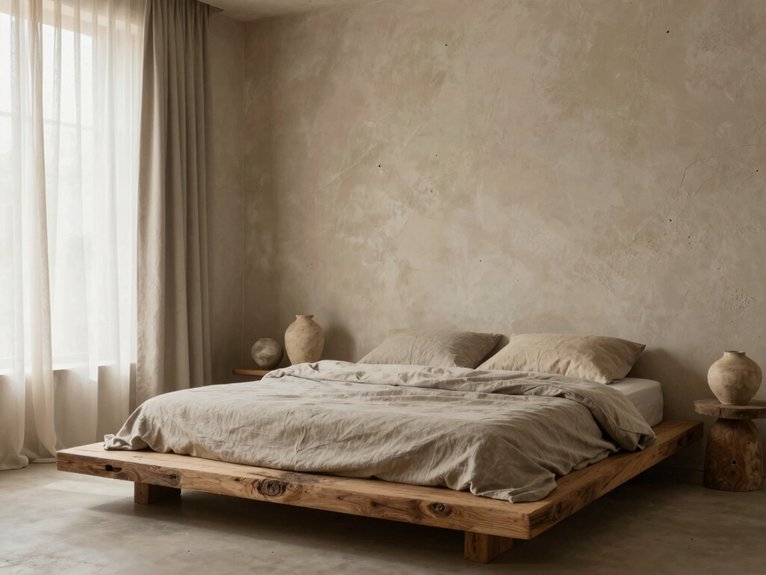
You can build a calm bedroom by layering beige, taupe, and soft gray like a quiet little trio, with beige on the big pieces, taupe in the middle, and soft gray on the accents.
I like how a linen duvet in off-white, a stone-gray throw, and a beige bed runner can add depth without turning the room into a pattern party my family would call “too busy.”
Try a sage pillow or a clay vase in one small spot, and check the colors in daylight and at night so they stay warm and cozy.
Beige, taupe, soft gray
I love how beige, taupe, and soft gray can make a bedroom feel calm without turning it bland. I’ve found that warm undertones and soft contrast help you fit right in, like the room already knows you.
In my family, we layer them this way:
- Beige walls, taupe bedding, soft gray rug
- Linen duvet, wool throw, matte plaster
- Oak nightstand, charcoal lamp, oiled walnut frame
I keep shades close, about 10–20 Delta E apart, so they stay friendly. Add a darker pillow, and the whole space feels settled, not sleepy. It’s wabi-sabi, but make it comfy.
Simple Floor Seating Option
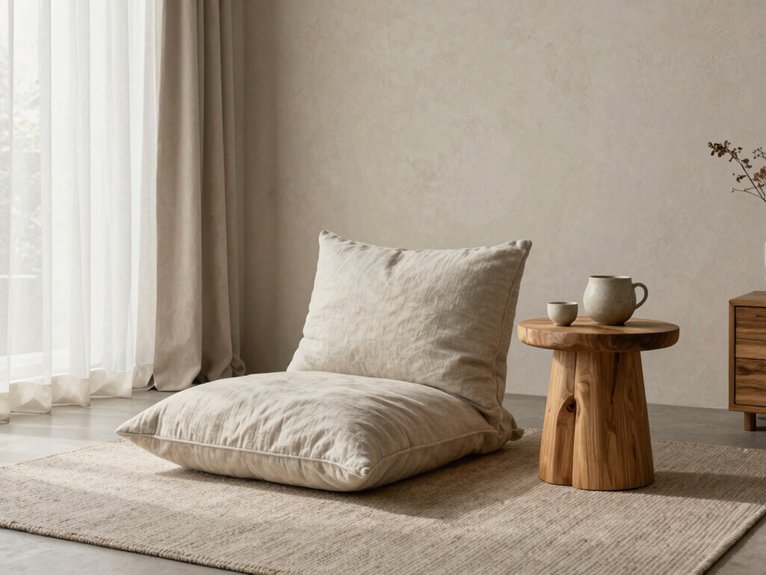
I’ve found that a simple floor seating setup can make a wabi-sabi bedroom feel calm right away, almost like the room took a deep breath.
You can tuck a zabuton-style cushion, one of those 40–60 cm floor cushions, beside a low oak tray table and turn it into a tiny tea nook. I like coarse linen or cotton with kapok fill; it feels honest, not fussy. Add a jute rug, a folded hemp throw, and one clay bowl. My family jokes it’s our “sit-down-and-breathe” corner. Keep it near a window, and let the soft light do the rest.
Nature-Inspired Elements
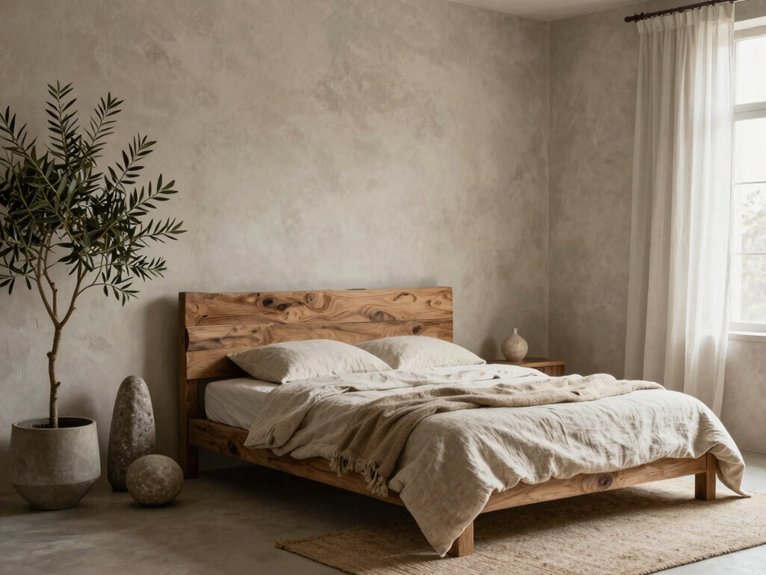
When I want a bedroom to feel more wabi-sabi, I start with nature itself. I lean on reclaimed oak, walnut, or rubberwood, because the grain, knots, and patina do the talking. You can tuck in a handmade clay vase with a dried pampas stem, and suddenly the room feels like it belongs to you, not a catalog.
- Linen curtains that soften daylight
- A jute rug under tired feet
- Rough-hewn pottery beside your lamp
I love seasonal botanicals, stone trays, and nature soundscapes too. My family says it’s calming; I say it’s less “mess” and more “home.”
Frequently Asked Questions
How Do I Make a Wabi-Sabi Bedroom on a Tight Budget?
You can create one with thrifted secondhand finds, DIY textiles, and a few imperfect natural pieces. Start with a humble lamp, soft linen, and uncluttered surfaces; you’ll feel at home, almost knightly, without overspending.
Which Scents Suit a Calm Wabi-Sabi Bedroom?
You’ll suit calm scents like lavender linen and cedar woody notes, plus subtle sandalwood or chamomile. You can keep them light, so your room feels welcoming, grounded, and softly shared.
How Do I Balance Wabi-Sabi With Smart Bedroom Storage?
You can balance wabi-sabi with smart storage by choosing minimalist cabinetry and tucking daily items into imperfect baskets. You’ll keep surfaces calm, make room for life’s little messes, and still feel warmly at home.
What Plants Work Best in a Low-Light Wabi-Sabi Bedroom?
Your room could feel as calm as a silent forest with a snake plant, ZZ plant, peace lily, cast iron plant, parlor palm, and philodendron scandens; you’ll pick hardy, low-light growers that welcome you home.
How Can I Keep a Wabi-Sabi Bedroom Easy to Clean?
You can keep it easy by choosing minimalist surfaces and washable textiles, storing only what you use, and wiping things down daily. You’ll feel at home when every item has a simple, cared-for place.