I’d keep your sofa bed slim and tight to the wall, then put a 20-inch-deep desk opposite so the opened bed still has 30–36 inches to breathe. I like light greige walls, a jute rug, hidden cords, and a low lamp so the room doesn’t feel like a storage gremlin moved in. Add baskets, a picture light, and one big print above the backrest, and you’ll get a calm room that works hard, with more smart tricks ahead.
Key Takeaways
- Place the sofa bed against a wall and keep 30–36 inches clear so it opens without blocking circulation.
- Use a compact, low desk opposite or in a corner to preserve an open center and allow chair clearance.
- Add hidden storage like baskets, lift-up ottomans, or lower bookcase cabinets to keep bedding and office items tidy.
- Choose light neutral finishes, slim furniture, and one large print or gallery row to make the room feel airy and balanced.
- Layer task and ambient lighting with warm dimmable lamps, desk lighting, and blackout sheers for comfort day and night.
Sofa Bed Against Wall with Desk Opposite
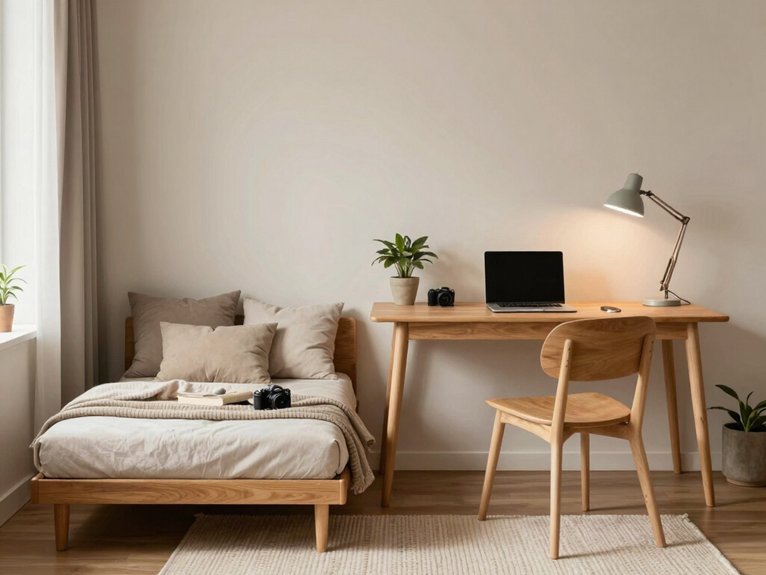
Against the wall, I like to start with a slim sofa bed—tight back, exposed legs, the whole “I take up less space than I look like I do” trick—because it gives your small office room to breathe and still opens fully when you need it.
I’ve seen a 76-inch sleeper work well in my brother’s den. Keep 30 to 36 inches for bed clearance, and you’ll spare your shins and your sanity. Put a low desk, maybe 20 inches deep, opposite it. That layout helps traffic flow and keeps the center open. Add a rug, and the space feels welcoming, not cramped.
Compact Desk Next to Sofa Bed
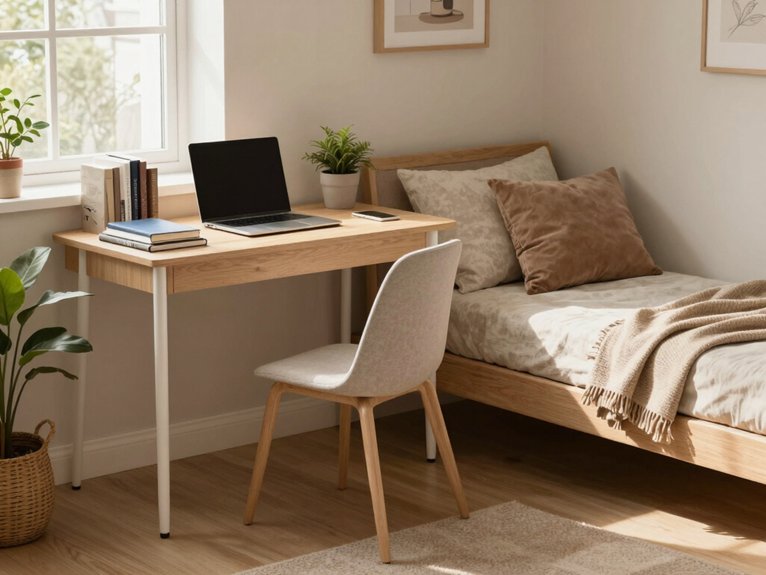
If you want the room to work hard, I’d put a compact desk right next to the sofa bed so nothing feels jammed up. I’ve done this in our guest room, and it saves the day.
Pick a slim desk, 24 to 30 inches deep, with under desk power source and a chair that tucks in fast. I like a floating corner desk from IKEA or a simple wood model with one slim drawer.
Keep a basket nearby for bedding, and add noise mitigation with a rug. My family thanks me when bedtime turns into office mode without drama.
Neutral Minimalist Office Layout
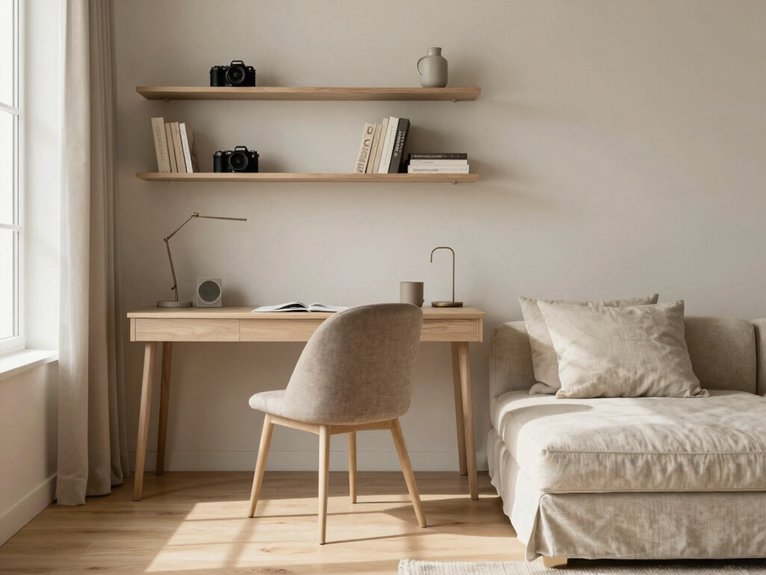
I’ve found that a slim mid-century sleeper sofa in a light neutral fabric keeps your office feeling calm, not crowded, and it still gives guests a real bed when they show up with their overnight bag and zero warning.
A cream or jute rug, a 36–48 inch floating desk, and two slim bookcases with lower storage can make the whole room feel open and tidy, which is a miracle in a small space. Add two neutral pillows and a folded throw in a woven basket, and you’ll have a clean setup that looks professional enough for work and comfy enough for family movie-night emergencies.
Clean and open feel
To keep a small home office feeling calm instead of cramped, I always start with a slim-profile sleeper sofa in a light neutral fabric like beige or soft grey; it cuts the visual bulk way down, and in a 10×10 ft room that’s fundamentally a magic trick.
I’ve found a 5×8 jute rug helps the seating nook feel set apart, while airy textiles and minimal clutter keep the mood open. Put a 30-inch desk by the window, then add white bookcases with doors. I tuck bedding in a woven basket, and my family says it finally feels like “real grown-up calm.”
Floating Desk Above Sofa Bed Area
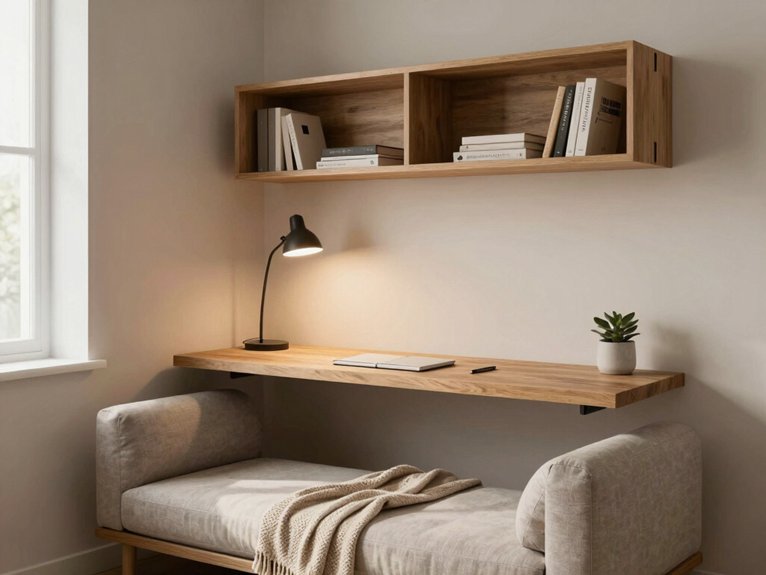
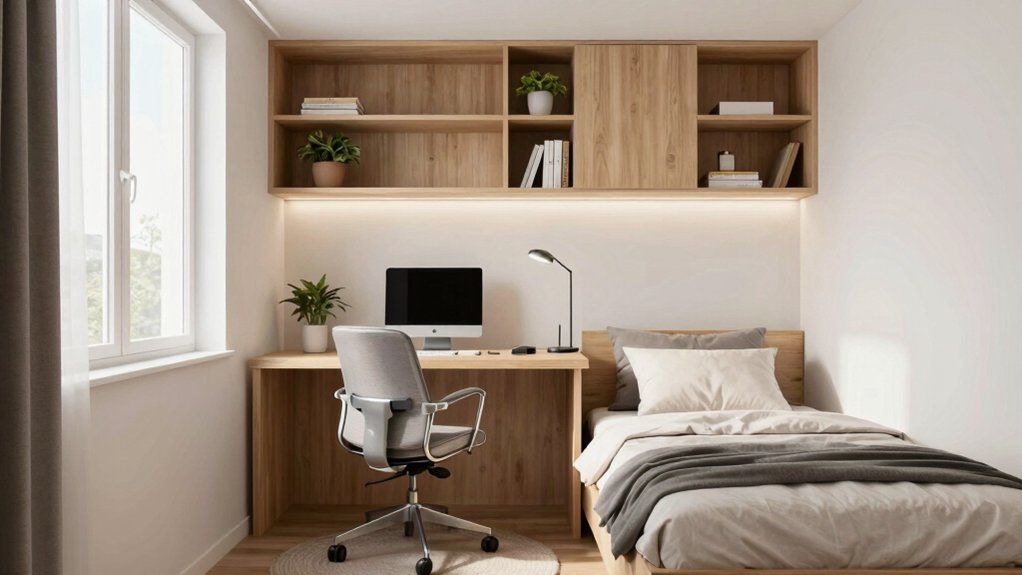
One smart way I’ve found to make a sofa bed office pull double duty is to sneak in a floating desk above the back of the couch. I mount mine at 28–30 inches, so the bed still opens and my keyboard sits right. With ergonomic mounting and under sofa clearance, the setup feels friendly, not cramped.
I keep it 16–18 inches deep, like a slim IKEA shelf, and anchor it to studs or a ledger board.
- Add LED strip lighting
- Hide cords with clips
- Store linens in a narrow shelf
My family loves the tidy, guest-ready vibe.
L-Shaped Desk with Sofa Bed
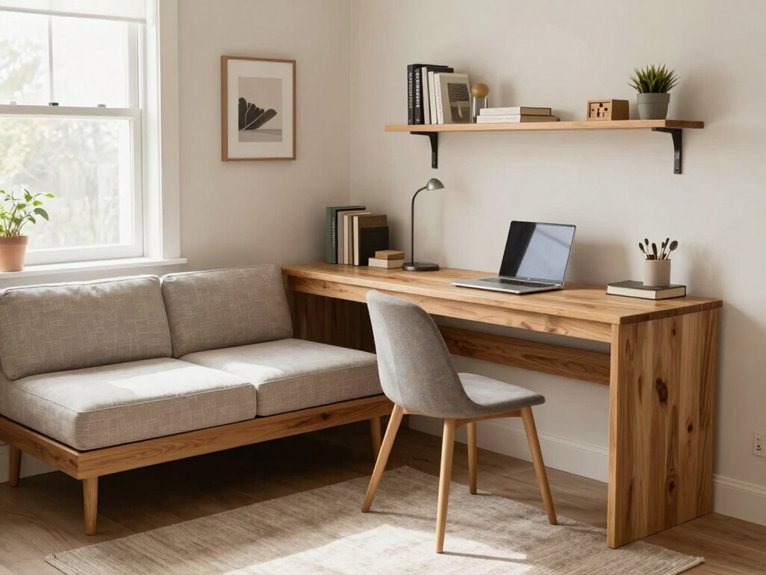
If the floating desk above the sofa bed has made your room feel cleaner, an L-shaped desk can take that same idea and give it more elbow room. I’d tuck the shorter leg near a window and let the sofa bed face the longer run, so your chair still glides without bumping the bed.
Measure the opened bed first; a twin or full usually needs 75–80 inches, plus a 30-inch walkway. I like slim-profile sofa beds, under desk lighting, and acoustic panels for calmer calls.
Add shelves up high, a 5×8 rug, and two pillows.
Window-Side Sofa Bed Setup
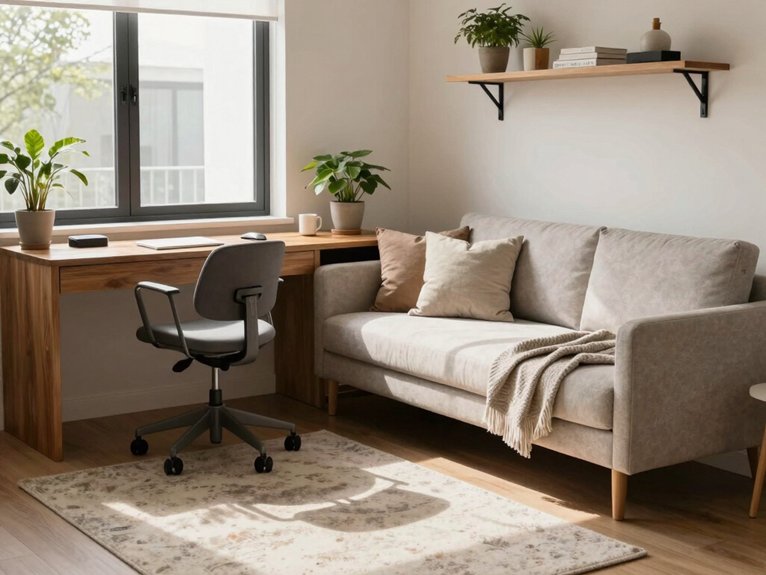
I’d park a slim sofa bed under the window so you get all that lovely daylight for reading, and your room still feels open enough to walk through without doing a tiny dance around the furniture. I like a light neutral sleeper with exposed legs, plus a low window bench or cushion with hidden storage, because it keeps the nook airy and gives you a spot for blankets when the bed opens up.
Put your desk 90° to the window or a few feet away, then add a small rug and side table, and you’ve got a bright, practical setup that works for work and for guests—my family calls that a “why didn’t we do this sooner?” win.
Natural light workspace
Chasing daylight has made my small home office feel bigger, brighter, and a lot less cranky. You can do the same by placing your desk under the south-facing window, then keeping the monitor low to dodge south facing glare. I like a slim sofa bed across the room so it soaks up soft light without stealing your view.
- Use sheer-plus-blackout panels with window treatment automation.
- Leave space for the bed to unfold, even if it means a tape-measure dance.
- Add a 4×6 rug and layered lighting.
My kids call it the “sunshine nook,” and honestly, they’re right.
Built-In Shelving Around Sofa Bed
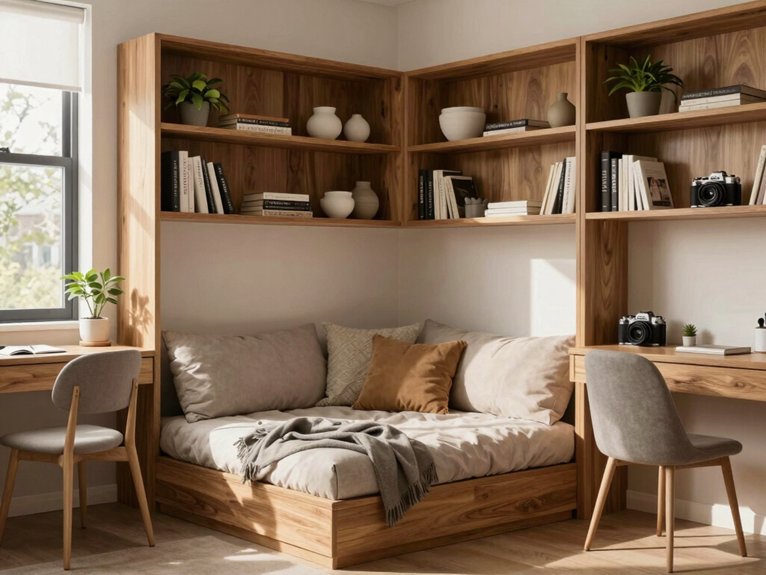
Built-in shelving can turn a sofa bed into a smart little wall system, and I love how it keeps a small office from feeling like a spare-room jumble. I’ve seen it work like incorporated seating with a hidden headboard effect.
| Shelf zone | Best use |
|---|---|
| Lower cabinets | Linen storage |
| Upper shelves | Books, bins, decor |
I’d flank the bed with 24–36-inch cabinets and 12–14-inch shelves, then leave 18–24 inches clear for the mattress. Full-extension drawers, rounded edges, LED strips, and USB ports make it feel easy for you and your family. A crown line above keeps everything calm, tidy, and quietly grown-up.
Foldable Desk for Flexible Space
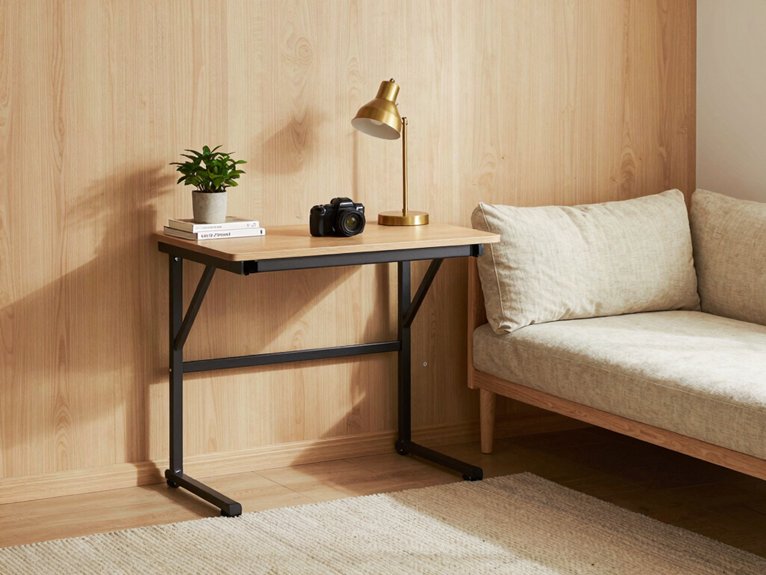
For a small home office that has to moonlight as a guest room, a foldable desk is one of my favorite space-saving tricks. I’ve used one under a window, and it felt like instant breathing room. When you need it, it opens 12–18 inches; when you don’t, it folds flat.
- Pick a 50–75 lb model with sturdy hinges.
- Add vertical storage above it for notebooks and linens.
- Choose hidden outlets and cable clips for fast setup.
A tambour or Murphy desk with a shallow tray keeps my laptop ready, and my family still gets a comfy sofa bed.
Corner Desk + Sofa Bed Combo
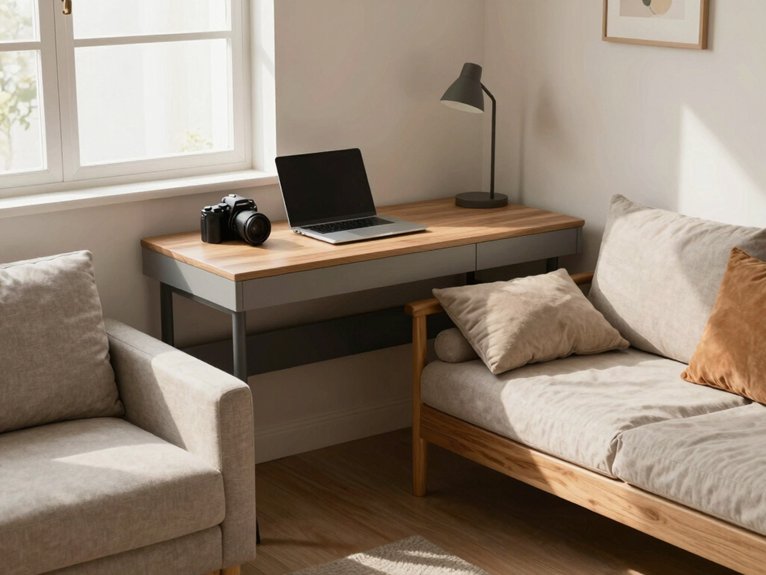
You can make a corner desk and sofa bed work beautifully when you keep the desk slim—about 18 to 24 inches deep—so the bed can pull out without a furniture shuffle that feels like a tiny wrestling match.
I’ve found that a tight-profile desk with cable management, a monitor arm, and tall shelves for bedding keeps my family’s stuff neat, while a low-profile sofa bed and a 4×6 or 5×8 rug help the room feel organized instead of cramped.
That smart layout lets you use every inch well, and honestly, it makes the whole space feel like it’s finally pulling its weight.
Smart layout use
When I need a tiny room to work twice as hard, I start with a corner desk and a sofa bed that play nicely together. I tuck the desk into a 30–36-inch corner, then leave the sofa bed’s full-open depth clear, so nobody has to do furniture yoga. That’s smart space zoning, and it keeps the room feeling friendly.
- Use vertical storage above the desk for books and chargers.
- Choose a slim sofa bed with exposed legs.
- Add bedding to a woven ottoman.
A runner rug can define the lounge zone, while a task lamp and floor lamp keep everyone happy.
Light Color Palette for Space Illusion
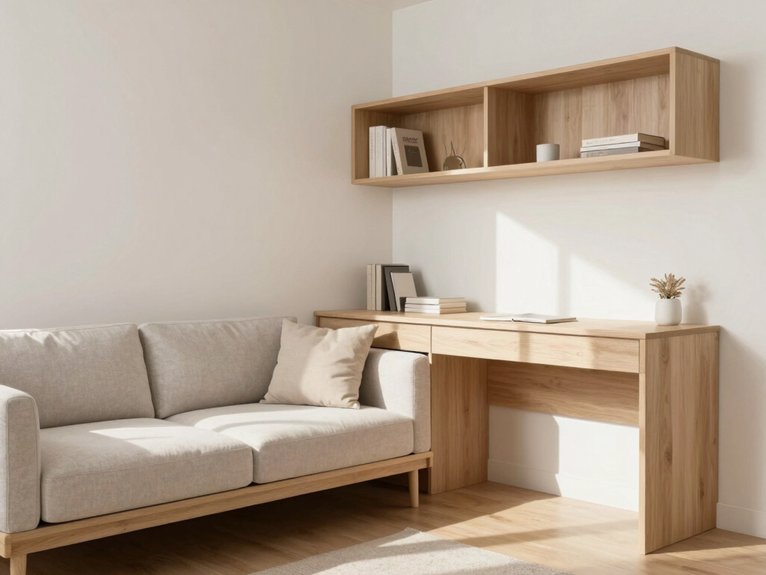
Even in a tiny home office, I’ve seen a light color palette work like a little magic trick. I paint walls soft white or warm greige, then choose a sofa bed in cream or light grey, with pale undertones and reflective finishes that bounce daylight around. A low-profile frame keeps the room airy; I learned that after my brother’s “cozy cave” phase.
I add texture with a jute rug, a chunky knit throw, and linen pillows in muted tones. Then I keep accents small—maybe a jade pillow. It feels calm, friendly, and roomy enough for everyone.
Multi-Functional Storage Solutions
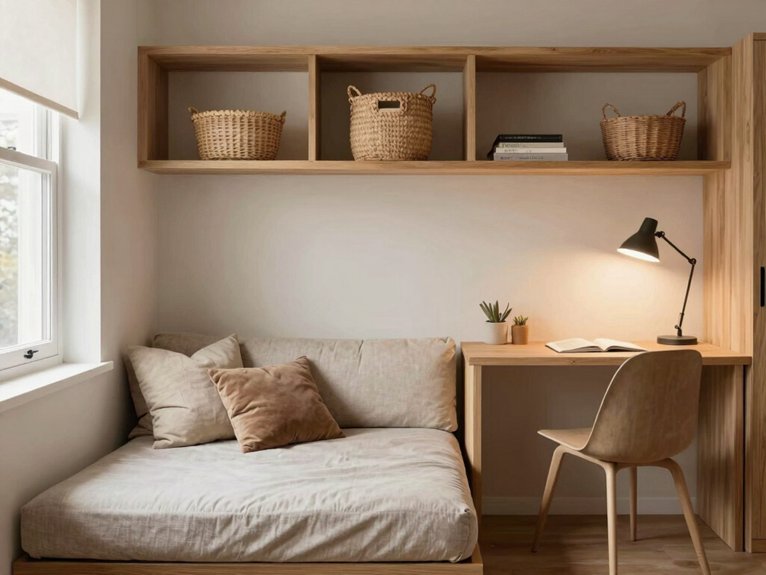
To keep a small home office from turning into a bedding pile with a desk attached, I like to build storage right into the room’s bones. I’ve learned that when you tuck things away, the room feels like it’s got your back. Try these moves:
- Tall bookcases with 18–24 inch lower cabinets hide folded bedding.
- under seat organizers and a sofa bed with lift-up storage add handy space.
- hidden headboard storage, plus a storage ottoman, keeps guest extras close.
I also use rolling carts for lamps, books, and snacks. It’s a little like having a tidy helper who never complains.
Wall Art Above Sofa Bed
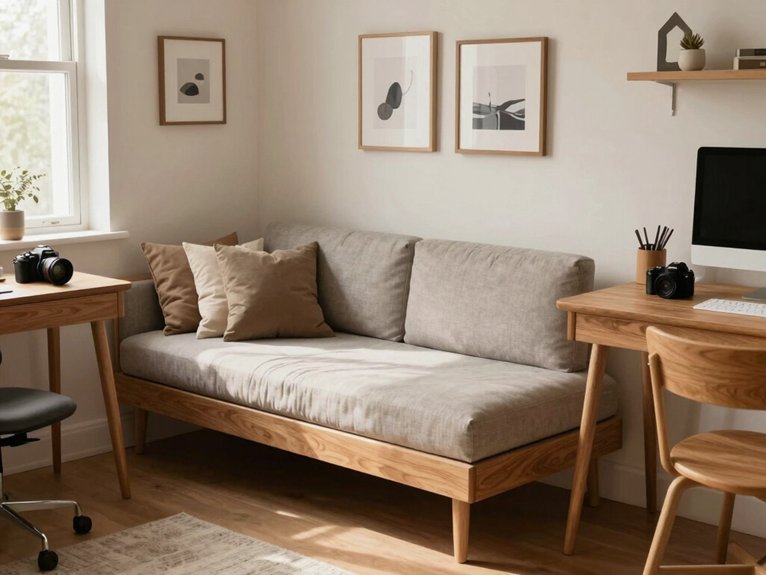
You can make your sofa bed area feel balanced by hanging one large print or a neat gallery row centered about 6–8 inches above the backrest, which keeps the wall looking calm instead of cramped.
I like using lightweight frames or canvas art in colors like jade green or Pilot Blue, because they tie your office and lounge together without screaming, “I’m both a couch and a bed!” If you’ve got a tight room, try a slim shelf with a few framed photos or small artworks, and add a little picture light so the whole setup feels polished and ready for day or night.
Balanced decor look
When I want a sofa bed to feel polished instead of cramped, I start with what’s above it. I center a gallery or one large print 6–8 inches above the back cushion, and I keep it about 60–75% of the sofa width. That balance helps your room feel like it belongs to you, not the sofa bed’s chaos.
- Use symmetry accents for calm
- Match mats and frames to light walls for fabric cohesion
- Add a tripod lamp or mirror cluster for warmth
I like 2700K light; it says, “welcome,” without yelling.
Cozy Lighting for Dual Use
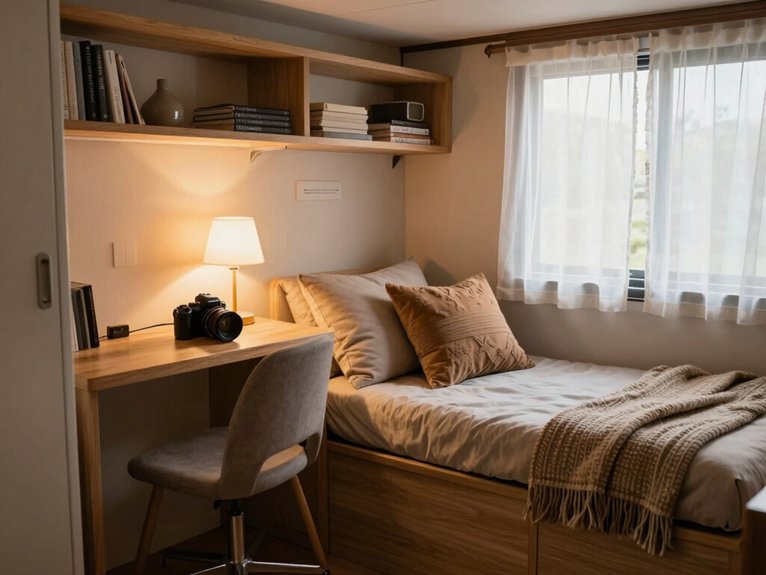
I’ve found that cozy lighting is what makes a small home office with a sofa bed feel like one room that can truly do both jobs well.
I use a dimmable ceiling light for work, then add a 400–600 lumen desk lamp and a 200–300 lumen floor lamp for evening calm. For warm dimming and bedside accents, I mount swing-arm sconces beside the sofa bed with 2700–3000K bulbs. Under shelves, LED strips keep paths clear.
I also set smart bulbs to 4000K by day, 2700K at night, and keep a battery lamp nearby—because nobody wants bedtime acrobatics.
Frequently Asked Questions
How Do I Choose the Best Sofa Bed Mattress for Daily Use?
Choose a memory foam or innerspring hybrid mattress with medium firmness, sturdy support, and breathable materials. You’ll sleep better, feel at home, and enjoy everyday comfort that fits your space and your routine.
What Sofa Bed Size Works Best in a Small Home Office?
A compact sleeper or small loveseat usually works best; you’ll keep floor space open, fit a desk nearby, and still create a welcoming spot where you belong. Choose one that opens easily and feels balanced.
How Can I Reduce Noise in a Shared Office-Sofa Room?
You can hush the room with acoustic panels, white noise, room dividers, and heavy curtains. Picture a soft cocoon around your sofa desk, so you feel included, focused, and calm there.
Which Sofa Bed Fabrics Are Easiest to Clean and Maintain?
Performance fabrics, Crypton upholstery, microfiber suede, and outdoor grade polyester are easiest for you to clean. You’ll love how they resist stains, wipe down fast, and keep your space feeling welcoming, lived-in, and naturally cozy.
How Do I Hide Cables in a Small Office With a Sofa Bed?
You can hide them fast—then your space feels like it truly belongs to you. Use under desk channels, tuck excess into baskets, and add decorative cord covers. You’ll keep cables neat, safe, and nearly invisible.