You can turn any awkward corner into a real office with a floating desk, fold-down wall shelf, or slim L-shaped setup. I’ve found that 28 to 30 inches high and 12 to 16 inches deep works best for a laptop, while pegboard, hidden cable clips, and a tiny rolling cart keep chaos in check. Add soft LED strips, a pale oak finish, and a monitor arm, and that “junk nook” starts acting like a grown-up workspace, which still surprises me.
Key Takeaways
- Use a floating corner desk or wall-mounted foldable desk to keep the floor open and maximize knee and storage space.
- Add vertical storage with pegboards, floating shelves, and floor-to-ceiling shelving to keep supplies visible and off the desktop.
- Manage cords with adhesive clips, under-shelf power strips, and hidden surge protectors for a cleaner, safer setup.
- Choose an L-shaped or stacked corner layout to double usable surface area without expanding the room footprint.
- Improve comfort with proper desk height, monitor arms, task lighting, and window-aware placement to reduce glare and clutter.
Floating Corner Desk
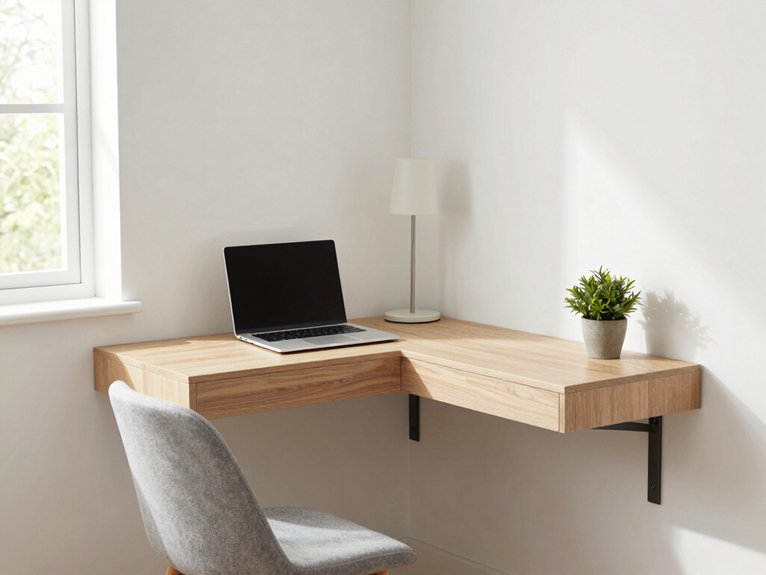
A floating-corner desk can turn that awkward little nook into my favorite kind of work zone: simple, tidy, and surprisingly roomy.
You’ll mount a solid board on floating brackets, then keep the floor open for a chair or storage bin—hello, less toe-stubbing.
I like 12–16 inches deep for laptop work, or 24 inches if you need a monitor and papers.
Set it at 28–30 inches high, hit studs or use proper anchors, and add cable management clips plus a mounted outlet strip.
My family loves the clean look, and honestly, so do I.
L-Shaped Corner Workspace
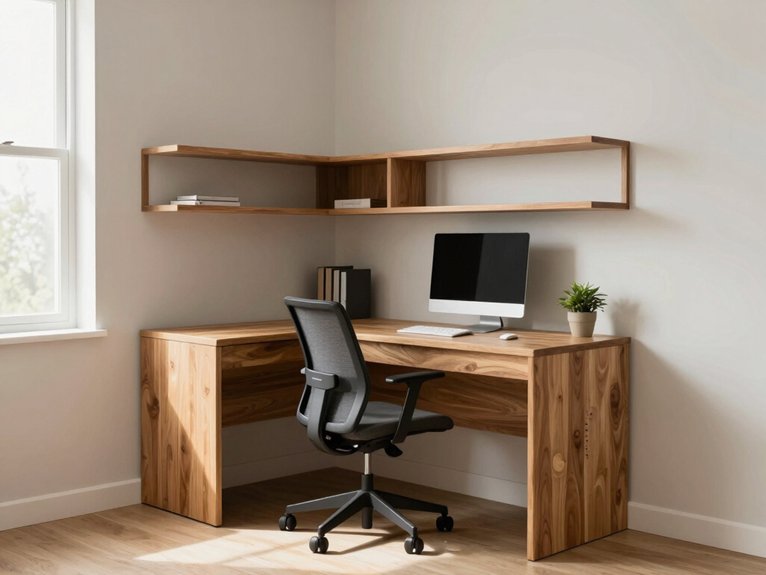
Two walls, one smart setup—an L-shaped corner workspace can give me almost twice the usable surface without taking over the room. I set mine at 29 inches high, and I leave 24 inches of knee depth, so I’m not doing the desk-dance every afternoon.
One wing holds dual monitors on a wall arm; the other gives me room for papers, snacks, and my stubborn notebook. I keep cable management neat with clips and a tray. My family likes that the floor stays open, and I love the pegboard above for pens, chargers, and the random stuff that always multiplies.
Minimal Corner Desk Setup
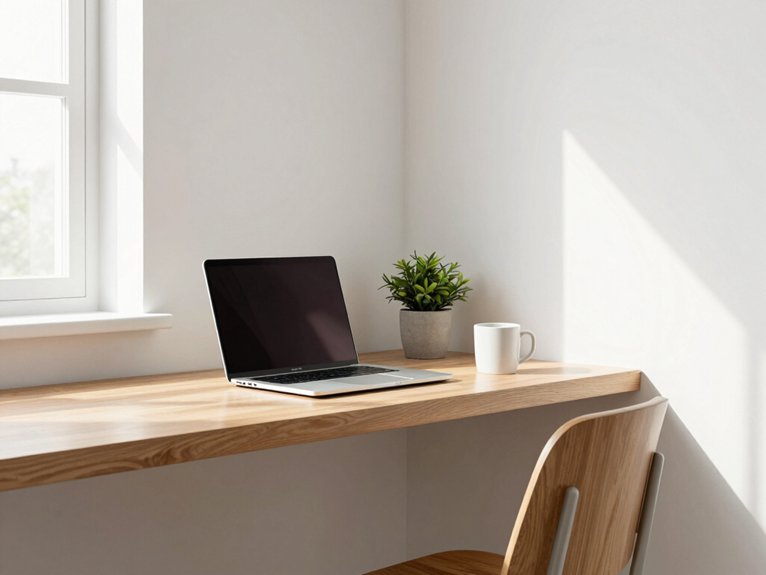
You can keep your corner office clean and uncluttered with a floating desk that’s 28–30 inches high and no deeper than 16 inches, so your laptop stays close and your shoulders don’t file a complaint.
I’ve found that a wall-mounted monitor arm or a shelf above the desk frees up space fast, and my family always notices when the chaos finally loses the battle. Add pegboard or floating shelves on both walls, and you’ll stack supplies up high while leaving the desk surface looking calm, simple, and ready for work.
Clean and uncluttered
When I want a small corner to feel calm instead of cramped, I start with a floating shelf desk that sits about 28–30 inches off the floor and 12–16 inches deep, because it keeps the floor open and still gives me a comfy typing height.
In my house, that setup brings visual calm and tactile minimalism, which feels like a sigh. I keep mine tidy with:
- a wall-mounted monitor arm
- a pegboard or paper trays above
- a narrow 12–15-inch rolling cart below
Then I hide cords with an under-shelf energy strip and adhesive channels. No cable spaghetti.
Wall-Mounted Foldable Desk
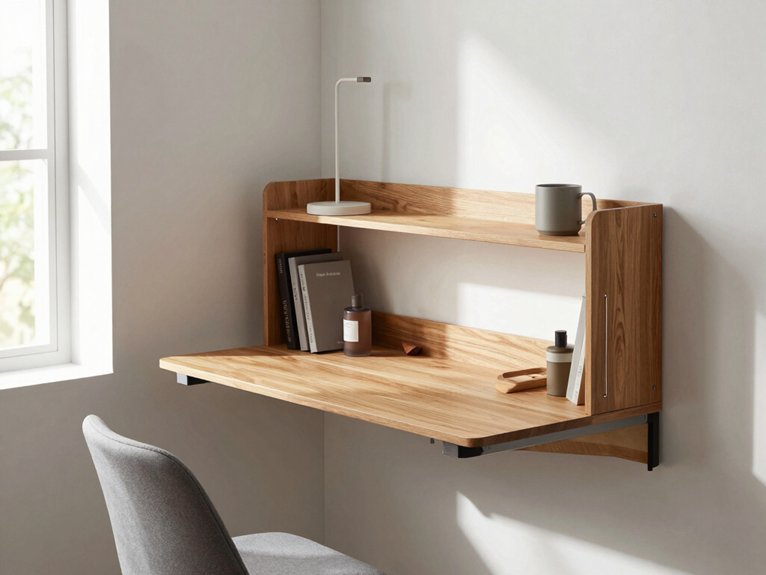
A wall-mounted fold-down desk is one of my favorite small-space fixes, because it gives you a real work area and then practically disappears when the workday’s over.
You’ll love how it folds flat to about 4 inches deep, so your hallway corner or guest room can breathe again.
I mount mine at 28 inches for comfy fold down ergonomics, and I always look for an incorporated cableway so cords don’t stage a rebellion.
Add a shelf for your monitor, anchor everything to studs, and use interior bins for pens, chargers, and the family scissors nobody admits taking.
Corner Shelf Desk Combo
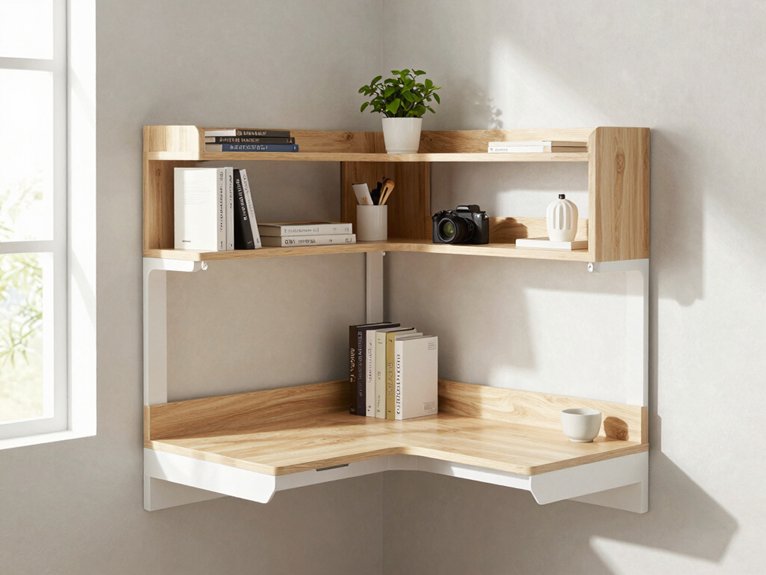
A corner shelf desk combo lets you claim that awkward spot and turn it into a real workspace without crowding the room, which feels a bit like finding bonus square footage in your own house.
You can mount a 12–16 inch deep floating shelf at desk height, add a second shelf above it for storage, and keep the whole setup neat enough that your coffee mug and laptop stop playing bumper cars.
I’ve seen this work best in family homes where every inch matters, because it gives you a sturdy, space-saving desk that doesn’t drag the room down with bulky legs.
Space-saving design
If you’re trying to squeeze a real work spot into a tiny corner, I’m a big fan of the corner shelf desk combo. You can mount it 28–30 inches high and 12–16 inches deep, so your knees stay happy and the floor stays open.
I like to:
- Bolt it into two studs for a solid hold.
- Add a 10–12 inch shelf above for a monitor.
- Use pegboard or floating cubes nearby for supplies.
A hidden surge strip keeps cords out of sight. It’s a neat fit for standing desks, corner benches, and your sanity.
Compact Desk with Drawers
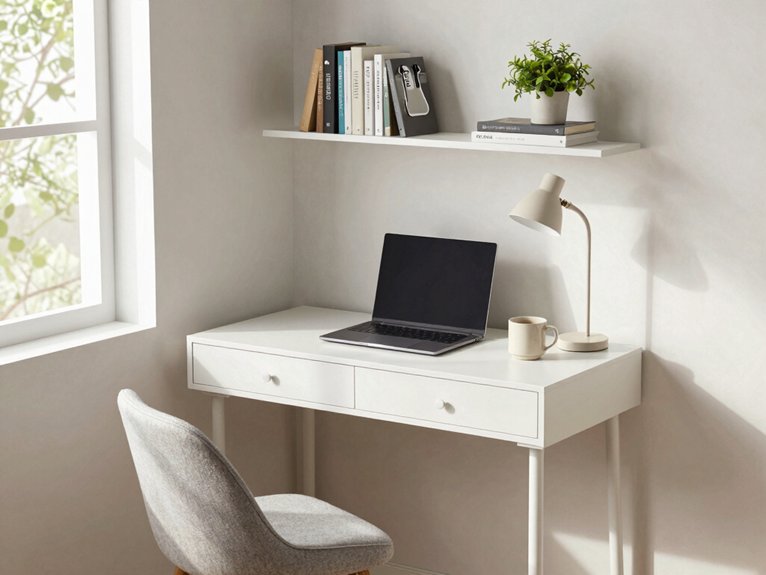
I’ve learned that a compact desk with drawers can make a tiny corner feel surprisingly grown-up, which is saying a lot when the room also has a laundry basket and maybe a stray sock or two.
You’ll want one no deeper than 16–20 inches, so your laptop and lamp fit without elbow wars. Pick a 28–30 inch height, smooth drawer rails, and at least one full-width drawer with a sturdy bottom plus a shallow top drawer. I like drawer liners, too. Add ergonomic seating, built-in cable slots, or a floating desk if floor space’s tight.
Window Corner Office Setup
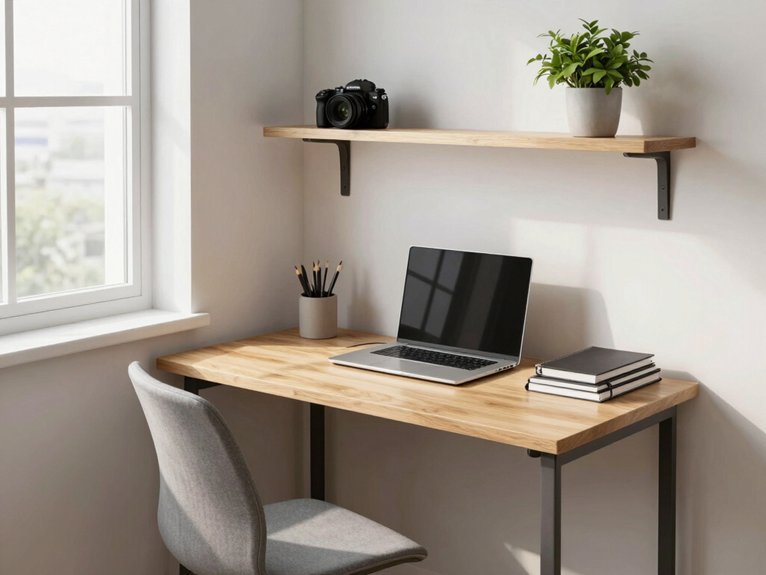
After a compact desk with drawers, I’d look hard at the window corner, because that little spot can feel bright, calm, and way less cramped than you’d expect.
I’d set a floating desk at 29 inches, then angle my monitor perpendicular to the glass for daylight harvesting and window glare control. In my house, that move stopped my screen from acting like a mirror.
I’d also use a slim arm, sheer curtains, and a light wall or mirror to bounce glow around the room.
- Keep the view.
- Keep the surface clear.
- Keep your eyes happy.
Vertical Storage Above Desk
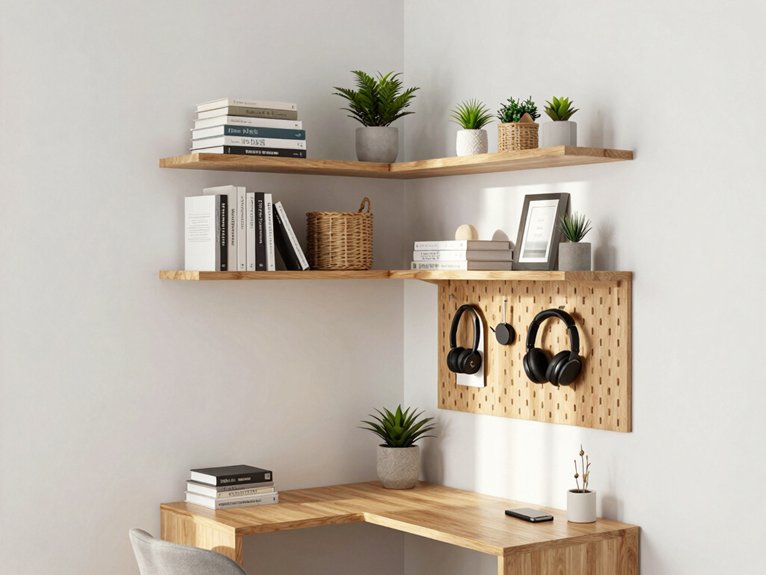
I’d use your full wall height above the desk, because that’s where a small corner starts working harder for you; floor-to-ceiling shelves can hold books, bins, and printer paper without swallowing your desk.
Put the everyday stuff low and the “I might need this someday” items up top, and if the shelves go higher than you can reach without a little stretch, a rolling ladder or a step stool keeps things safe and less wobbly than my uncle’s old DIY setup.
In my house, that vertical storage has saved more than one family command center from turning into a paper avalanche, and honestly, it feels pretty great when the wall does the heavy lifting.
Use wall height
When I’m trying to make a tiny office corner work hard, I go straight up the wall. I install floor to ceiling shelves, because that’s where the hidden real estate lives, and my family stops losing printer paper in drawers.
Try this:
- Keep daily supplies at eye level.
- Put heavy boxes low, for top shelf safety.
- Add puck lights every 12–18 inches, so the desk doesn’t feel like a cave.
I anchor tall units into wall studs, and if my ceiling’s high, I use a rolling ladder. It feels like joining a smart little club.
Cozy Corner with Soft Lighting
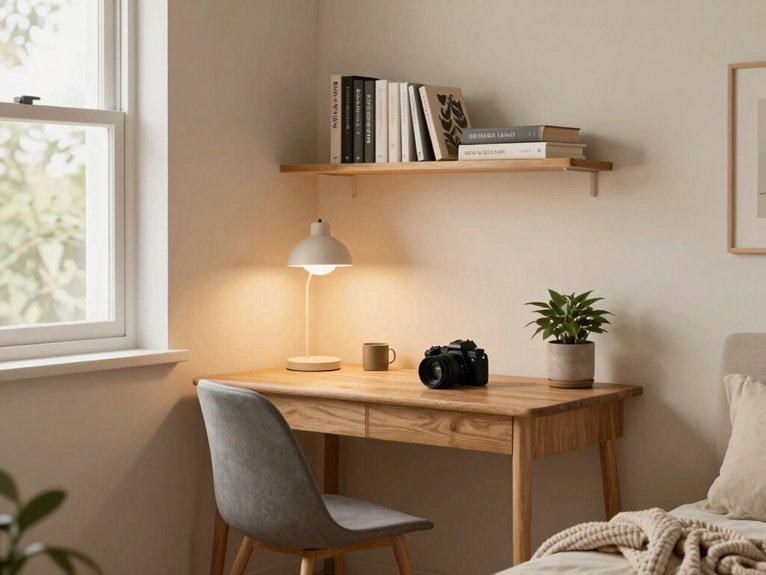
I’ve found that a cozy home office corner feels instantly better when the lighting does more than just “turn on.”
Start with a 12–16 inch deep floating shelf set at standard desk height, around 28–30 inches, and tuck an under-shelf LED strip or a couple battery-powered puck lights underneath it for warm, shadow-free task light that doesn’t eat up floor space.
I also add a small lamp with a 2700–3000K bulb and dimmer, because my eyes like mercy.
Layer soft lighting with an adjustable desk lamp and tiny string lights, then add hygge accents, like a mirror, pillow, or rug.
Neutral Aesthetic Workspace
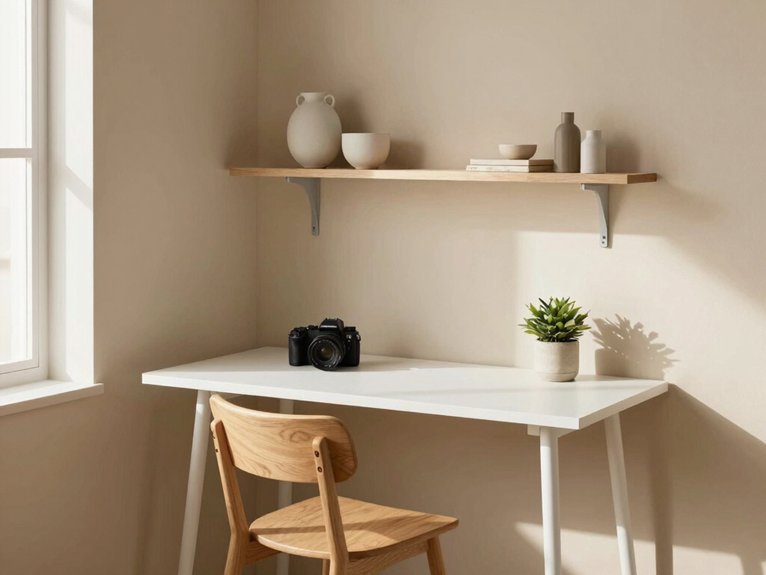
After all that soft lighting, I like to keep the rest of my small office corner calm and clean, because a neutral workspace can feel like a deep breath for your brain.
I use neutral colorways, like matte white and pale oak, so the corner blends in instead of shouting for attention.
- I mount a 12-inch floating shelf desk at 29 inches high.
- I add a wall monitor arm to clear space and keep my screen easy on my neck.
- I choose calming textures, like taupe shelves, a sand fold-down desk, and a tiny snake plant.
My family says it feels tidy, not boring.
Corner Desk with Pegboard
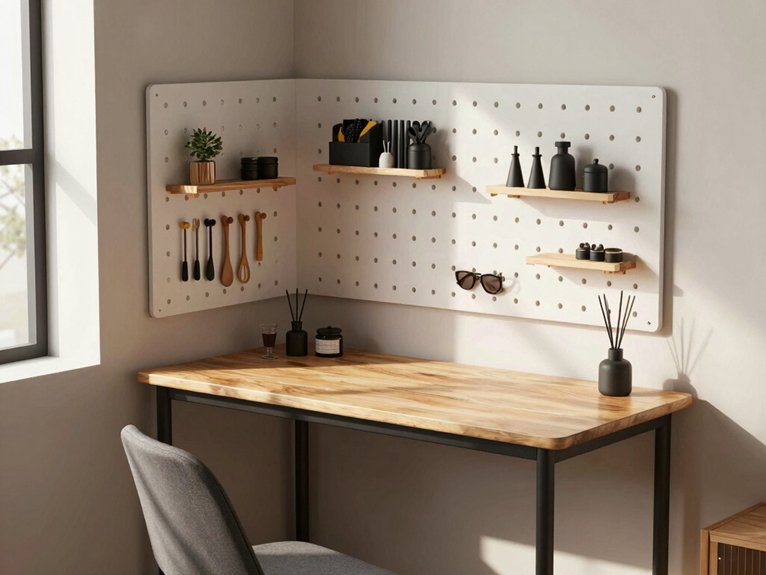
I’d set a corner desk right into the apex, then mount a pegboard across both walls so your tools, notes, and tiny shelves stay in easy reach instead of staging a desk takeover.
Use hooks, cups, and 1–2 inch shelves in clear zones for daily items, reference stuff, and hardware, and you’ll keep the top neat enough for actual work, not a chaos museum.
I like painting the pegboard a bright accent color and anchoring it to studs, because that makes the wall system look good and stay put—even when my family starts “borrowing” pens like they’re treasure.
Organized wall system
Corner command center, assembled right on the wall—that’s how I like to think about a corner desk with a pegboard. I’ve found it helps you feel like you belong in your own workspace.
Mount at least 24 x 48 inches on each wall, then add shelves, hooks, bins, and cups. For extra order, I like modular panels and magnetic strips for tiny metal bits.
- Paint it bright so your zones pop.
- Use under-shelf lighting for late-night tasks.
- Anchor it to studs, and keep heavy items off hooks.
My family even borrows mine now.
Hidden Corner Office Nook
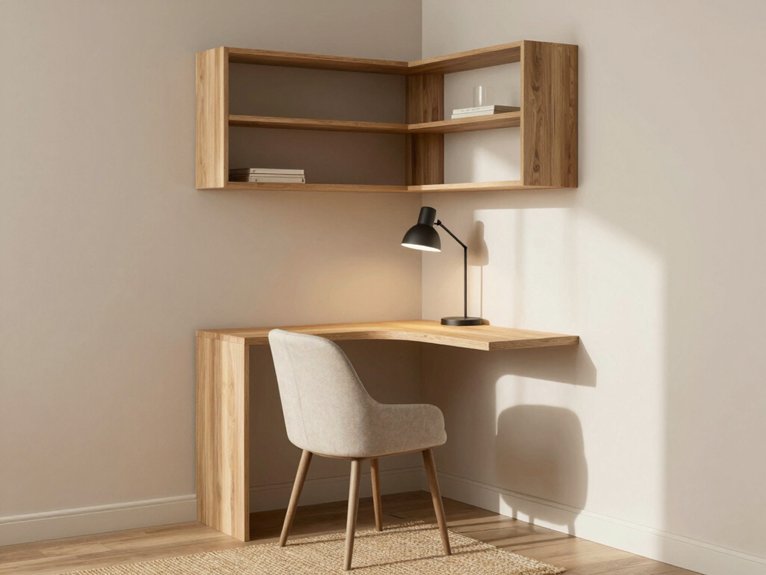
I love tucking a workspace out of sight, and a hidden corner office nook is one of my favorite small-space tricks.
You can carve out a hidden nook with compact privacy by turning a shallow closet into a desk zone, or by adding a wall-mounted fold-down desk that sits only 4 inches deep when closed.
I like mounting a shelf for a monitor, so setup stays quick.
Add battery puck lights and an under-desk outlet strip.
At day’s end, close the curtain or fold the desk, and your room goes back to being a room, not office chaos.
Frequently Asked Questions
How Do I Reduce Distractions in a Shared Home Office Corner?
You can reduce distractions by adding noise cancelling headphones and visual barriers like a screen or plant, then setting clear work hours. You’ll feel more focused, and your shared space can still feel welcoming.
What Chair Works Best for a Tiny Corner Workspace?
You’ll thrive with a compact ergonomic stool or a swivel compactchair, like a faithful village perch guarding your corner. It fits tight spaces, supports you well, and helps you feel welcomed, focused, and part of the room.
How Can I Improve Lighting Without Adding Floor Space?
Use layered lighting with a slim desk lamp, wall sconce, and LED strip to brighten your nook. Boost natural light amplification with sheer curtains and mirrors, so you’ll feel cozy, included, and focused.
Which Cables and Chargers Should I Hide First?
Hide your monitor cables and phone chargers first—they’re the spaghetti monsters stealing your calm. Tuck visible cords behind the desk, use clips or sleeves, and you’ll feel instantly more organized, connected, and at home.
How Do I Make a Small Office Corner Feel More Private?
You can make it feel private by adding a hanging curtain or a portable screen, then facing your desk away from traffic. You’ll create a cozy, tucked-in nook that feels like yours.