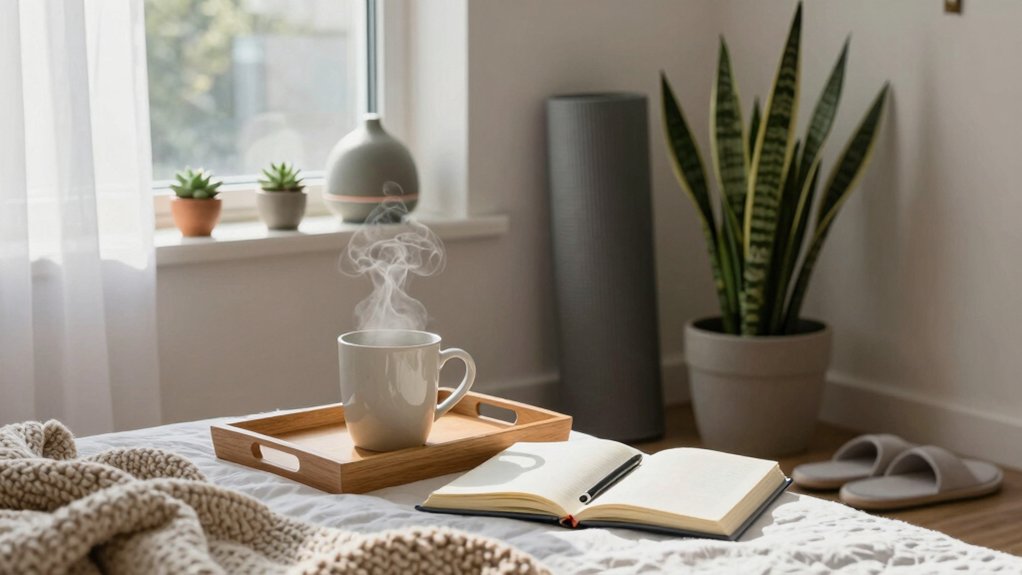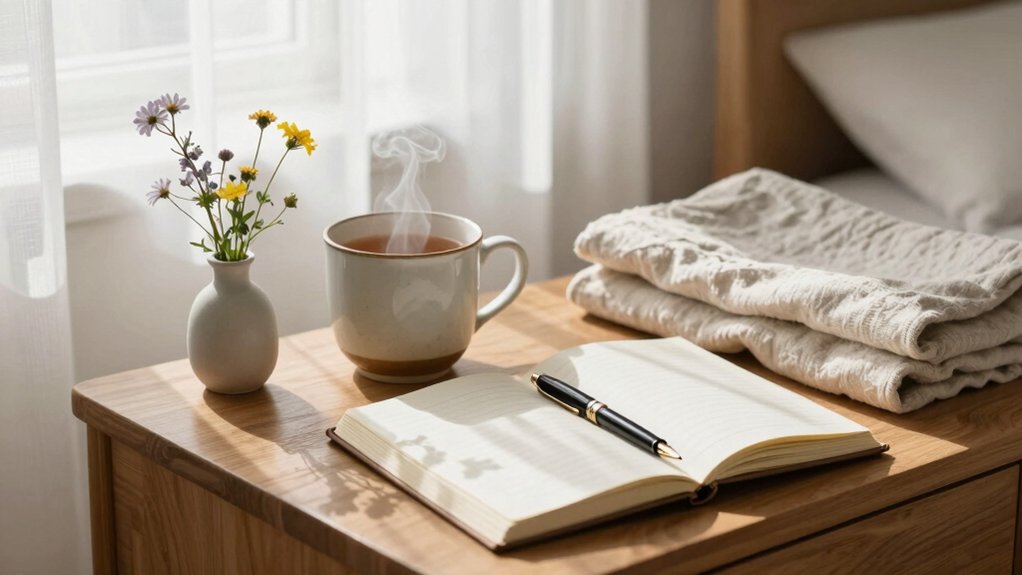
You’re not alone—15–30% of people share your heightened sensitivity! Instead of viewing it as a flaw, reframe it as noticing subtleties others miss. Start by protecting your energy: craft calm mornings with soft light, schedule daily downtime blocks, and set boundaries without guilt. Build a comfort kit with noise-canceling headphones and grounding tools. Create space for creative outlets to process intensity. When overwhelm persists, seek an HSP-aware therapist who gets you. Stick around to uncover exactly how to make each strategy work in your life!
Key Takeaways
- Reframe sensitivity as a strength—15–30% of people share deep processing, which enhances creativity, empathy, and problem-solving abilities.
- Establish morning routines with 20–30 minutes of calm, low-stimulation activities to ease gently into each day.
- Schedule daily 30–60 minute recharge periods and one zero-plan weekly day to protect and restore energy consistently.
- Create sensory-friendly environments using dim lighting, noise-canceling tools, and soft furnishings to reduce overwhelming stimulation.
- Build a portable comfort kit with 5–7 soothing items like earplugs, blankets, and stress balls for grounding support.
Understand Your Sensitivity as a Strength

If you’ve ever felt like you’re picking up on things others completely miss—the slight shift in someone’s tone, the overwhelming buzz of fluorescent lights, or the emotional weight of a room—you’re not alone, and there’s actually solid science behind it!
About 15–30% of people share your trait, meaning your deep processing isn’t a flaw—it’s a feature! Through strength mapping, you’ll recognize how your sensitivity fuels creativity and empathy.
A trait reframe shifts “I’m too much” into “I notice subtleties others miss.” That shift? It’s transformative!
Your heightened awareness makes you an exceptional friend, colleague, and problem-solver. Embrace it!
Create Calm Morning Routines

You’ve got to give your sensitive brain a fighting chance in the morning, and that means starting with a genuinely gentle awakening instead of jumping straight into chaos!
Rather than rolling out of bed into a whirlwind of notifications and demanding decisions, you can carve out 20–30 minutes of calm, predictable time—think quiet tea, soft stretching, or a good book—that lets your deep-processing mind ease into the day.
This simple shift sets the tone for everything that follows, helping you show up as your best self instead of feeling frazzled before breakfast is even done!
Gentle start to the day
Because mornings set the tone for everything that follows, it’s absolutely worth protecting those first precious minutes from chaos and overstimulation!
Start with 10–15 minutes of low-stimulation activities like gentle stretching or sipping coffee by a window—slow shifts help your sensitive nervous system ease into the day without overwhelming it.
Make sensory adjustments by using soft, natural light instead of harsh overhead lighting in your bedroom. These small changes genuinely matter!
Add a 5–10 minute buffer between waking and commitments: turn off notifications, breathe deeply, and journal one sentence. You’ll preserve mental energy and prevent stress from cascading throughout your day!
Limit Overstimulating Environments

Since your brain processes sensory information way more deeply than most people’s do, crowded and chaotic spaces can drain your energy faster than you’d expect!
When choosing venues, prioritize your sensory friendly lighting preferences—dim, warm environments beat harsh fluorescents every time. Skip packed malls and noisy restaurants when you can; instead, seek out quieter alternatives like nature trails or uncrowded coffee shops during off-peak hours.
Consider wearing noise-canceling headphones or sunglasses as your energy-protecting toolkit. You’re not being difficult; you’re being smart! By deliberately selecting calmer settings that honor your nervous system, you’ll preserve mental energy for activities you actually enjoy.
Schedule Alone Time Regularly

Just like your phone needs to charge after heavy use, your sensitive nervous system needs regular downtime to function at its best!
Predictable scheduling transforms alone time from a luxury into a necessity for your wellbeing.
- Block 20–60 minute recharge sessions daily on your calendar—treat them like unmissable appointments!
- Aim for 1–3 longer weekly periods (45–60 minutes) in nature or with a good book for deeper sensory recharge.
- Schedule alone time around shifts—before or after social events—so you decompress predictably and prevent overstimulation buildup.
Use a scripted response like “I’ll have to pass” to protect your sacred time. You’re not being rude; you’re honoring your needs!
Set Clear Personal Boundaries

You’ve got to practice saying no kindly—and yes, you can absolutely do both at the same time!
Instead of launching into a lengthy explanation or making excuses, try simply saying, “That doesn’t work for me right now,” and then stop talking (seriously, silence is your friend here).
The beauty is that a kind but firm no protects your energy without damaging your relationships, so you’re not being rude; you’re being real about what you can actually handle.
Practice saying no kindly
Learning to set boundaries can genuinely transform how you experience your day, and here’s the thing—saying no doesn’t have to come wrapped in apologies or lengthy explanations!
A polite refusal protects your emotional energy while keeping relationships intact.
Try these transformative strategies:
- Use a scripted boundary like “I can’t take that on right now; thank you for understanding”
- Buy time by saying “Let me check my schedule and get back to you”
- Offer concrete alternatives such as “I can help once a month instead”
Reduce Background Noise at Home
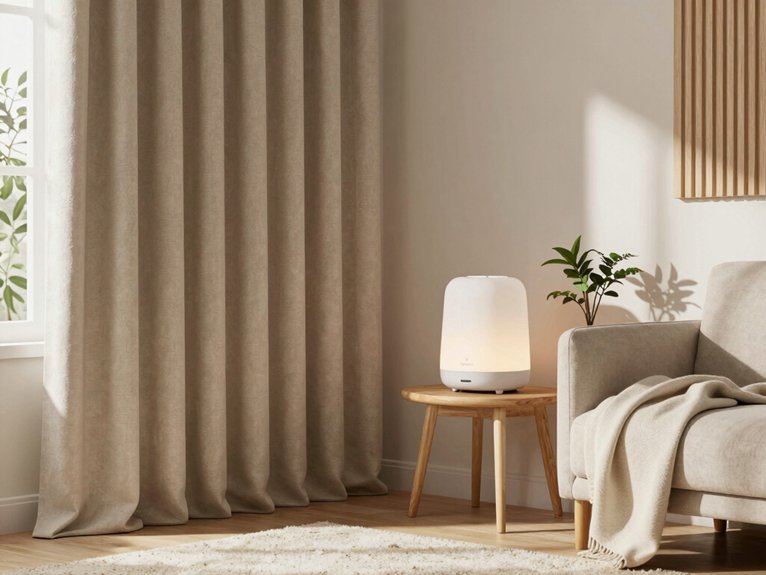
For highly sensitive people, background noise isn’t just annoying—it’s genuinely draining! You can reclaim your peace by targeting household noise sources like HVAC systems and appliances using a smartphone sound-level app. Add soft furnishings—rugs, heavy curtains, upholstered furniture—to absorb sound naturally. Consider soundproofing methods and acoustic panels placement in your spaces for maximum noise reduction. Invest in quality noise-canceling headphones or earplugs, which reduce ambient noise by 15–30 dB and lower cortisol levels.
Create a designated quiet retreat with low lighting, greenery, and a white-noise machine around 40–50 dB. Schedule noisy tasks predictably, buffering 30–60 minutes before focused activities!
Take Social Media Breaks

Unlike the quiet retreat you’ve created at home, social media feeds you a constant stream of notifications, hot takes, and curated highlight reels—and it’s absolutely exhausting for your sensitive nervous system!
A proper digital detox isn’t about quitting entirely; it’s about reclaiming your peace. Here’s how:
- Schedule weekly social media sabbaths (one full day or 48-hour weekend breaks) to prevent sensory overload
- Cap daily usage with app timers—start with 30–60 minutes and adjust based on your overwhelm threshold
- Master notification management by turning off nonessential alerts and setting “do not disturb” windows
Batch your checking instead of continuous scrolling.
Unfollow accounts triggering negative emotions.
You’ll notice your mood stabilizing and energy returning!
Prepare for Social Events in Advance

You’ll want to schedule some serious downtime after the event wraps up—think of it as your brain’s cool-down period after hitting the gym!
Since social situations drain your energy faster than they do for non-HSPs, giving yourself at least 30 to 60 minutes of quiet time helps you process what happened and return to normal without feeling completely wiped out.
That post-event recovery window isn’t lazy or antisocial; it’s actually the smart move that lets you enjoy socializing without paying for it with days of exhaustion!
Plan recovery time after
Social events can drain your energy fast, so here’s the thing—building in recovery time isn’t lazy or antisocial; it’s absolutely crucial for highly sensitive people!
You deserve to bounce back feeling restored, not wiped out. Here’s how to protect your peace:
- Schedule quiet time immediately after—block 24–48 hours for low-stimulus activities like reading or nature walks
- Create a shift ritual—change clothes, turn off notifications, take grounding breaths to signal your nervous system that social mode’s over
- Do a sensory check-in through post-event journaling—write down impressions and emotions before they pile up inside you
Your recovery matters!
Use Deep Breathing Techniques
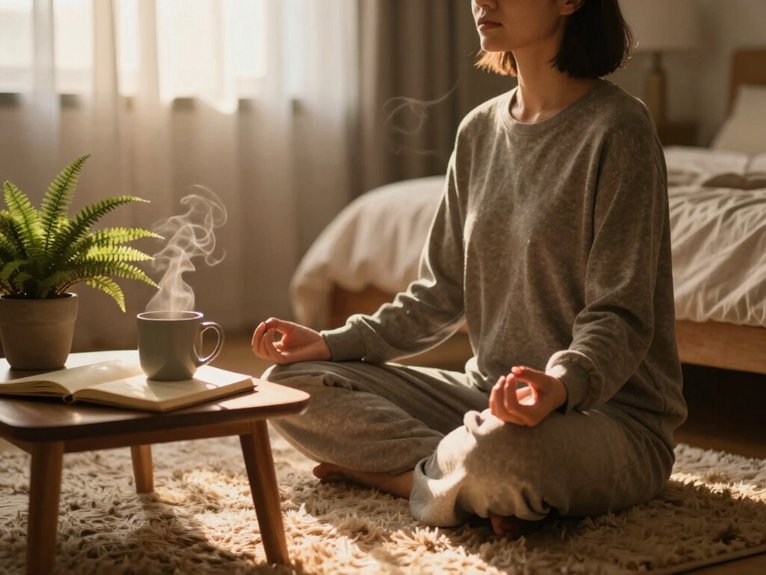
Calming your nervous system through intentional breathing can be a game-changer for highly sensitive people!
Try paced breathing at 5.5–6 breaths per minute for 10–20 minutes to lower your heart rate and cortisol levels.
When you’re feeling overwhelmed socially, take three slow belly breaths to interrupt rumination and reclaim your space.
Pairing breath work with grounding cues—like naming three things you sense—helps you distinguish your emotions from absorbed feelings.
Keep a simple cue card handy and practice twice daily for two weeks.
Soon, you’ll have automatic regulation ready whenever overstimulation hits!
Spend Time in Nature

Beyond your phone and four walls, nature’s got some serious healing potency for highly sensitive people! You’ll find incredible restoration through seasonal immersion and wildlife observation in natural spaces. Here’s what works:
- Spend 45–60 minutes in quiet spots using sensory-focused practices—examine shapes, distinguish individual sounds, slowly taste snacks
- Walk barefoot on grass or soil for grounding, draining excess tension into the earth
- Take regular 10–20 minute nature breaks between tasks, preventing overstimulation buildup
Nature-based mindfulness trains present-moment awareness while lowering rumination. Pair your time outside with deep breathing visualizations or calming scents like juniper.
You’re not just relaxing—you’re actively recharging your sensitive system!
Choose Supportive Relationships

While you’re recharging in nature, don’t forget that the people you spend time with matter just as much! You’ll thrive when you surround yourself with folks who genuinely get your need for downtime. Seek relationships built on mutual curiosity and shared rituals—people who celebrate what makes you unique rather than drain your energy. Communicate boundaries plainly (“I need thirty minutes alone after work”), and dodge chronic complainers who exhaust you. Look for partners expressing care in ways that resonate with you!
| Relationship Type | Energy Impact | Action |
|---|---|---|
| Supportive friends | Energizing | Nurture them |
| Energy drainers | Exhausting | Set limits |
| HSP-aware confidants | Validating | Prioritize them |
Journal Emotional Experiences

You’ve got a potent tool right at your fingertips—journaling—and it’s one of the best ways to process your feelings safely before they pile up and overwhelm you!
By taking just a few minutes after stressful moments to write down what you felt, what triggered it, and where you noticed it in your body, you’re essentially giving your nervous system permission to release all that absorbed energy instead of letting it fester.
Think of your journal as a judgment-free zone where you can untangle your emotions and figure out exactly what you need, so you’re not caught off guard by big feelings later!
Process feelings safely
Journaling your emotions might sound like something from a diary you kept in middle school, but here’s the thing—it’s actually one of the most potent tools highly sensitive people have for understanding what’s going on inside!
You’ll benefit from:
- Micro processing sessions (15–30 minutes daily) to safely unload feelings before they build up
- Body mapped tracking that pinpoints where stress lives physically—your chest, shoulders, gut
- Specific prompts asking what happened, what you felt, and what thought emerged
This transforms vague overwhelm into clear patterns you can actually work with!
Improve Sleep Hygiene
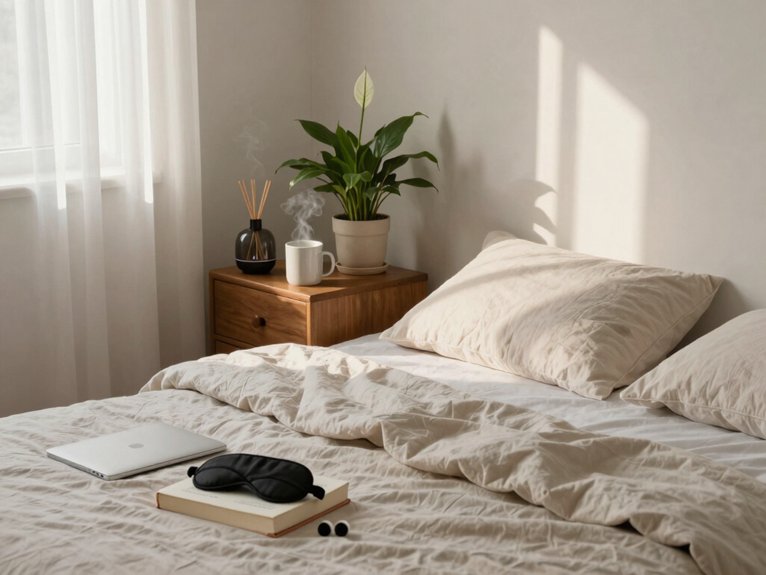
Getting solid sleep isn’t just about closing your eyes—it’s about creating the right conditions for your sensitive nervous system to truly rest! You’ll thrive when you establish consistent routines and optimize your environment.
| Sleep Strategy | What to Do | Why It Matters |
|---|---|---|
| Bedtime Lighting | Dim lights 60–90 minutes before bed | Signals your body it’s time to wind down |
| Temperature Control | Keep your room 60–67°F | Cool temps help HSPs sleep deeply |
| Pre-Sleep Ritual | Try reading or stretching | Calms your deep-processing mind |
Build a calming bedtime routine with journaling to offload thoughts. Schedule transitional breaks after stimulating activities. Your rest matters—you’ve got this!
Avoid Overloading Your Schedule

Because your nervous system processes everything more deeply than others’, saying yes to every invitation or obligation can leave you feeling completely drained before you even realize what’s happened.
You’ve got this! Protect your energy by:
- Time blocking two 30–60 minute downtime periods daily plus one zero-plan day weekly to recharge
- Limiting sensory limits to one major social event per day, keeping stimulation manageable
- Saying no strategically—skip explanations or ask “Let me check my schedule and get back to you”
Your capacity matters! Assess what you can handle, eliminate non-aligned tasks, and watch your energy transform!
Practice Grounding Exercises

Anchoring yourself to the present moment through grounding exercises can be a game-changer for highly sensitive people!
Try barefoot grounding by walking on grass or soil for 10–20 minutes to calm your nervous system and reconnect with your body.
You’ll also love the quick 3–2–1 technique: name 3 things you see, 2 you hear, and 1 you feel.
For grounding visualization, practice breathing white light in for 4 counts, holding for 2, then exhaling tension into the earth for 6 counts.
Repeat this 5–10 times daily!
These practices help you process emotions without getting completely overwhelmed.
Communicate Your Needs Clearly

You’ve got to be straightforward about what you need—and that’s totally okay!
Instead of dropping hints and hoping people catch on, just tell them directly what helps you recharge, whether that’s quiet time, softer lighting, or fewer social interactions.
Being honest but respectful means you’re not demanding the world change for you; you’re simply explaining what works for your sensitive system so others can actually understand and support you!
Honest but respectful approach
When you’re highly sensitive, staying silent about your needs won’t make them disappear—it’ll just leave you exhausted and resentful!
The secret’s using assertive empathy: express yourself honestly while respecting others’ feelings. Here’s how:
- Use boundary scripting to rehearse what you’ll say aloud—it builds confidence!
- Be specific and factual instead of vague; say “I need 30 minutes alone after work” rather than “I’m tired.”
- Keep it brief—a simple “No” works; you don’t need lengthy explanations.
You’re not being difficult; you’re being real. When you communicate unmistakably and respectfully, people understand what you actually need, and you finally get the support you deserve!
Keep a Comfort Kit Nearby

A comfort kit‘s your secret weapon when sensory overload hits hard! Pack five to seven portable comfort necessities—noise-canceling earplugs, a soft blanket, a textured stress ball, and scent layering items like a calming inhaler.
Store compact versions in your bag, at your desk, and at home so you’re never caught without support! Test items weekly, rating what actually soothes you on a simple scale.
Include a grounding tool—maybe a five-sense prompt card or breathing exercise cheat sheet—to regulate your nervous system fast. Monthly, replenish consumables and sanitize items, keeping your kit reliable and inviting when you need it most!
Focus on Creative Outlets

Your comfort kit’s got you covered when sensory chaos strikes, but here’s the thing—you’ve also got potent tools living inside you, waiting to transform those intense feelings into something beautiful!
Creative outlets aren’t luxuries; they’re lifelines for HSPs like you.
Schedule 20–30 minutes daily for creative pauses—journaling, painting, or playing music—to process overwhelm naturally.
Try sensory journaling with prompts that dig into what you’re feeling, turning rumination into expression.
Here’s what works:
- Low-stimulation activities (watercolor, solo guitar, writing)
- Emotion-regulation journaling for 10–15 minutes
- Mood tracking to spot your best restorative practice
You’ll convert intensity into manageable art!
Seek Professional Guidance If Needed

If you’re finding that your sensitivity is really getting in the way of work, relationships, or sleep, it’s totally worth chatting with a therapist who gets HSP—they can teach you actual tools that make a real difference!
A good clinician will help you figure out how to manage overwhelm, work through anxiety, and build skills that fit how your brain naturally processes stuff more deeply than others.
You don’t have to white-knuckle through this alone, and getting professional support can be the game-changer that helps you actually enjoy being sensitive instead of just struggling with it!
Therapy can offer helpful tools
Consider therapy as a game-changer for highly sensitive people who find themselves overwhelmed more often than not. A skilled therapist trained in HSP-aware approaches can teach you concrete, life-changing tools that actually work!
- Trauma-informed techniques help you process overwhelming experiences safely and build resilience
- Paced scheduling prevents burnout by spacing activities strategically throughout your week
- CBT-based skills like boundary-setting and reframing negative thoughts reduce emotional spirals
You’ll learn grounding practices, mindfulness strategies, and ways to identify core beliefs holding you back. Working with someone who understands your sensitivity means you’re not struggling alone—you’re building genuine, lasting change that helps you thrive!
Frequently Asked Questions
How to Survive and Thrive as a Highly Sensitive Person?
You’ll thrive by setting mindful boundaries that protect your peace and practicing paced stimulation through regular breaks. You’re not alone—many HSPs find belonging by honoring their needs, saying no without guilt, and creating calm spaces where you genuinely belong.
How Can HSP Protect Themselves?
You’ll protect yourself by setting firm boundaries without guilt and creating low-stimulation spaces that feel safe. You’ll manage sensory input through breaks, grounding practices, and saying no unapologetically. You’re not alone—many HSPs thrive by honoring their needs first.
How Can an Empath Protect Their Energy?
You’ll protect your empathic energy by mastering grounding techniques like nature walks and boundary scripting—practicing phrases that honor your needs. You’re not alone; many empaths thrive when they prioritize self-care rituals and say “no” authentically, creating space where you truly belong.