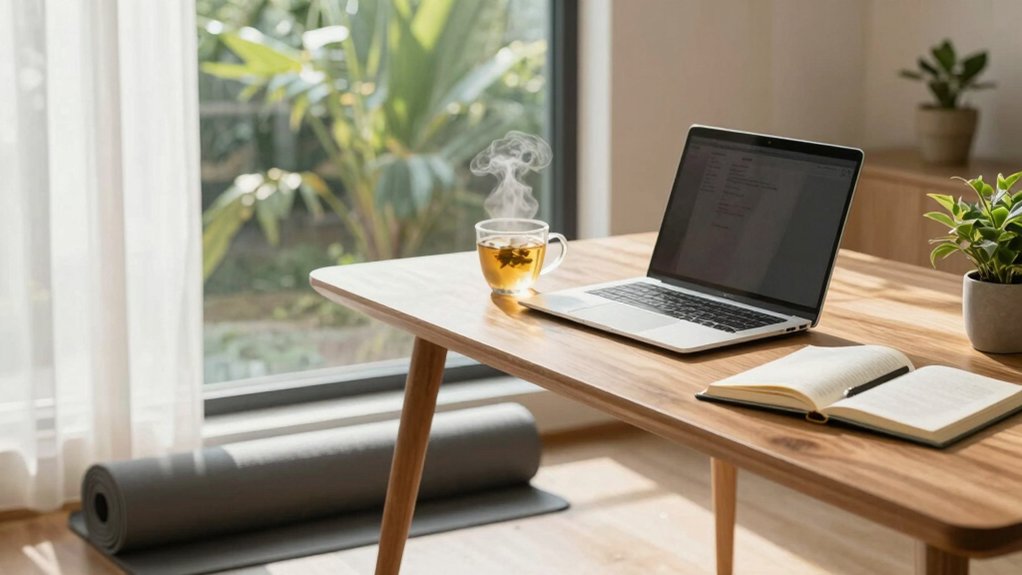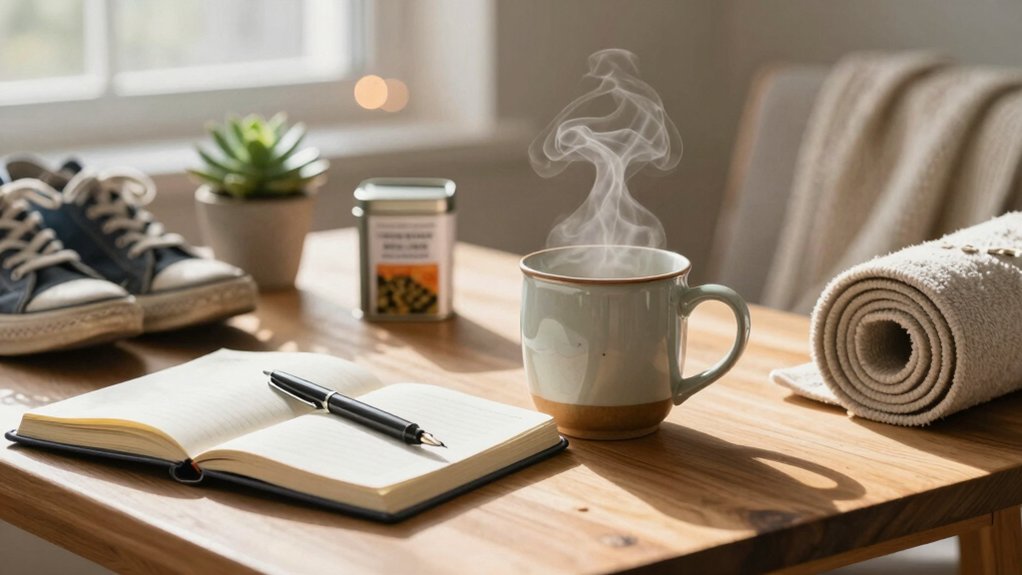
You can slow down and savor life by starting with a warm stretch and tea, journaling one line of gratitude, and planning on paper for a calmer day—tiny rituals make mornings feel like a celebration! Cook slowly with seasonal produce, light a candle, and enjoy textures like wood, linen, and clay to create a cozy home. Dim lights at night, take gentle walks, and favor presence over productivity; stick with these simple shifts and you’ll find more room for meaning as you keep exploring.
Key Takeaways
- Start unrushed mornings with gentle stretches, tea, and a one-sentence gratitude or intention to set a calm tone.
- Use analog planning and daily rituals—handwritten lists, timed meals, and short breaks—to anchor focus and presence.
- Design neutral, decluttered spaces with natural textures (wood, linen, clay) to foster warmth and reduce visual noise.
- Turn meal prep into mindful ritual—slow chopping, sensory savoring, seasonal ingredients, and small table rituals.
- Prioritize quiet evenings, nature walks, and low-stimulation hobbies to deepen presence and strengthen community connections.
Unrushed Mornings
You can start your day slowly, stretching and sipping tea while sunlight edges into the room — it feels like a tiny celebration! Skip the blaring alarm and wake more naturally to enjoy extra minutes of cozy stillness, breathing deeply and noticing small details that usually get missed. Gentle beginnings like these spark creativity, calm your mind, and make the whole day feel a bit brighter — who knew pausing could be this fun?
Gentle daily beginnings
When mornings are unrushed, they can feel like a tiny celebration before the day begins—yes, really! You’ll welcome a mindful awakening by letting yourself rise naturally, avoiding the jolt of an alarm, and noticing the soft light, the hush, the breath that steadies you. Make simple, intentional rituals: a few deep breaths, gentle stretches to wake your body, and a hot cup savored without screens. Try journaling one sentence of gratitude or setting a small intention, and feel how purpose settles in like a warm blanket. This gentle pace lowers anxiety, boosts clarity, and helps you belong to your own day. Invite these tiny celebrations often — they change mornings into moments you actually look forward to!
Analog Planning
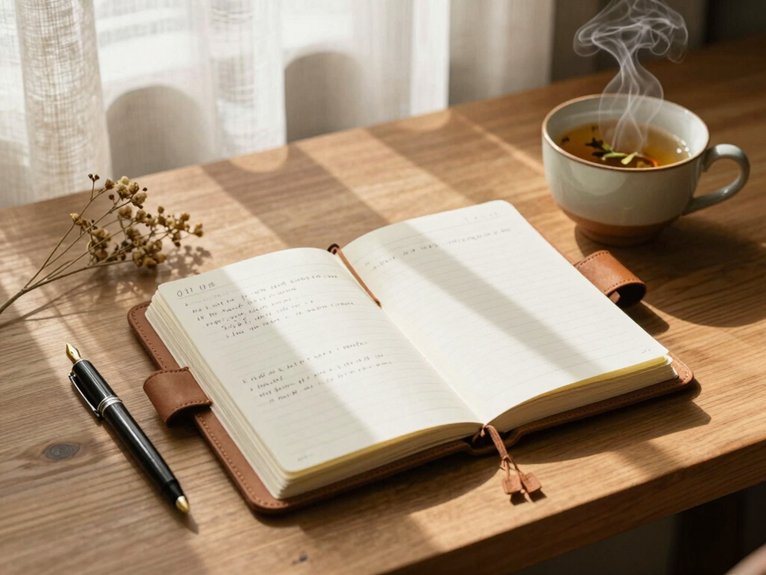
Put down your phone and pick up a notebook — you’ll be surprised how much calmer your day feels when paper takes the lead! Writing things by hand, from appointments to tiny triumphs, helps you remember more, feel more present, and actually enjoy crossing tasks off the page. Give analog planning a try and watch your slow living routine get a little more intentional, tactile, and oddly satisfying!
Paper over screens
Even though screens are everywhere, swapping a buzzing phone for a crisp sheet of paper can feel like a tiny, glorious rebellion — and you’ll love how grounding it is! You’ll notice writing benefits immediately: the paper’s texture slows you down, mindful journaling helps untangle your thoughts, and you reconnect with what matters. Handwriting boosts memory, sparks creativity, and cuts the chaos of endless notifications, so you feel calmer and more in control. You belong to a gentle community of people who choose presence over noise, and this small ritual becomes a shared language. Try it and smile, because simple tools bring big joy!
- Paper makes time feel kinder and more spacious.
- Handwritten lists reduce overwhelm.
- Gratitude notes lift your mood.
- Doodles spark ideas.
- Planners keep you grounded.
Natural Home Textures
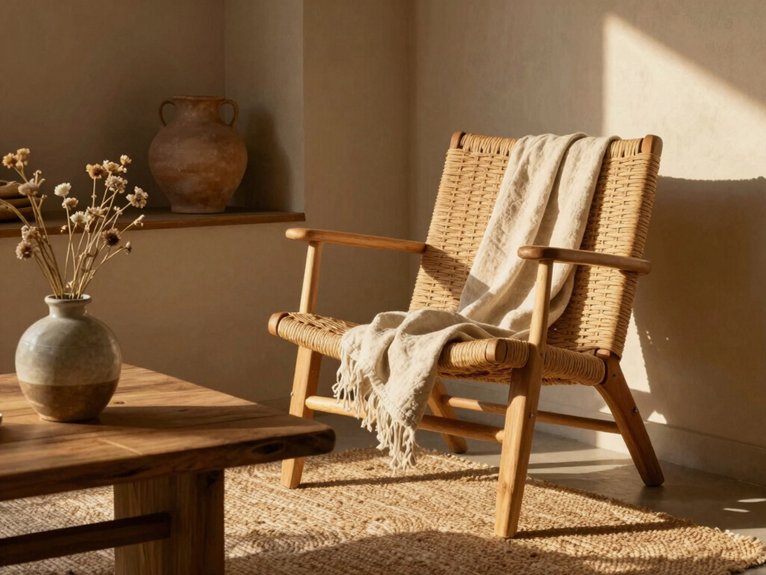
Bring on the cozy vibes with warm wood grain under your hands, breezy linen curtains swaying in the window, and chunky clay pots dotted around the room — it’s an easy way to make your space feel lived-in and loving. You’ll enjoy the mix of smooth pottery, rough-hewn timber, and soft linen throws, which together create a layered, touchable home that whispers “slow down.” Try swapping one synthetic item for a wooden bowl or a linen napkin and watch how instantly calmer and more intentional the room feels — no fuss, just good taste and gentle living!
Wood, linen, clay elements
Texture is everything when you’re shaping a slow-living space—wood grain, linen weave, and clay’s soft matte will make your home feel like a gentle hug! You’ll love how wooden accents warm rooms and soften noise, linen textures cool and breathe, and clay decor brings honest, handcrafted charm. Natural finishes tie it all together, reminding you of seasons and roots, and making the space feel like it belongs to everyone who lives in it. Small choices add up, so pick durable linen curtains, a reclaimed wood table, and simple ceramic bowls to hold daily rituals — they’ll ground you and invite friends in with ease and warmth, like a cozy, well-loved sweater.
- Wood warms your room and your heart
- Linen breathes, absorbs, and relaxes
- Clay shows handcrafted charm
- Natural finishes feel timeless
- Sustainable choices build belonging
Mindful Meal Preparation
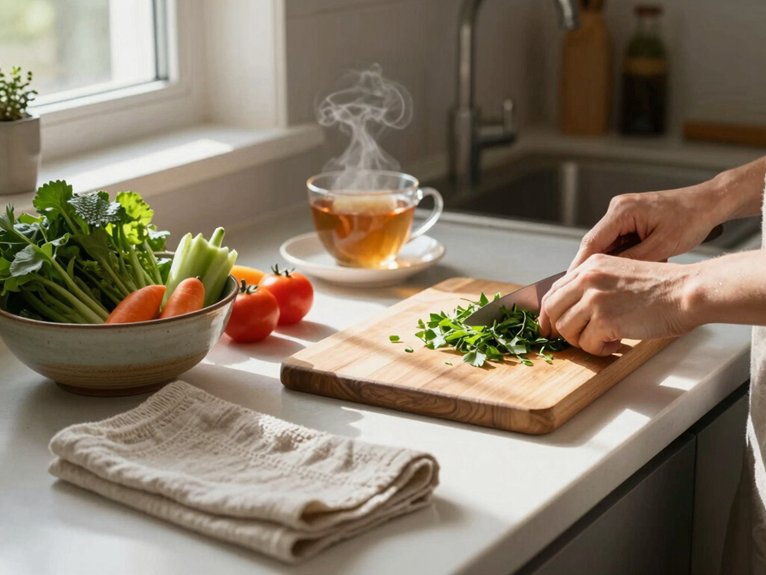
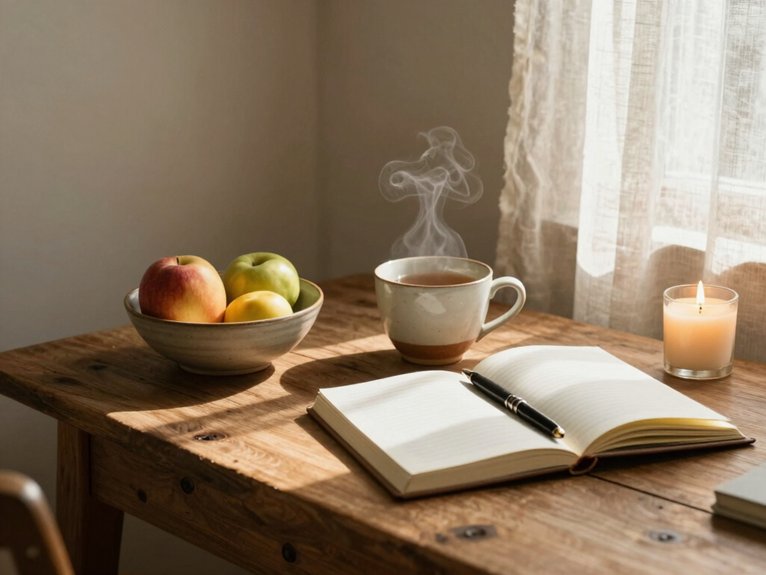
Bring a little ritual to your cooking—light a candle, play a favorite playlist, or line up wooden spoons and colorful bowls so everything feels intentional and cheerful! You’ll notice that chopping vegetables slowly, tasting as you go, and pausing to admire the colors turns a routine into a small celebration, and it really helps you eat more mindfully. Try swapping one rushed meal for a simple ritual this week and see how calm and pleased you feel—bonus: it makes the food taste better too!
Simple cooking rituals
When you slow down and really pay attention while you cook, even the simplest tasks feel a little magical—chopping a bright orange carrot becomes rhythmic, smelling a warm pinch of cumin makes you smile, and tasting a roasted tomato feels like uncovering a tiny sun! You can turn meal prep into a calm, shared ritual that builds belonging, using mindful chopping and sensory cooking to anchor your attention. Seasonal produce, homemade sauces, and weekly prep make food feel like care, not chores. You’ll notice textures, colors, and smells more, and stress gently slips away as you focus on the present.
- Slice slowly, feel the knife, breathe.
- Season with curiosity, not rush.
- Cook with friends or family.
- Use local, seasonal ingredients.
- Prep once, savor all week.
Quiet Evenings
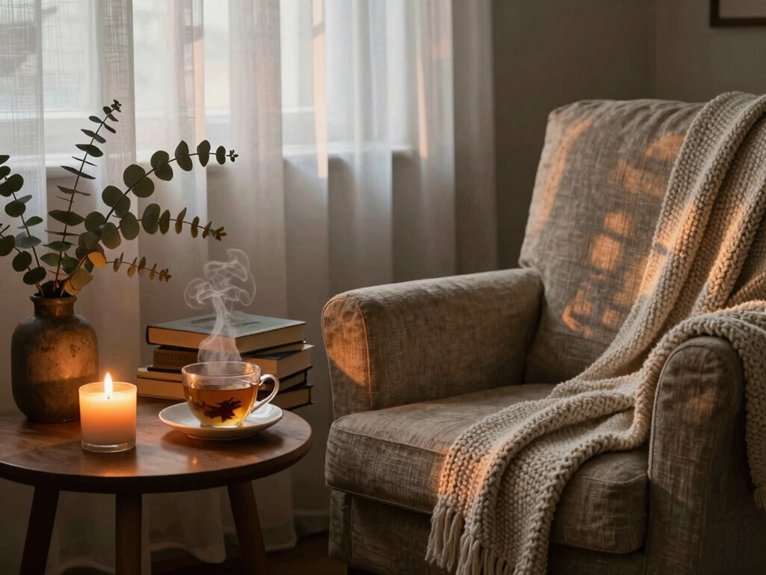
You deserve a low-stimulation night now and then, where you dim the lights, put your phone away, and let the hush of the evening calm your brain — it’s like pressing a cozy reset button! Try reading a favorite book with a soft lamp, sipping warm herbal tea, or sharing a quiet chat with someone you love, and notice how the noise in your head starts to fade. Ah, the joy of simple evenings — they help you sleep better, think clearer, and feel more connected, and who doesn’t want that?
Low stimulation nights
Picture a soft-lit evening where the world seems to sigh and you finally get to slow down—ah, bliss! You choose low stimulation nights to unwind, practicing mindful breathing and simple, relaxing rituals that feel like a warm hug. You dim the lights to amber, play gentle nature sounds, and let pages or a journal pull you in, as screens rest elsewhere. You belong here, sharing quiet with yourself and loved ones, and it feels like home.
- Turn off devices an hour before bed, breathe slowly, and notice the calm.
- Read a favorite book by lamp light, savoring each sentence.
- Journal one small gratitude, then close the pen.
- Play soft rain or forest sounds, sink into stillness.
- Try a short stretch, then sleep.
Decluttered Visual Spaces
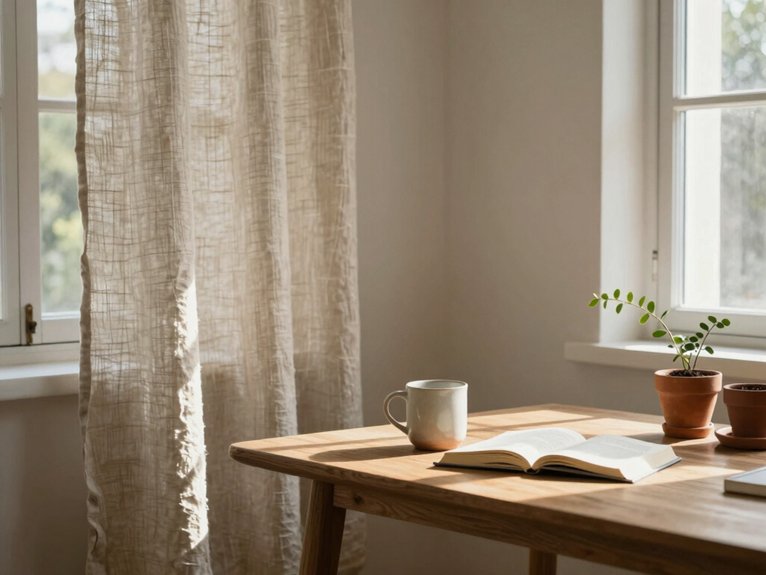
You’ll feel the calm settle in when surfaces are clear and every thing has a home, like a soft exhale for your rooms! Try removing items you haven’t used in six months to a year and set up simple zones for keys, books, and clothes — it’s surprisingly freeing and makes your space look intentional. Even your inbox can join the party with folders and quick deletes, so your whole day feels less noisy and more peaceful.
Calm surroundings
When your space is cleared of excess stuff, your mind breathes a little easier — seriously, it’s like a weight lifts and you can actually think! You’ll notice serene spaces appear, clutter free zones forming where you once tripped over things, and suddenly your home feels like a friend who makes room for you. Let go of items you haven’t used in six months to a year, organize drawers and closets, and set up a simple digital filing system for emails — it’s oddly satisfying and calming!
- Keep only items that bring purpose or joy, so each thing earns its place.
- Tidy daily, even five minutes keeps overwhelm away.
- Sort clothes, donate what’s unused.
- Label digital folders, unsubscribe ruthlessly.
- Celebrate small wins together!
Gentle Daily Rhythm
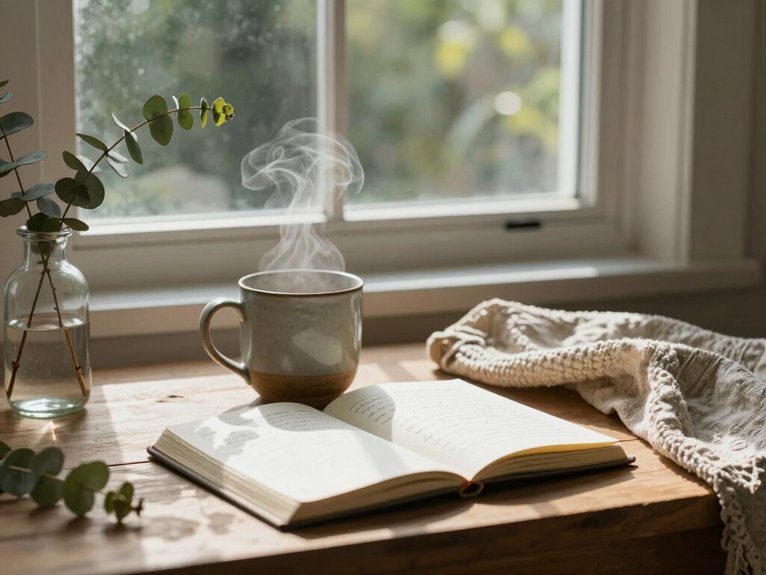
You’ll love how a predictable flow can calm your whole day, like a gentle river guiding you from morning coffee to evening wind-down! Try smooth little rituals — slow mornings without an alarm, a few breaths before emails, a creative stretch in the afternoon — and watch the chaos shrink. It’s simple, joyful, and oddly potent, making room for better conversations with friends and more time to just be.
Predictable flow
Since life can feel like a whirlwind, settling into a gentle daily rhythm gives you a predictable flow that actually lowers stress and clears your head—yes, really! You’ll notice how mindful shifts between tasks, like a short stretch after a meeting or a quiet cup of tea before dinner, help you arrive fully and stay present. Rhythmic practices—simple morning journaling, set meal times, and a late-afternoon walk—bring comfort and belonging, making each day feel like it fits you. This steady structure frees space for what matters: real rest, meaningful chats, and time outside, laughing with friends or tending a little garden. It’s about small, steady rituals that remind you you’re not rushing alone.
- Slow morning ritual: meditate, write, breathe
- Timed meals: predictable, nourishing pauses
- Regular breaks: short, restorative resets
- Daily nature: walks, gardening, sunlight
- Evening wind-down: gentle, unhurried closure
Mindful Outdoor Time
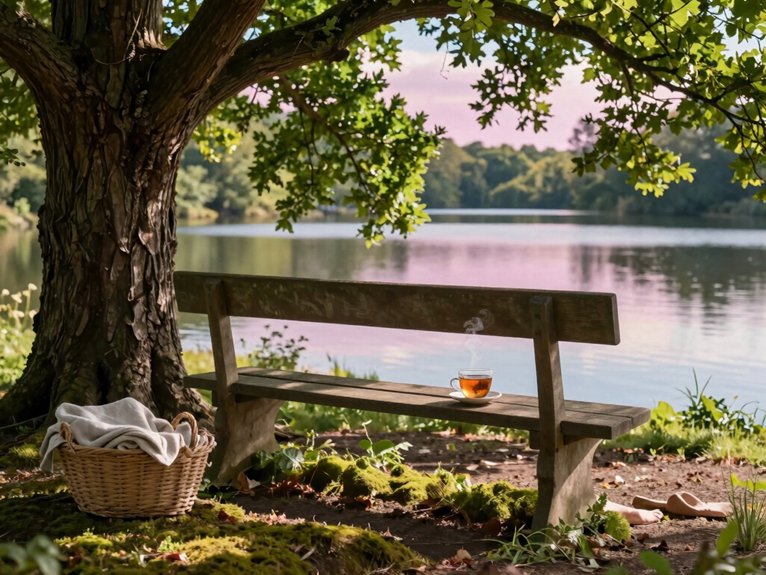
Take slow walks and make little pauses to notice the way sunlight dapples the leaves, the scent of wet earth, or a bird calling nearby—it’s like hitting the refresh button for your brain! You’ll feel your shoulders drop and your thoughts clear as you step out, and you can even stop to watch ants at work or tuck a hand into soil for a quick, grounding moment. Try turning a short stroll into a mini-adventure, with no rush and plenty of wonder—you might laugh at how alive you feel afterward!
Slow walks and pauses
When you slow your pace and really look around, even a short walk can feel like a tiny adventure—listen to leaves whisper, notice the way light skips across puddles, and breathe like you mean it! You’ll try mindful wandering, savoring each step and letting your shoulders drop, and you’ll feel nature connection grow, calmer and more curious. Pauses matter: stand, watch a bird, feel wind on your face, and let the bustle fade. This is for people who want to belong to the world around them, to neighbors and seasons alike — simple, grounding, and joyful!
- Stop and name three sounds you hear right now.
- Trace a leaf’s veins with your eyes.
- Breathe slowly for six counts.
- Notice seasonal colors nearby.
- Walk without a destination.
Neutral Color Palette
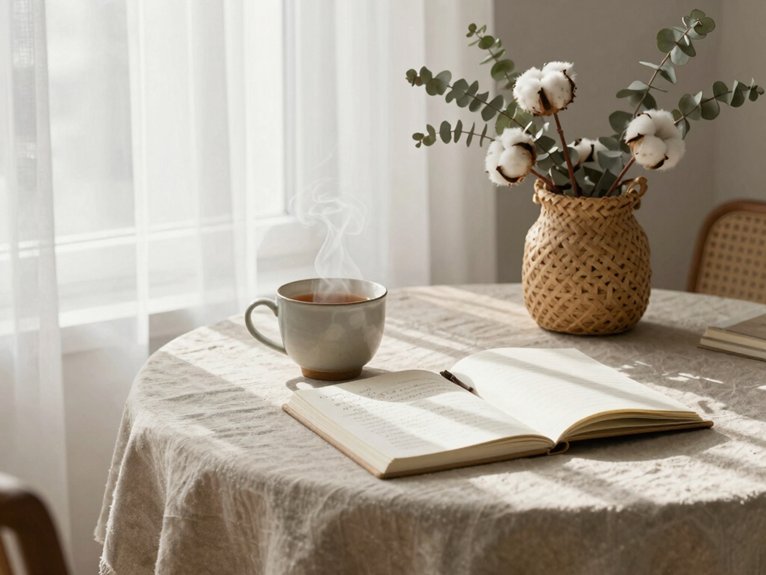
You’ll love how soft visual tones like beige, muted gray, and warm taupe make a room feel calm and seamlessly put together! They’re great for creating cozy corners—think a linen armchair, a wool throw, and light wood floors that all whisper “slow down” (and yes, it’s okay to nap). Mixing those gentle shades with natural textures adds warmth and depth without clutter, so your space stays simple, clear, and inviting.
Soft visual tones
Imagine stepping into a room that sighs with calm—soft beiges, warm whites, and gentle pastels wrap around you like a cozy blanket, and yes, it actually makes you breathe easier! You’ll want soft lighting and calming textures everywhere, because they turn a space into a personal retreat where you can slow down, feel seen, and actually rest. Earthy hues connect you to nature and clear your mind, while neutral tones cut clutter from your sight so you can focus on what matters. You’ll mix natural materials—linen, wood, woven rugs—and the result feels warm, familiar, and welcoming, like a hug from a friend.
- Soft lighting for gentle mornings and quiet evenings
- Calming textures that invite touch and presence
- Earthy hues to ground your mood
- Versatile neutrals for easy decorating
- Minimal distractions, clearer focus
Presence Over Productivity
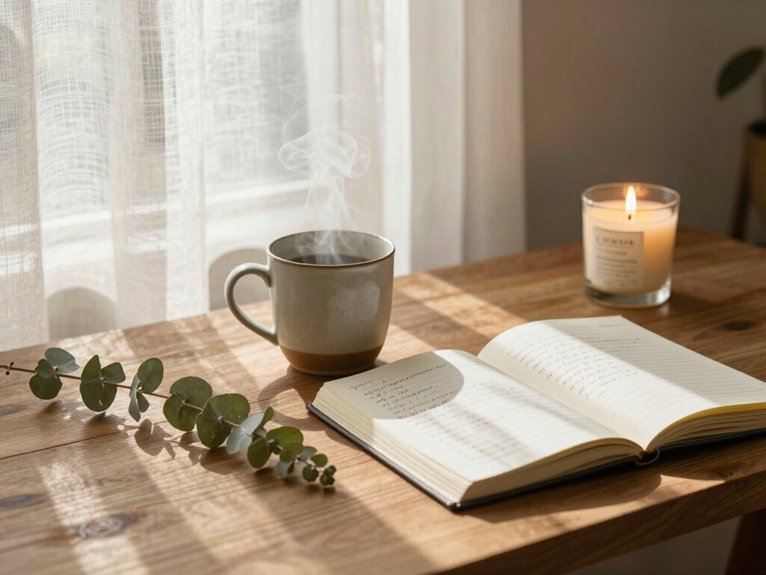
You’ll feel so much lighter when you choose an experience-first mindset, focusing on tasting your food slowly, listening fully to a friend, or watching the way light moves across your table—yes, even the small stuff matters! Embracing presence over productivity doesn’t mean you’re lazy, it means you’re choosing moments that actually feed you, lowering stress and sharpening your focus. Try a short breathing break before a task and notice how much sweeter the rest of your day feels!
Experience-first mindset
When you slow down and choose presence over productivity, life suddenly feels richer and way more interesting—like noticing the steam curl off your tea or the silly grin a friend makes when they tell a story. You lean into an experience-first mindset, making mindful connections and carving intentional pauses into your day, and wow, everything blooms a bit. You’ll notice small joys, feel calmer, and build deeper bonds with people who get you. Try simple slow hobbies that let you focus on the process, not the end result, and watch your stress drop while your happiness rises.
- Share unrushed meals to practice mindful connections.
- Take intentional pauses between tasks.
- Garden to savor slow, physical work.
- Cook with care, enjoying smells and textures.
- Sit quietly, breathe, and notice.
Frequently Asked Questions
How Do I Involve Children in Slow Living Routines?
You involve children by inviting them on nature walks, letting them lead, and doing creative cooking together, sharing tasks and stories so everyone feels included, valued, and connected as you slow down and cherish simple family moments.
Can Slow Living Reduce Digital Dependence With a Full-Time Job?
Yes—you can reduce digital dependence while working full-time by scheduling digital detox periods and mindful breaks, creating shared routines with colleagues or family, and gently setting boundaries so you’ll feel supported, productive, and more connected to life.
What Hobbies Best Complement a Slow Living Lifestyle?
You’ll enjoy gardening benefits and painting mindfulness; join community gardens, attend casual art nights, cook from scratch, practice low-tech reading, or knit with friends — you’ll feel connected, present, and supported while slowing down together.
How Do I Practice Slow Living While Traveling Frequently?
Treat your passport like a compass: you’ll practice slow living while traveling frequently by choosing mindful travel routines, doing intentional packing, honoring local rhythms, sharing meals, and staying present so you’ll feel rooted and belong wherever you go.
Can Slow Living Improve Chronic Stress or Anxiety Symptoms?
Yes — you can reduce symptoms by practicing mindfulness practices and nurturing nature connection; you’ll feel calmer, more supported, and less isolated as you build slow, intentional routines that soothe anxiety and chronic stress over time.