In hot weather, gel nails usually outlast acrylics because they flex with your natural nails as heat, sweat, and humidity kick in. Expect gel to last three to four weeks, while acrylic often needs a fill around two weeks. Pool days can lift either type, so use cuticle oil and protect your topcoat—tiny raincoat vibes! Gel costs about $25–$100, too. Keep going for beach-proof care, removal tips, and vacation picks.
Key Takeaways
- Gel nails typically last three to four weeks, while acrylic nails often need fills after about two weeks in summer.
- Heat, sweat, sunscreen, and faster nail growth can weaken both enhancements and cause earlier lifting near cuticles and sidewalls.
- Gel flexes with natural nails but may lift after prolonged swimming or moisture exposure in hot, humid conditions.
- Acrylic provides a strong initial bond, though hot weather speeds curing and repeated pool or beach exposure can reduce wear time.
- For longest summer wear, maintain sealed edges with top coat and cuticle care, avoid peeling lifts, and schedule timely fills.
Durability Comparison
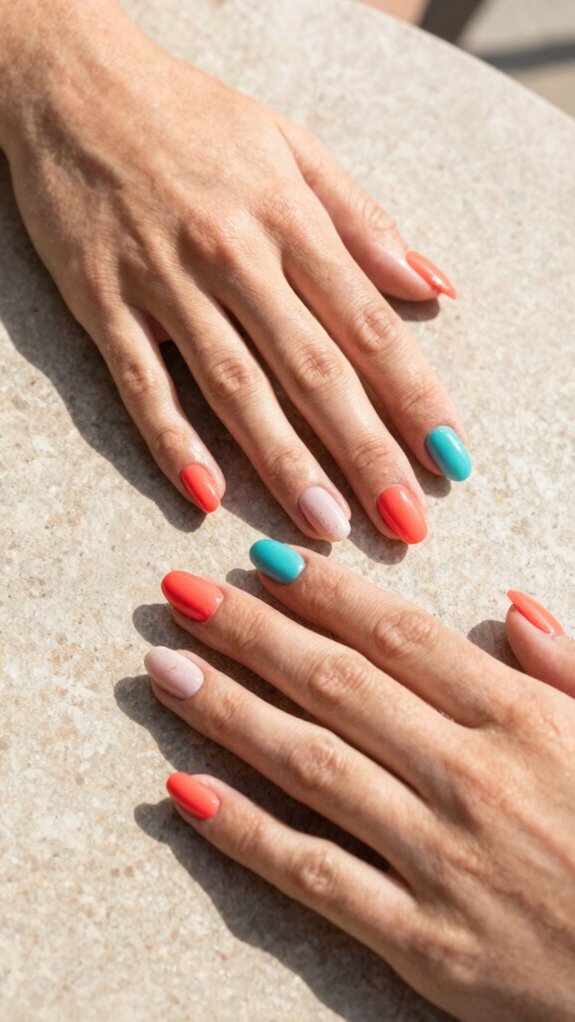
When summer heat kicks in, both acrylic and gel nails face a tougher job than usual—think sweaty hands, extra sunscreen, pool days, and nails that seem to grow overnight! The lightweight, juicy spring-red styling from the guides can inspire fresh color ideas that also play nicely with summer wear.
You’re not alone if your fresh set starts showing gaps sooner. Faster growth pushes the nail forward, shortening Bonding Longevity and inviting Cuticle Lifting around the edges. The idea of keeping nails looking bright and fresh pairs well with choosing a finish that supports a springy, breathable look, such as jelly or glossy options.
Acrylic usually lasts about two weeks and costs less, but it may need a fill before your beach plans end. Gel often lasts three to four weeks, and its flexibility moves better with your natural nail. Juicy finishes and lighter layers can help maintain that spring vibe while enduring heat and humidity.
Heat Resistance
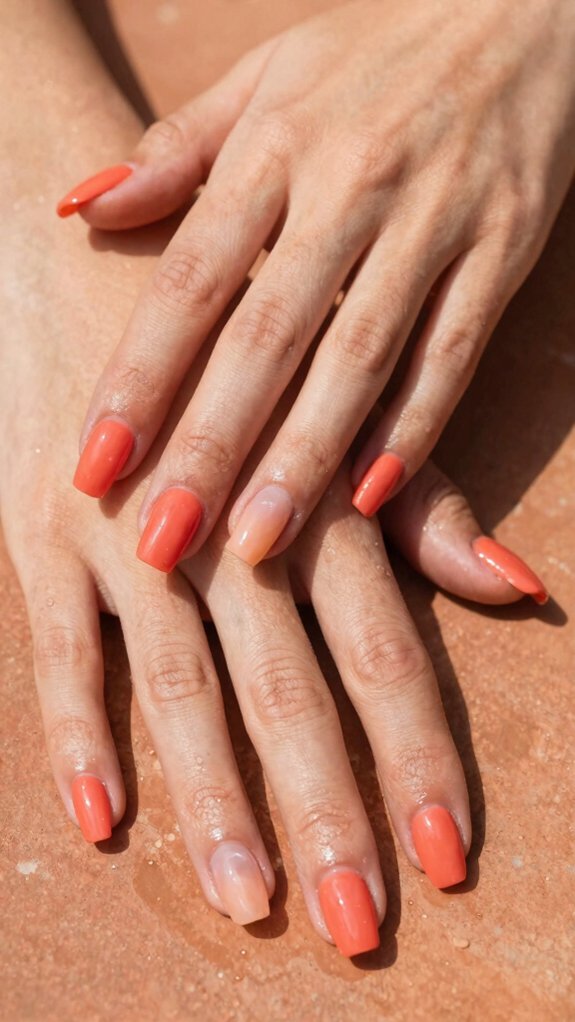
Heat changes the nail game, even if your manicure still looks picture-perfect at first! When your nails grow faster in summer, gel can lift near the cuticle, while heat and cooling make your natural nails flex. That movement stresses gel edges and sidewalls—tiny drama, big annoyance!
A Heat flare can also soften gel slightly, so choose a thicker builder or sculpting gel to help it stay put. Your salon crew knows the trick!
Acrylic reacts differently: hot weather speeds cure timing, making it harder to shape before it sets. Ask for slower-setting powder and adjusted liquid. Surprisingly, that extra control often gives acrylic a steadier summer bond.
Pool and Beach Performance
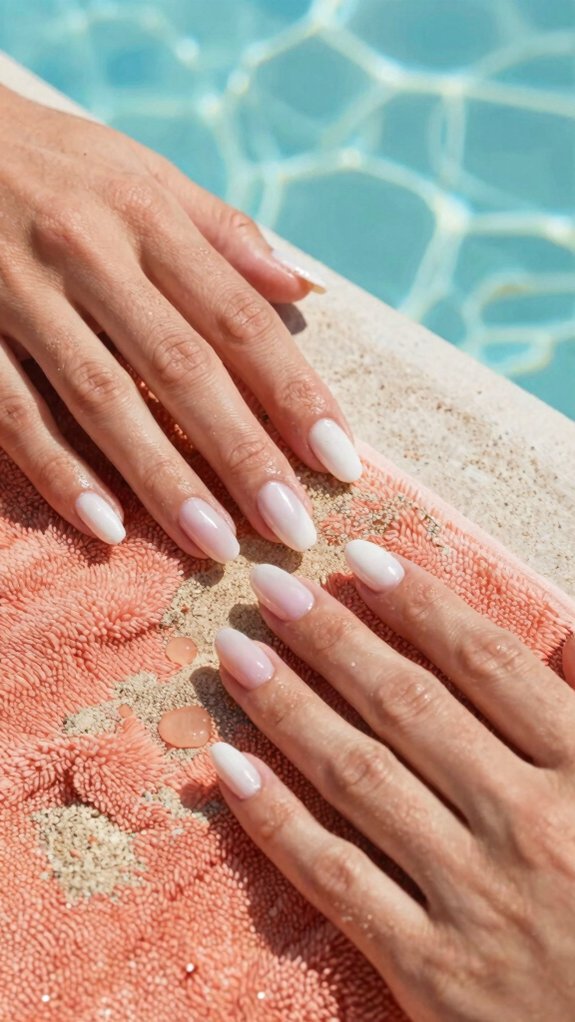
Pool days can be rough on any manicure, even if your nails look flawless before you jump in! Heat, sweat, and water exposure can slip into tiny gaps, weakening seal integrity and inviting lifting around the edges. Regular maintenance with a oil-rich cuticle care routine helps protect the edges during exposure care routines. Gel may lift sooner after long swims because summer oils and moisture can disturb its bond, especially at sidewalls. Cool pool water followed by hot sand or AC can add extra stress, too! Acrylic sets quickly in summer heat, which gives you a strong start, but repeated dips can still wear down its bond over time. For your beach crew’s best-looking nails, keep swims shorter and protect that glossy topcoat—tiny habits make a big difference!
Maintenance
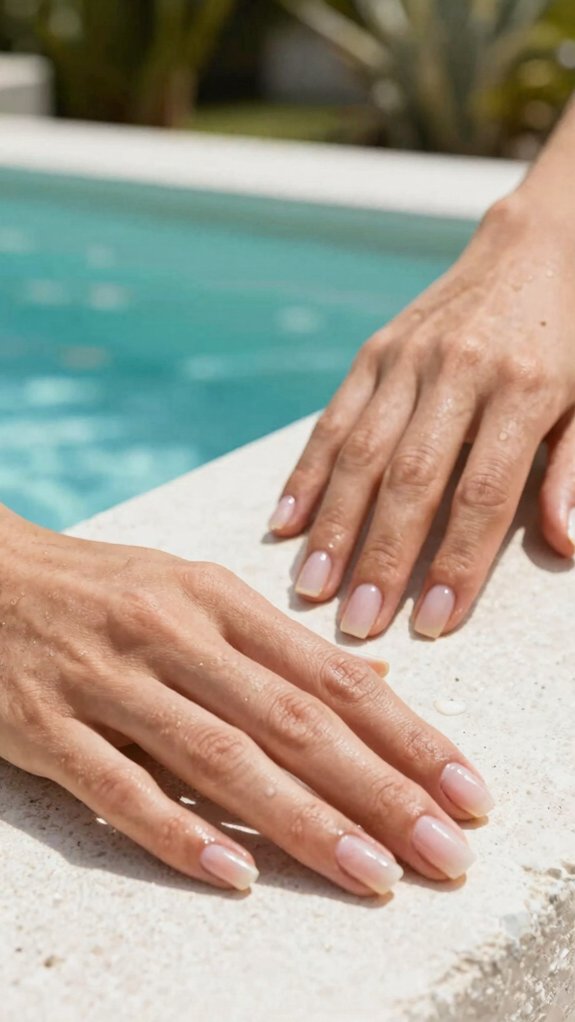
Summer maintenance can sneak up on you fast—your natural nails often grow quicker from June through August, so the gap near your cuticles becomes noticeable sooner, and that fresh growth can start loosening the improvement. Regular exfoliation and careful moisture management help keep both natural nails and enhancements resilient in heat and humidity top coat protection. Gel may stretch three to four weeks, while acrylic often needs attention around two, especially when heat and oil cause edge lift. You’re not alone—summer hands work overtime!
For humidity protection, swipe on a quality top coat and focus on cuticle sealing. Think of it as an invisible raincoat for your manicure! Wear gloves for dishes, limit long soaks, and pat hands dry after swimming. Those tiny micro-gaps love water, unfortunately.
Removal Process
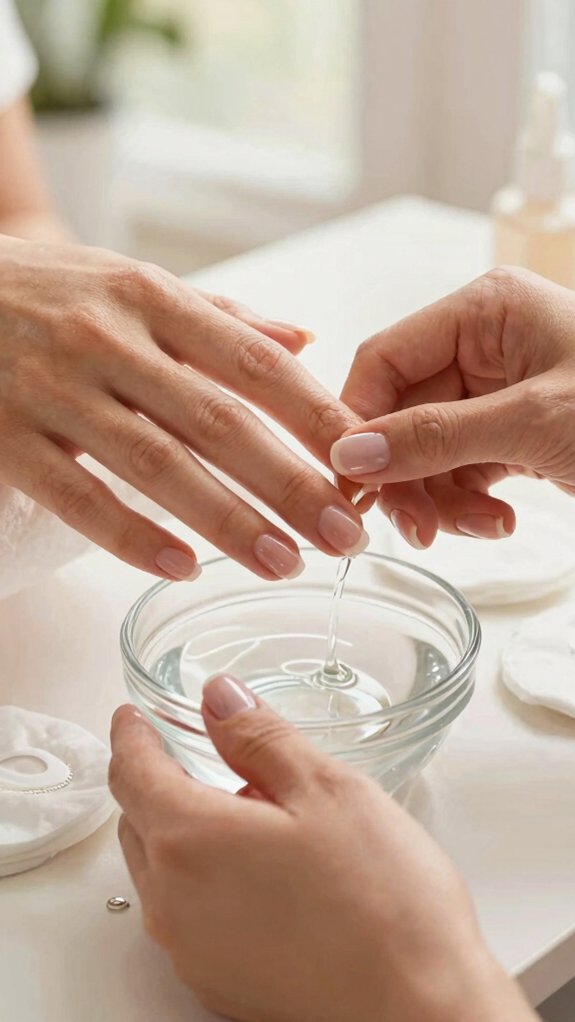
Removal takes a little patience, but you’ll protect your natural nails when you resist the urge to peel—tempting, yes, but it’s a tiny disaster movie for your nail plate!
For acrylics, use acetone soaking with foil wrapping after gently filing the surface. This method is key to minimizing damage and reducing lifting caused by heat and humidity.
Summer lift near the cuticle or free edge may help, but don’t pry it!
Gel usually needs more filing first to break its cured seal, then an acetone soak. You’ll want to ensure you’re using a gentle touch to avoid thinning the natural nail.
Work slowly with a gentle file, especially around tiny heat-related lift points.
You’re not alone if removal feels fiddly—everyone learns!
The big win: fully file loose areas without over-filing your natural nail, which helps prevent soreness and infection.
A careful approach reduces damage and supports healthier nail recovery, with safe removal practices guiding each step.
Cost Comparison
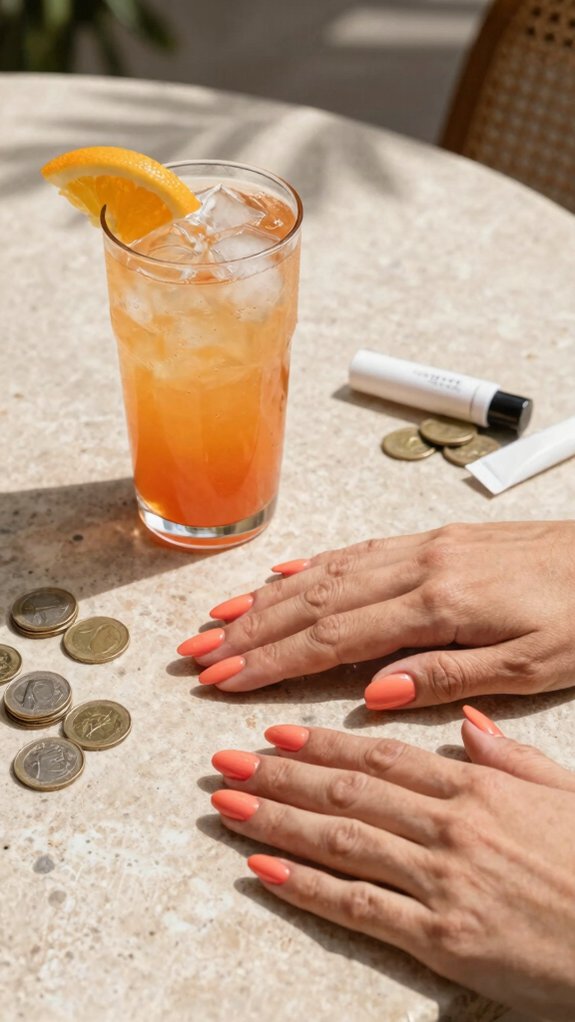
Once your nails are safely off, the next question is usually, “Okay, but what’ll the next set cost me?” Acrylic sets often run about $25–$120, while gel appointments commonly cost around $25–$100, so the sticker price can look pretty similar at first—sneaky, right?
For Budget Planning, count return visits, not just today’s bill. Acrylics may need renewal after about two weeks, while gel can last three to four weeks.
Summer growth can mean fills, repairs, or shaping for either choice, and Seasonal Pricing may shift salon totals. Here’s the surprise: gel often gives you a lower cost per week, so you can stay polished with your crew! Gel longevity
Which One Is Better for Vacation?
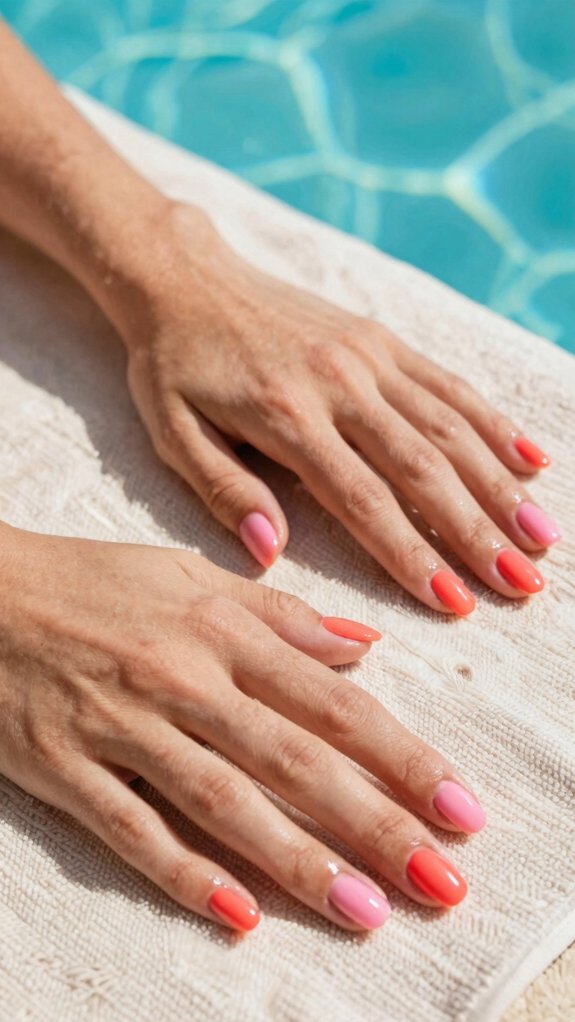
For a 3–7 day getaway filled with heat, sightseeing, and pool time, you’ll want nails that stay cute without demanding a mid-trip rescue mission!
Start with pre trip planning: book your set a day or two before leaving, so everything feels fresh.
Acrylic can be quick to apply in summer, but heat, sweat, and faster nail growth may make lifting more likely. No one wants a tiny nail emergency beside the beach bag!
For swim proof prep, ask for careful sealing and a strong top coat. Still, gel is usually your vacation MVP: its flexible, hard-cured seal often handles movement and lasts 3–4 weeks.
Acrylic Pros and Cons
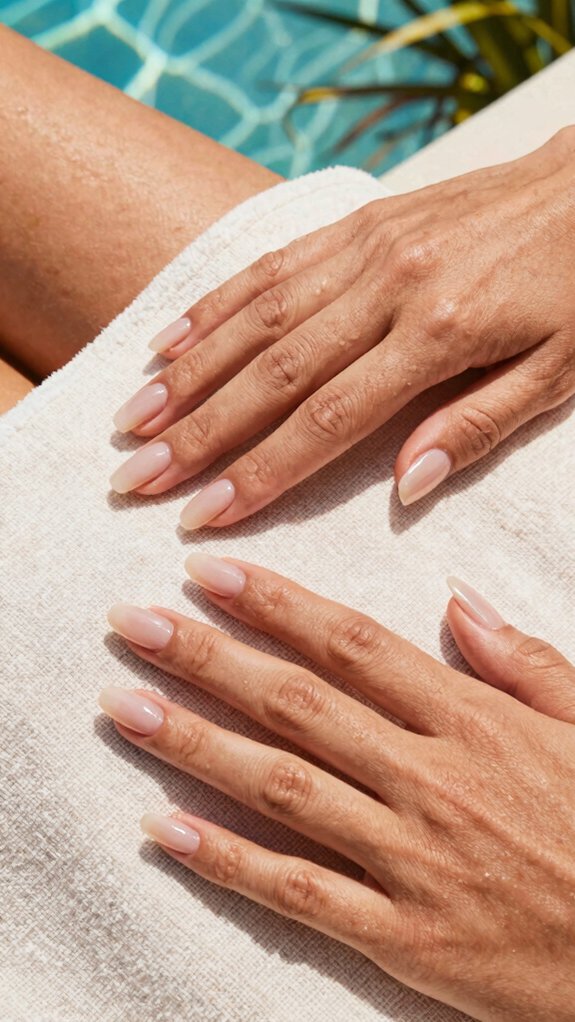
Acrylic nails can give you a bold, polished summer look without draining your vacation budget—yay! You’ll often pay about $25–$120, and they can boost nail strength for beach photos, pool days, and your whole summer crew.
There’s a catch, though! Heat causes quick setting, so your nail tech may need slower-setting powder to shape each tip smoothly. Otherwise, acrylic can harden before it’s evened out—rude!
You can expect around two weeks of wear, but active days and faster summer nail growth may bring gaps, fills, or repairs sooner. Still, with timely maintenance, your set can stay photo-ready.
Gel Pros and Cons
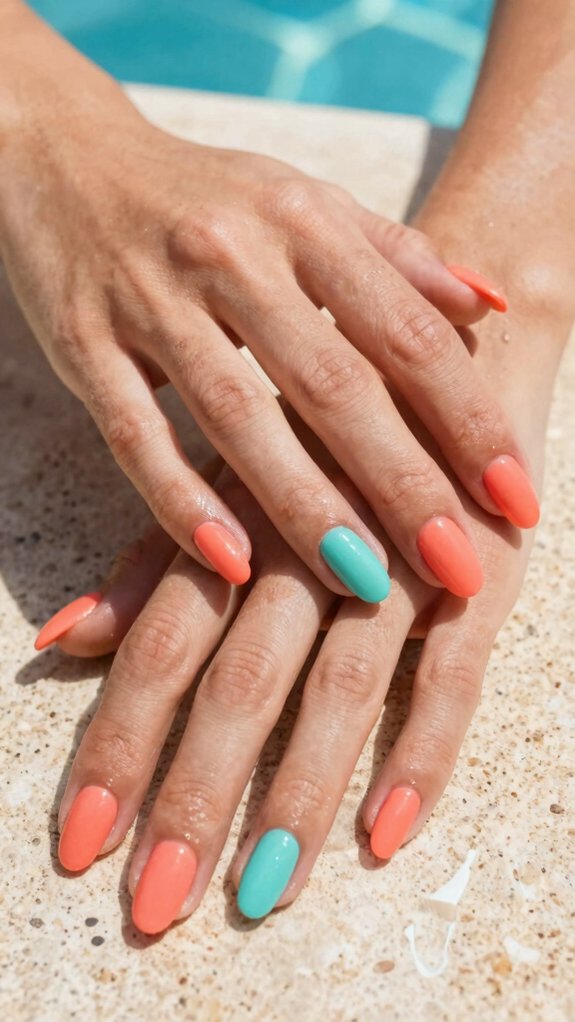
Gel nails bring that glossy, fresh-from-the-salon shine to summer plans, and they’re often a sleek choice if you want color that looks polished without the bulk—so cute!
With careful nail prep, you can join the poolside manicure crew with a smooth, lightweight finish.
Still, summer longevity can be tricky.
Heat boosts nail growth, so lifting may appear near your cuticles sooner between June and August.
Extra skin oil, sweat, showers, and swims can sneak into tiny gaps and weaken the bond.
Temperature swings also make nails flex while gel stays firm, loosening edges over time.
Keep appointments regular, wear gloves for chores, and don’t pick—your gel deserves better!