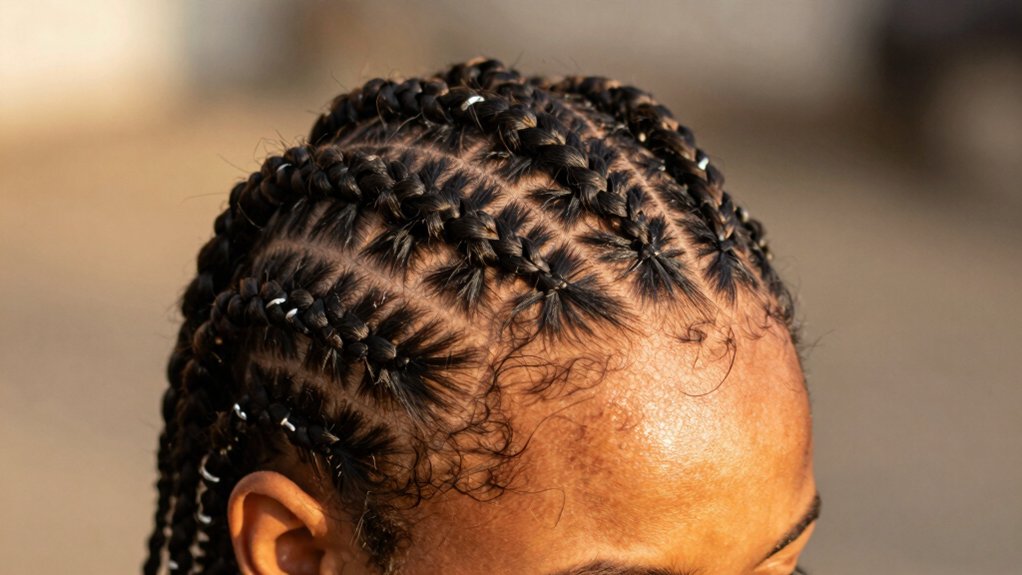
Choose low-manipulation styles like flat twists, mini twists, or medium knotless braids to keep your ends tucked and reduce daily pulling—yay, less mirror “fixing”! Start with clean, moisturized, trimmed hair, and ask for gentle, tension-free installation. Wear styles about four to five weeks, then reset. Sleep in a satin bonnet or scarf, not lint-loving cotton. For an extra win, use wigs over neat cornrows between wash days; next, you’ll find more ways to protect every inch.
Key Takeaways
- Choose medium knotless braids with low tension to protect edges, reduce weight, and minimize breakage while retaining length.
- Wear flat twists or mini twists to tuck away ends, limit daily manipulation, and reduce friction-related breakage.
- Keep protective styles for about four to five weeks, then cleanse, condition, detangle gently, and reset.
- Protect styles overnight with a satin or silk bonnet or scarf to reduce moisture loss, lint, and friction.
- Use wigs over neat cornrows, braids, or flat twists, but maintain scalp access and remove wigs regularly for washing.
Low Manipulation Styles
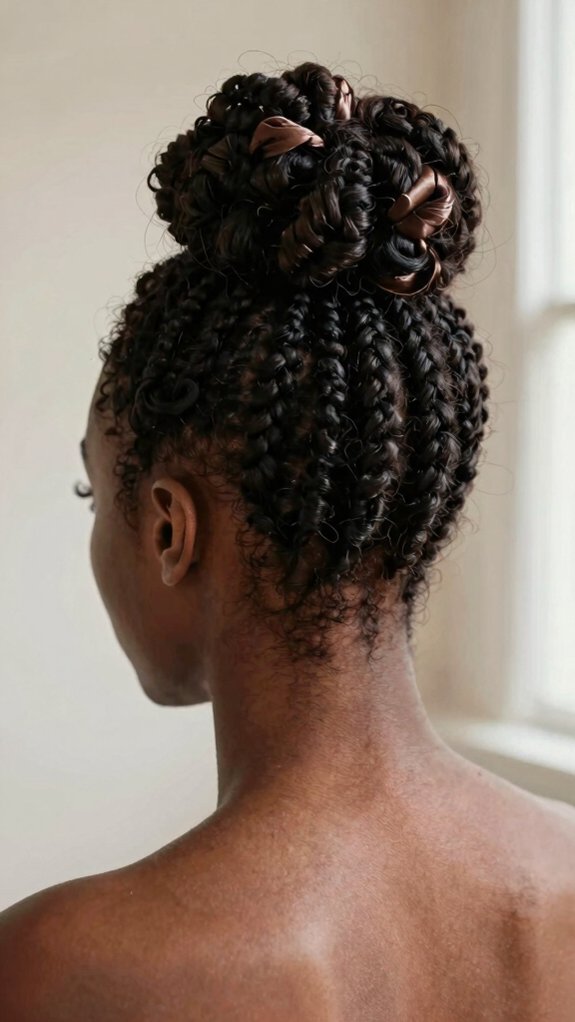
Low-manipulation styles help you hold on to more of the length you grow because your ends get a break from daily brushing, detangling, and “just one more quick fix” in the mirror.
You’re not alone—many naturals love medium or jumbo knotless box braids for their lighter feel and tension free installation.
Keep your style for about four to five weeks, then give your hair a reset.
At night, use a silk scarf or bonnet; cotton can be a tiny linty troublemaker!
Here’s the game changer: try scalp friendly care with a micellar rinse or diluted apple cider vinegar through braid parts. This method aligns with the Fulani braid care emphasis on keeping the scalp clean and minimizing buildup, which helps maintain healthy edges and longer-lasting styles scalp care alignment. Your scalp stays fresh, your hands stay out of your hair, and your ends can thrive!
Flat Twists

Flat twists give your hair a soft, close-to-the-scalp style that tucks away your ends and helps cut down on friction breakage—yes, please! You’ll fit right in while supporting Length goals with gentle twist tension. Regular check-ins with your hair care routine can help you notice how different styling choices affect breakage and growth, enabling more mindful care over time. You can also pair this style with a brief scalp check to ensure comfort and minimize tension emotional awareness while you maintain consistency with protective practices. At night, wrap your twists in satin or silk to protect your hairline and ends. The best part? You can refresh and restyle without daily pulling—your strands can finally relax!
Mini Twists
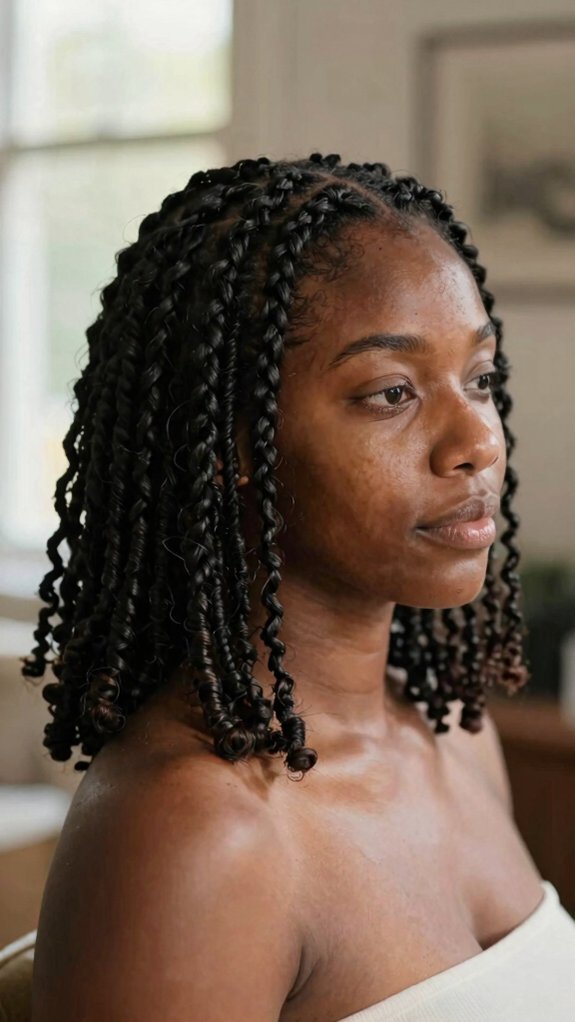
Mini twists are a lightweight, easygoing protective style that lets you tuck away your strands, cut down on daily pulling, and keep your length goals moving—without wearing a helmet of heavy hair, hooray! Adding a quick, budget-friendly maintenance routine, like using a satin or silk sleep surface, helps protect ends and preserves growth progress protective styling benefits.
Knotless Braids
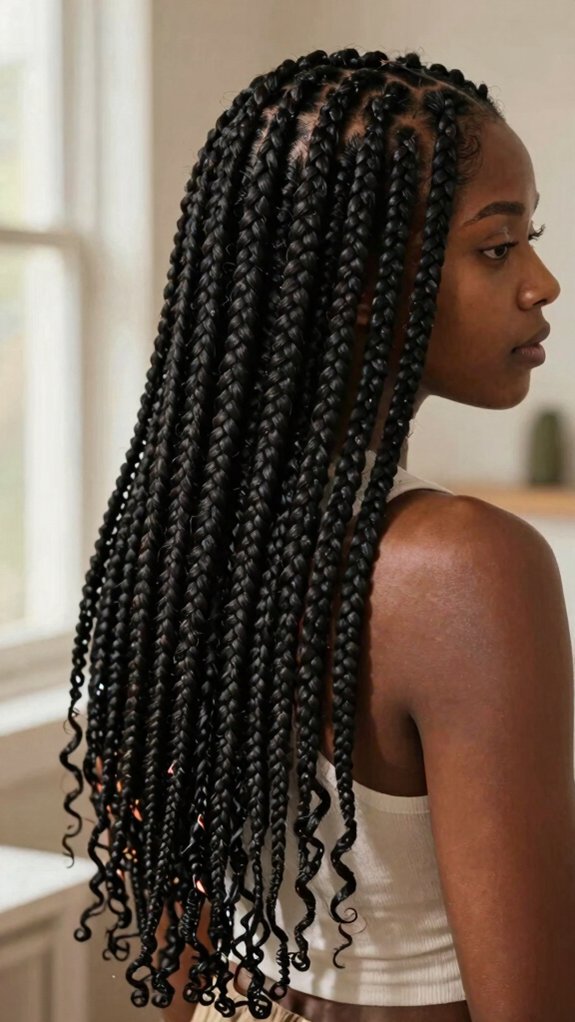
You’ll feel right at home with medium-sized braids that look full but don’t pile on weight.
Start with freshly washed, trimmed hair for better end protection, then ask your braider to tuck the ends neatly.
Installation may take four to five hours, so bring water, a snack, and patience—beauty shouldn’t feel like a race!
Next, support Scalp health by cleansing accessible parts and moisturizing regularly.
If they itch, sting, or feel too tight, speak up.
Comfortable placement is the real length-retention secret! barrier + moisture
Wigs Between Wash Days
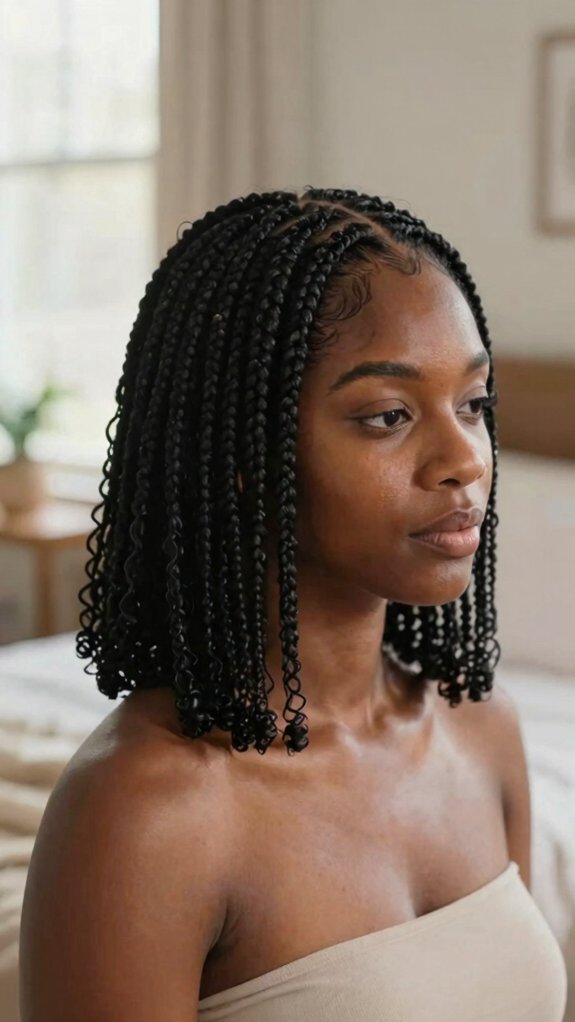
Wigs can be your between-wash-days secret weapon, especially when you tuck your natural hair into neat cornrows, braids, or flat twists underneath! Your ends stay sheltered from dryness and friction—yes, please! Keep scalp access open through partings; use micellar rinse or diluted ACV when itchiness tries to crash the party. Lightly moisturize parting areas and lengths with diluted leave-in, so your hair stays soft, not crispy. Add a tiny bit of oil at roots, then glide leftovers down strands. You’re part of a curl-loving crew that knows protection matters! Remove your wig to wash and dry fully, and sleep in satin. Vertical shelving can help you store protective styles and accessories neatly, keeping your space organized and clutter-free.
Stretching Natural Hair

Before you tuck your hair into a protective style, give it a gentle stretch first—it helps you detangle more easily, see your length, and keep those ends from bunching up and breaking later.
After washing, moisturize, then try twist-outs or braid-outs with a light-hold gel. Let the set dry fully, because rushing it invites frizz and extra handling—no thank you!
Need speed? Use a blow-dryer or roller set, but apply heat protectant first. Your strands deserve that backup!
For set timekeeping, leave your stretch in long enough to hold its shape. Then install your style without pulling too tightly. Keep protective looks around four to five weeks max; your scalp will thank you!
Overnight Hair Protection

While you sleep, your hair can either rest easy or rub itself into a tiny tangly mess—so give it a smooth nighttime setup!
- Tie on a silk or satin scarf or bonnet nightly for breakage prevention and edge protection. Your edges will thank you!
- No bonnet? Use a silk or satin pillowcase instead; cotton can steal moisture and invite tangles like an unasked-for guest.
- Gently tuck braid or twist ends inside your wrap. This simple move helps your whole hair community keep length goals on track!
Keep styles about four to five weeks, too. Then your nighttime routine preserves healthy hair instead of rescuing worn-out strands.
Moisture Before Styling
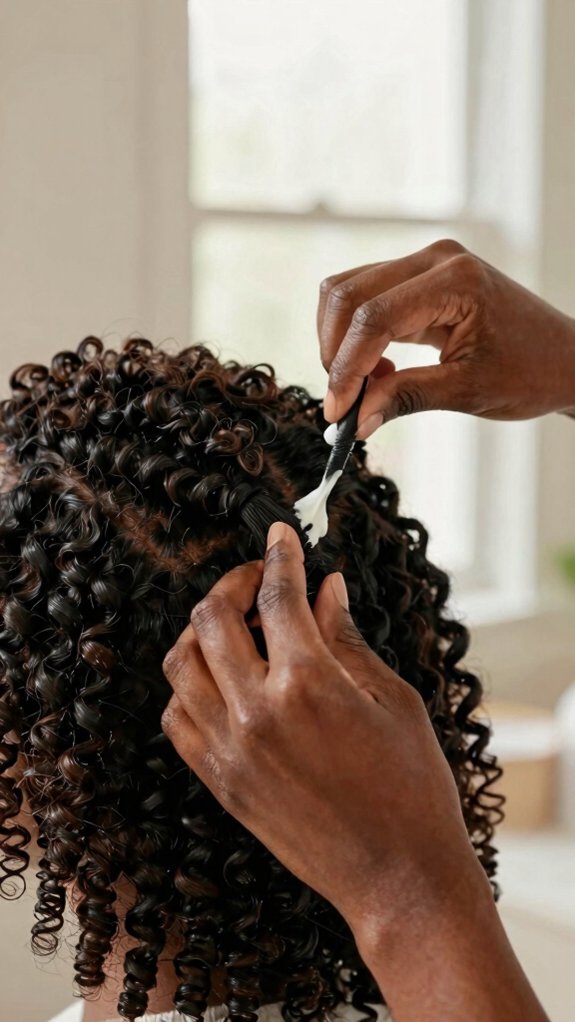
A little moisture prep gives your protective style a much better start—think of it as packing your strands a snack before a long trip!
On wash day, make Pre styling detangling your first move: work gently through knots, then smooth in a leave-in or mid-step moisturizer.
Next comes moisture sealing!
Warm a light oil between your palms and glide it over your hair, especially the ends.
You don’t need pricey products—just formulas without drying alcohols or heavy buildup.
As you braid, twist, or install your style, tuck those ends away and keep them softly moisturized.
That tiny step helps your strands stay flexible, connected, and far less likely to snap.
Knowing When to Take Styles Down
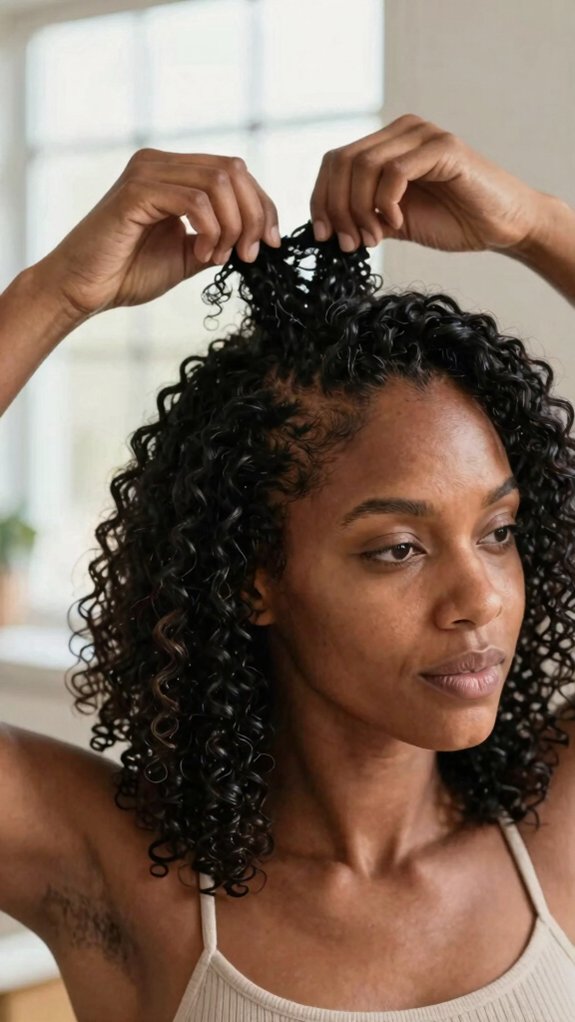
Protective styles can look great for weeks, but your scalp will usually tell you when it’s time to let them go! Aim for a 4–5 week install duration, and avoid pushing past six weeks—your roots aren’t running a long-term lease!
- Listen closely: Consistent itching, soreness, flaking, or scabbing signals scalp sensitivity. Take the style down early, then cleanse gently.
- Watch the roots: Loose braids, slipping twists, and grown-out parts mean tension isn’t spread evenly anymore.
- Act fast: Swelling, bumps, or thinning edges need immediate removal.
Plan takedown day when you can wash, detangle, and hydrate fully. Your healthy-hair community is cheering you on!