Make your small dressing room work harder! Add an L-shaped corner wardrobe, double hanging rails, and slim vertical cabinets with 16–18-inch shelves. Use pull-out shoe drawers, labeled overhead bins, and decorative boxes for seasonal items. Sliding doors save floor space, while warm lighting makes every outfit easier to find. Keep about 80% of each zone full, not stuffed, and add a built-in pull-out hamper near daily clothes—surprisingly handy! Keep exploring for more clever ideas, materials, and easy setup tips.
Key Takeaways
- Maximize corners with L-shaped shelving, hanging rods, pull-out racks, and carousel storage for otherwise inaccessible space.
- Install tall cabinets, overhead units, and slim drawers to use vertical space without reducing valuable floor area.
- Add double hanging rails and adjustable closet systems to organize short garments, long dresses, coats, and folded clothing efficiently.
- Use pull-out shoe organizers, divided drawers, and narrow open shelves to improve visibility and reduce bending.
- Choose sliding doors, built-in hampers, concealed lighting, and clearly zoned storage to maintain a bright, clutter-free dressing room.
Corner Wardrobe Solutions
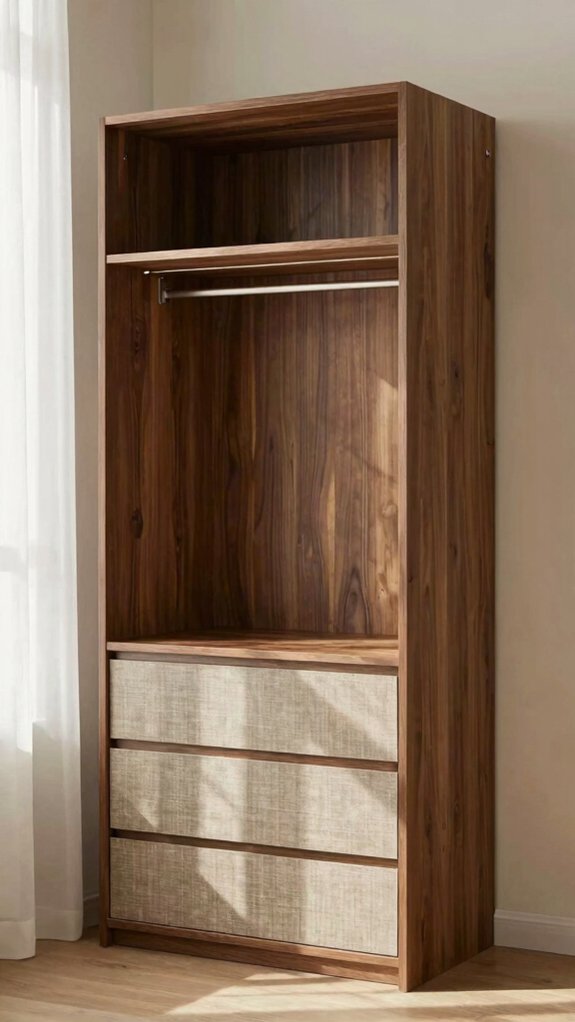
Corner spaces can feel like the black holes of a dressing room, but the right wardrobe setup can make every inch useful!
Try L shape storage: place an upper rod along one wall and a lower shelf run on the other. Your dresses and coats can hang freely, while folded shirts and pants get about 18 inches of shelf space.
Here’s the clever part! Add a blind corner access carousel or pull-out rack, so hidden items glide into reach instead of disappearing forever.
Use baskets or tiers below for smaller pieces, and match hinged doors to the opening. You’ll gain order, breathing room, and a corner that feels truly yours!
Vertical Storage Cabinets
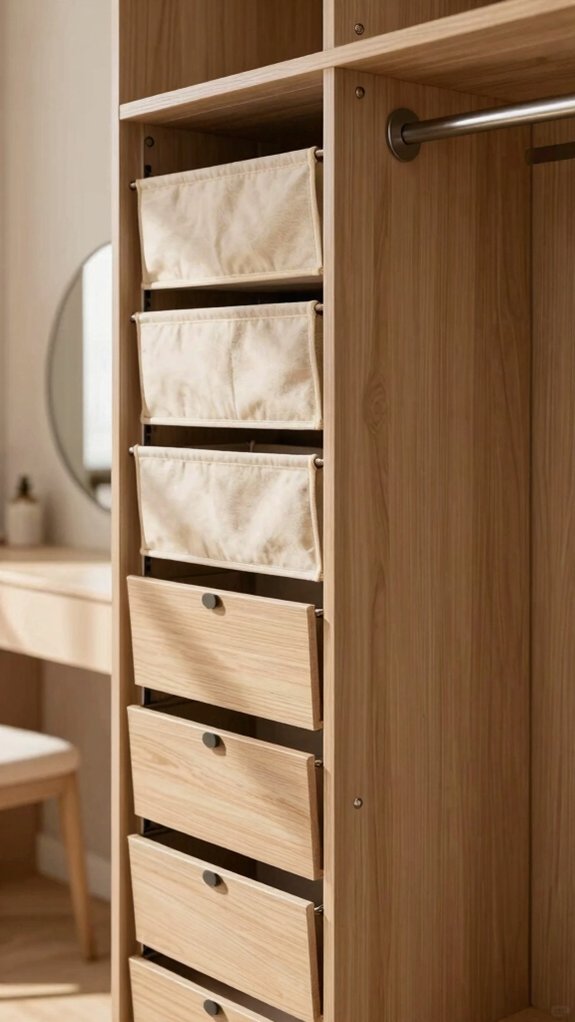
Upward is the smartest direction when floor space is tight, so tall vertical storage cabinets can turn a cramped dressing room into a tidy clothing station!
Choose open or glass-front cabinets, so you can see sweaters, jeans, handbags, and shoes while keeping dust away. Add shelves at different heights, leaving about 16–18 inches for folded stacks. Extra shelves make vertical stacking easy without wasted gaps!
| Cabinet zone | Best use |
|---|---|
| Upper shelves | Sweaters, bags |
| Middle shelves | Jeans, folded clothes |
| Lower shelves | Shoe organization |
Add shelf layers inside existing cabinets for a budget-friendly upgrade. Keep long garments’ needed height clear, and your shared dressing space will feel welcoming, calm, and wonderfully put together!
Double Hanging Rails
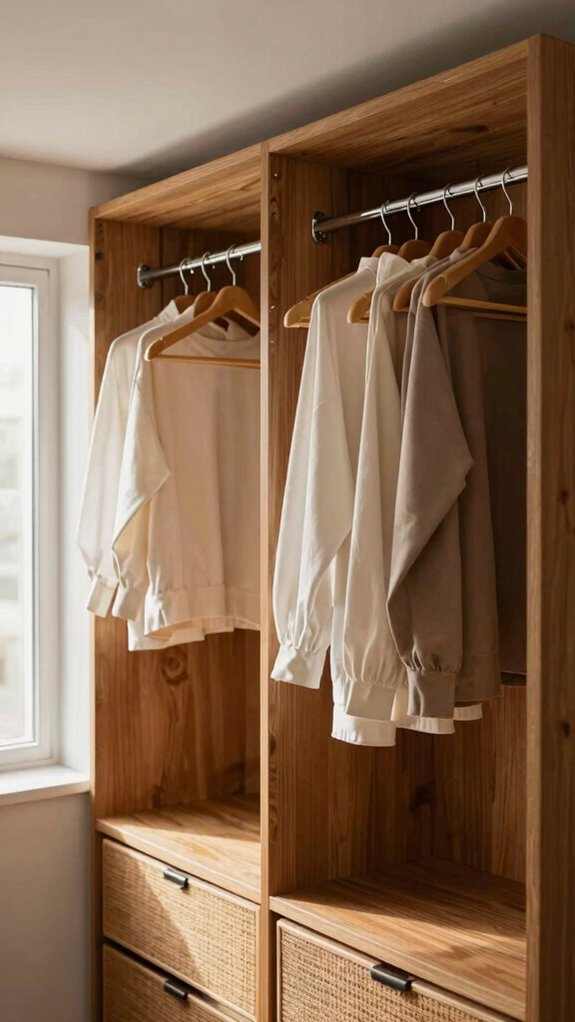
When space is tight, double hanging rails let you turn one crowded clothing zone into two neat levels—perfect for shirts, trousers, and folded skirts, while dresses and long coats stay on the upper rail!
For easy Closet organization, measure your door width and interior depth first, then choose rails that fit without creating dead space. Leave 18–20 inches between levels for proper hanger clearance, and mount the lower rail slightly higher to keep hems off the floor.
Add a top shelf for sweaters, knits, and folded accessories. This beginner-friendly upgrade costs little, uses basic rails and brackets, and makes your dressing room feel wonderfully welcoming!
Outfit chaos, evicted!
Pull-Out Shoe Organizers
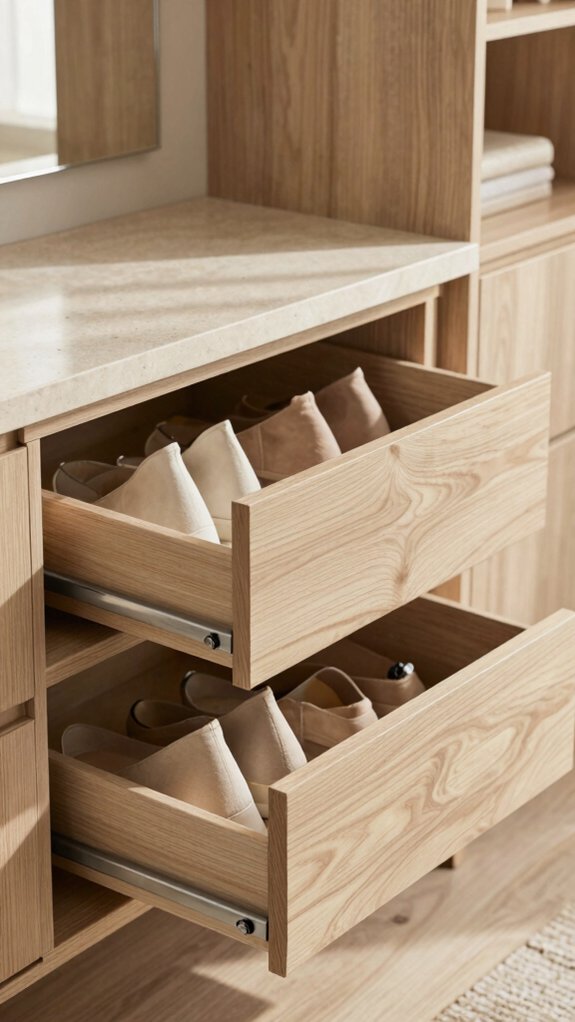
Pull-out shoe organizers make the lower tier of your dressing-room closet work much harder, giving you a clear view of every pair without awkward bending or shoe hunting! Choose sliding drawers sized to your closet’s width and depth, then group flats, heels, and boots together. You’ll enhance access and plan outfits faster.
| Feature | Result |
|---|---|
| Sliding tracks | Easy reach |
| Compartments | Fewer scuffs |
| Base ledge | Handy shoe care zone |
Install them beside vertical shelving to keep narrow rooms open around the door and vanity. Add a shallow ledge for brushes and insoles. It’s a simple upgrade with a beautifully tidy payoff!
Overhead Storage Cabinets
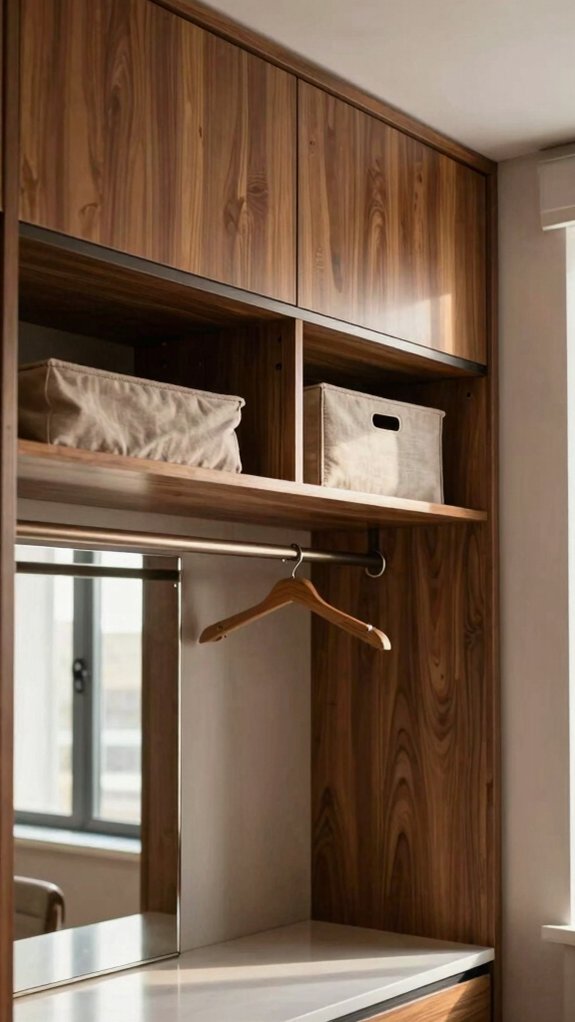
Overhead storage cabinets turn that forgotten strip near the ceiling into a tidy home for holiday clothes, extra linens, and rarely worn accessories—without crowding the garments you reach for every day!
First, measure your ceiling clearance, leaving hanging clothes comfortable below and at least 18 inches for folded shirts or pants. Choose 10–12-inch cabinets for accessories and shoe boxes, or 14–16-inch units for sweaters and bulky textiles.
Add adjustable shelves and labeled bins, so you won’t dig like a tiny treasure hunter!
For a clutter free look, match cabinet interiors to your walls. Mirrored or glossy accents make upper storage feel lighter, friendlier, and wonderfully interwoven.
Slim Drawer Systems
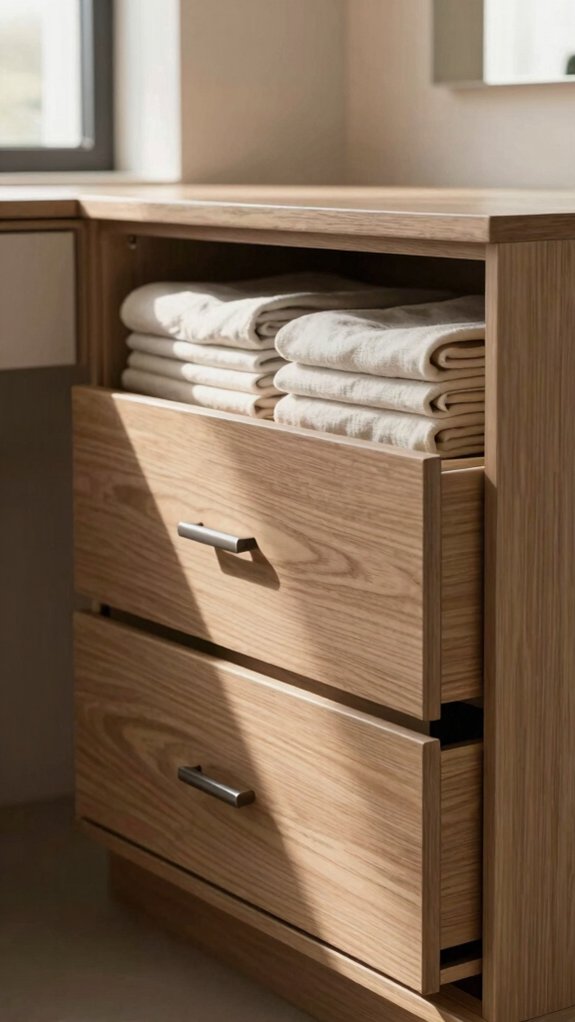
Slim drawer systems give a narrow dressing room a tidy boost without stealing space from your hanging clothes! Choose 4–6-inch drawers for tees, lingerie, and accessories, then use file folding to keep jeans visible. Narrow 12–18-inch slim modules create friendly zones for every category.
Add Drawer dividers and try compartment zoning for hosiery, camisoles, and ties, so you won’t rummage like a sock detective!
| Zone | Best items | Helpful tip |
|---|---|---|
| Tops | Tees, camisoles | File-fold rows |
| Basics | Socks, underwear | Add dividers |
| Bulky | Sweaters | Use vertical stacking |
Install drawers along one wall, leaving the rest open for hanging. You’ll gain calm, space, and a closet that feels wonderfully yours!
Mirror Closet Doors
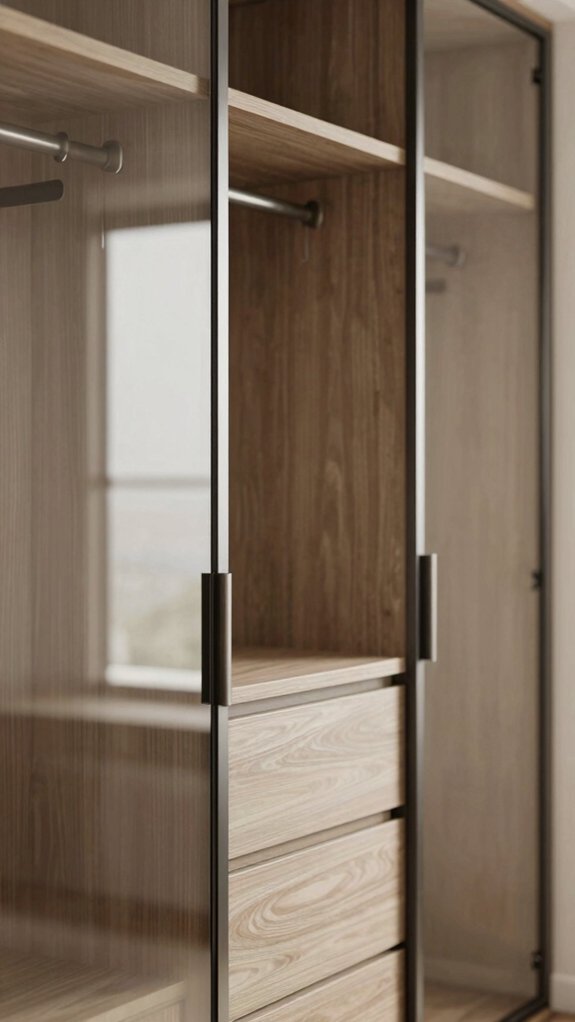
When you add mirrored closet doors, your dressing room can look bigger, brighter, and far less cluttered—without giving your clothes a front-row seat!
Choose sliding doors that match the opening, especially in a narrow layout, so every inch works hard.
Position the mirror opposite a window or bright wall to improve Storage Lighting and help you check fit and color.
Pair it with soft wall paint that flatters your skin, then use Color Contrast for a welcoming, polished look.
Want extra function? Pick a mirrored cabinet door that hides essentials, such as a coffee machine.
You’ll gain storage, style, and a delightful little surprise!
Visually enlarge the room
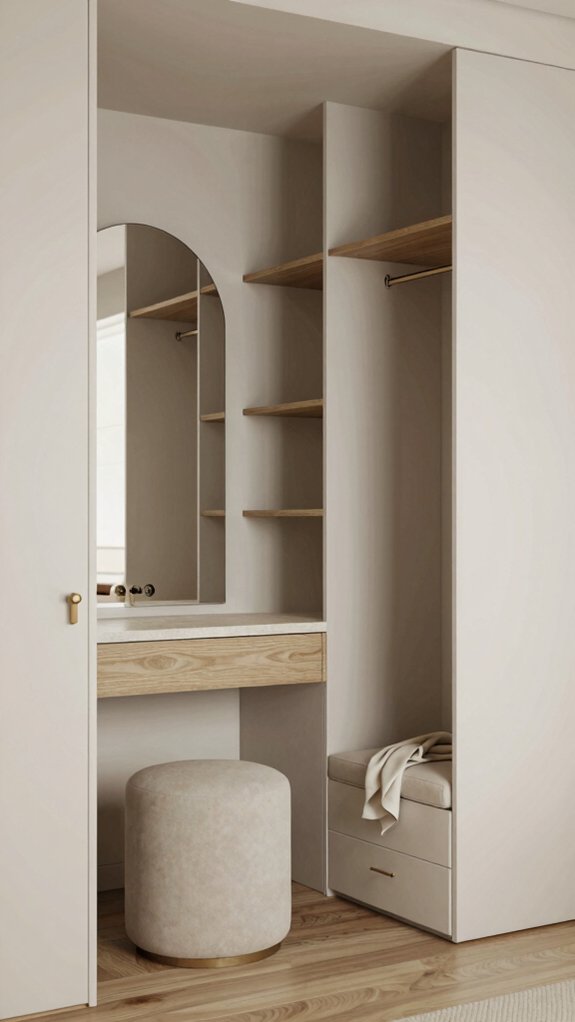
A smart color plan can make your dressing room feel instantly larger, especially when the walls, wardrobe fronts, and nearby bedroom share a calm, connected look. Choose warm cream, soft blue, or a flattering neutral that helps your skin and clothes look their best!
Carry paint continuity, or the same wallpaper, into the bedroom to remove visual breaks. Keep bold prints to one wall or vanity area, while glossy wardrobe fronts bounce light around the room.
Finally, add soft lighting with forgiving wall lights. You’ll see every sock detail without harsh shadows—and the space may feel surprisingly roomy, like your clothes finally joined the team!
Wall-Mounted Accessories
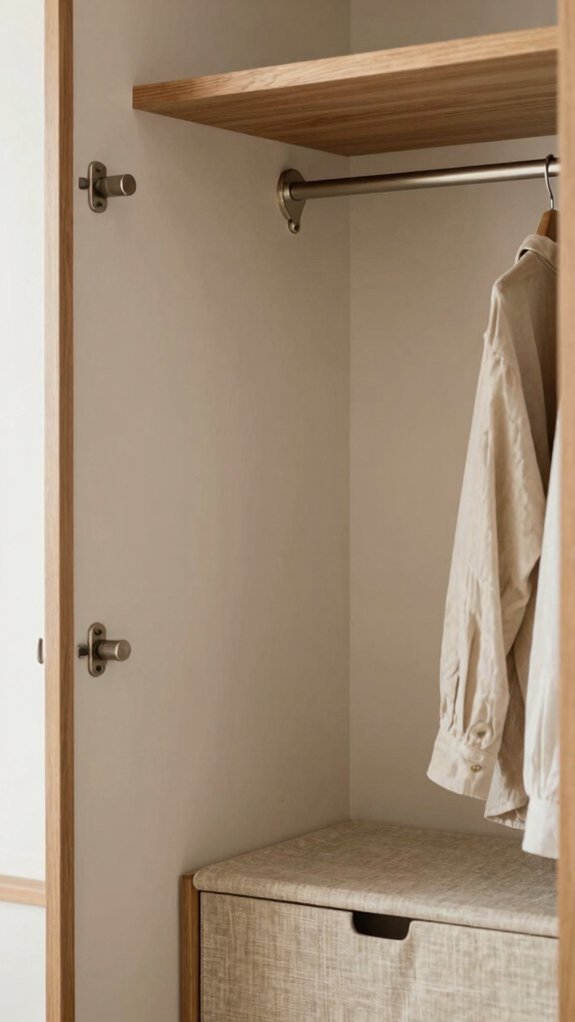
Turn your bare walls into hardworking storage with eye-level shelves, sturdy hooks, and slim organizers that keep accessories visible but out of the way!
Add a small shelf, screws, and a level, then mount it 6–8 inches deep so bags and belts won’t slide off.
Next, install a peg rail or sturdy hooks for scarves, hats, and handbags. A tiered organizer can neatly file rings and bracelets, while a pull-out bar keeps ties ready near your mirror. Thoughtful mirror placement makes choosing outfits easier, too!
For a polished finish, try glass-front organizers. They protect treasures from dust while showing your style—your tiny dressing room will feel wonderfully welcoming!
Foldable Vanity Desk
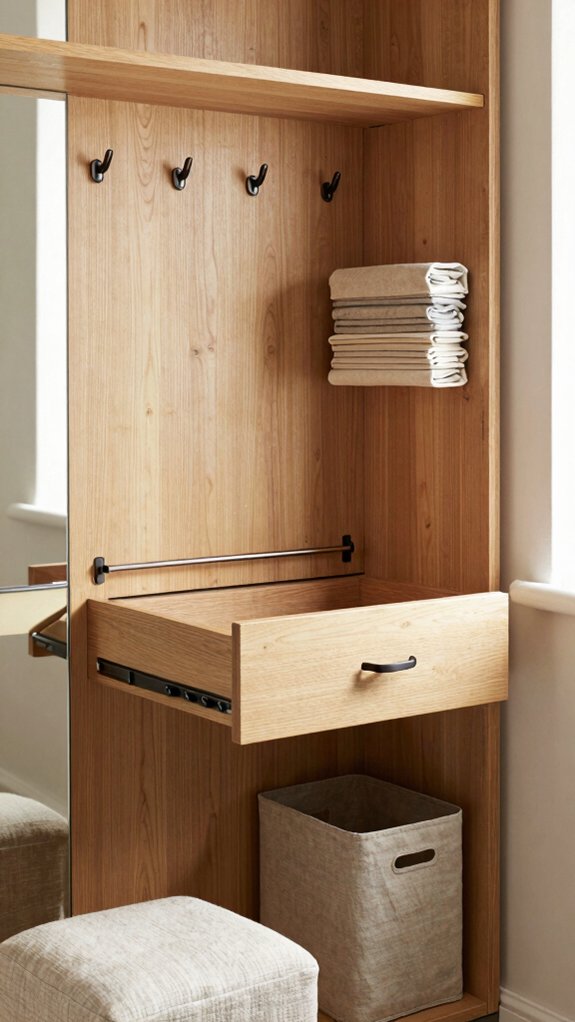
Give your small dressing room a hardworking upgrade with a foldable vanity desk that opens into a bright beauty station, then closes flush against the wall when you need more walking space! Choose a built-in mirror, install stud-mounted hinges beside the closet, and add an outlet with underside cord clips.
| Feature | Benefit |
|---|---|
| Slim shelves | Keeps palettes visible |
| Wall rails | Holds brushes neatly |
Add narrow pockets or a small lidded drawer for daily items. This clutter free setup makes everyone feel welcome, while space saving accessories protect your workspace. Best of all, the sturdy surface handles skincare, hair tools, and charging without turning your room into a tiny disaster zone!
Storage Ottoman
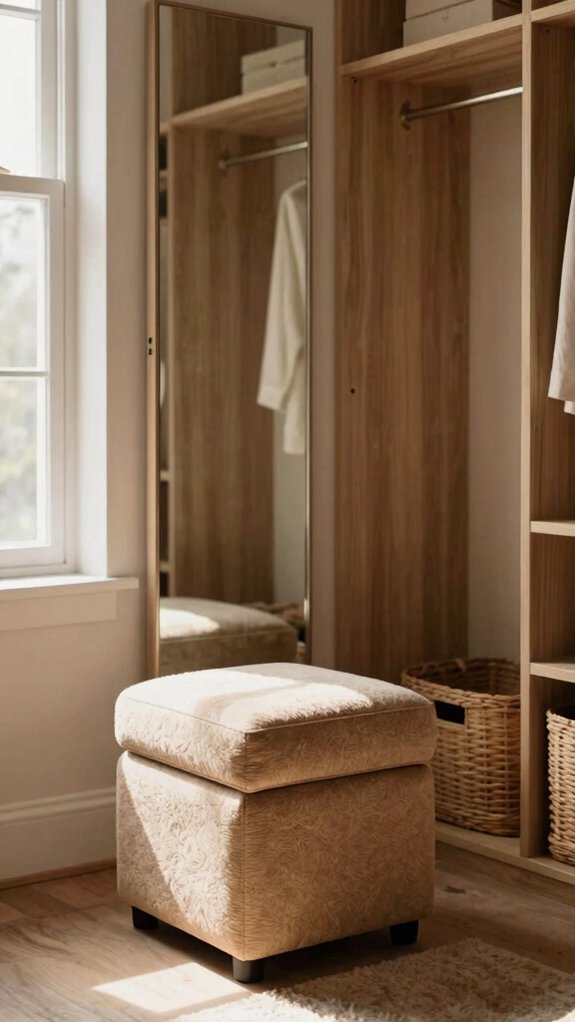
When your dressing room’s walkway feels tighter than your favorite jeans, a storage ottoman can add a hidden stash spot without crowding the room!
Choose one about 16–24 inches wide for the landing zone between your vanity and wardrobe. You’ll get a comfy seat without blocking doors or drawers.
- Pick a lift-top design for folded scarves, knitwear, or seasonal pieces.
- Choose stain-resistant upholstery that complements your mirror lighting.
- Place it near your dressing table for belts or jewelry.
This clever Stool storage keeps hidden clutter out of sight, while open hooks handle daily grab-and-go items. Best of all, you’ll gain a cozy perch for outfit planning—your room’s little multitasker!
Narrow Open Shelving
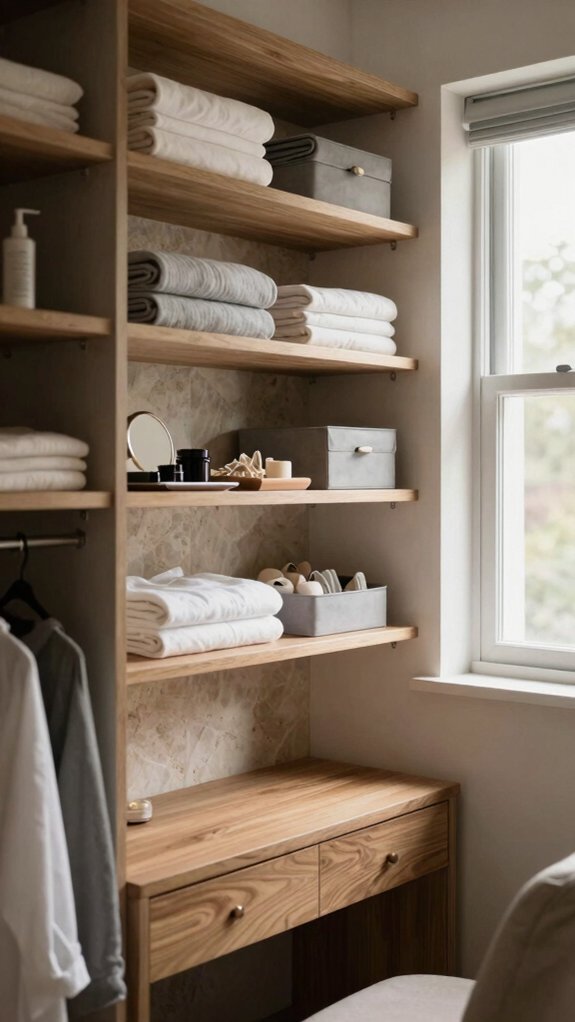
Narrow open shelving keeps a slim dressing room feeling airy while putting folded clothes, shoes, and accessories right where you can see them!
Run shelves vertically along one wall, so cabinet doors won’t steal your walking space.
Stack sweaters and jeans, then add dividers to keep each pile upright, almost like a tidy clothing library.
Reserve the bottom for shoes, while upper shelves hold accessories.
Keep hanging rods at one consistent height, with a small gap for easy reach.
Choose creams, blues, or whites, and repeat simple styling to avoid visual clutter.
Add open shelving lighting and wall mounted organization for a welcoming, polished finish!
Built-In Hamper
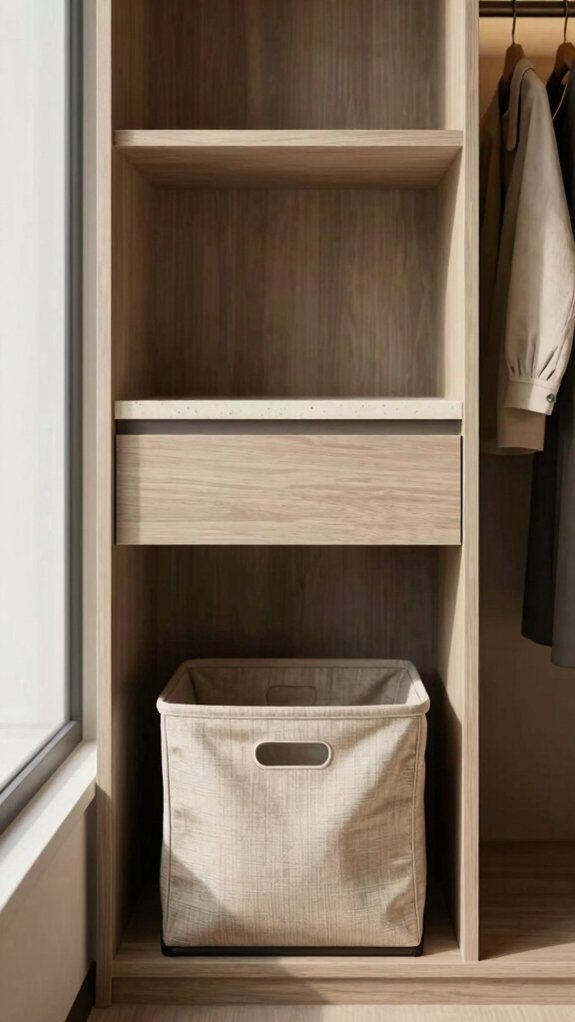
A built-in hamper keeps dirty laundry tucked neatly inside your dressing room wardrobe, so clothes don’t pile up on the floor and steal precious space! Tuck it into a lower cabinet, near hanging rods and everyday drawers, for a smoother routine.
- Choose a pull-out or lift-out bin for easy carrying.
- Add a louvered door or mesh liner for airflow and odor control.
- Set it near waist height, so tossing clothes won’t strain your back.
Use separate bins for simple Laundry sorting, if space allows. Closed cabinetry keeps everything out of sight. Best of all, your narrow room feels calmer, cleaner, and surprisingly spacious!
Adjustable Closet Systems
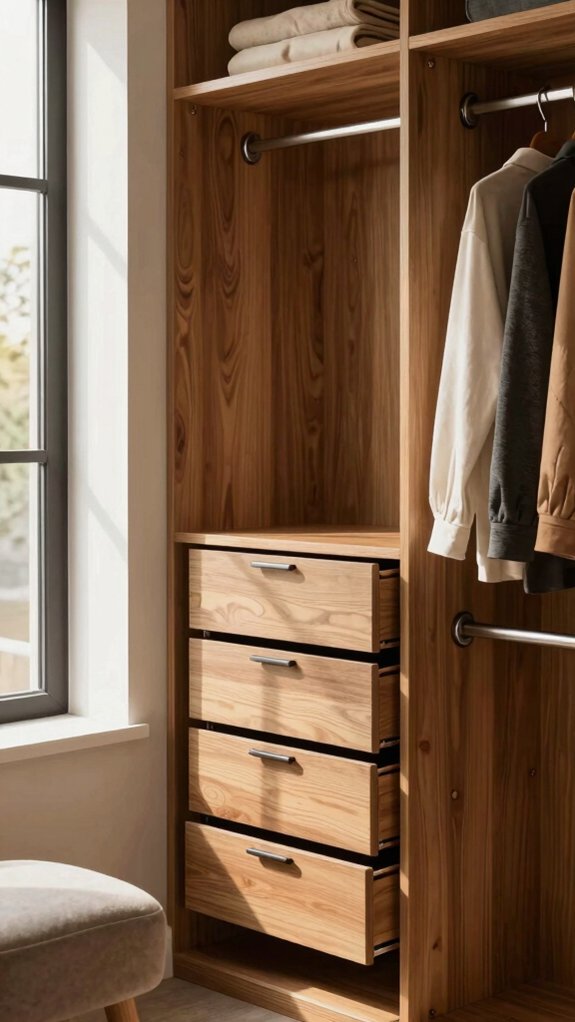
Make every inch work harder with an adjustable closet system! Choose modular shelving and rods you can move as your wardrobe changes. You’ll create a welcoming, personalized space that grows with you!
Add two rod heights in one bay: hang dresses and long skirts below, then reserve upper space for shirts and pants.
Use 16–18-inch shelves for folded pieces, while roughly 18-inch middle shelves keep sweaters, jeans, bags, and shoes tidy.
For a budget-friendly upgrade, install planked shelves with movable brackets and rods.
Reconfigure after decluttering, keeping the closet about 80% full.
Best of all, maximizing vertical space prevents awkward corners and makes every item feel at home!
Hidden Lighting Strips
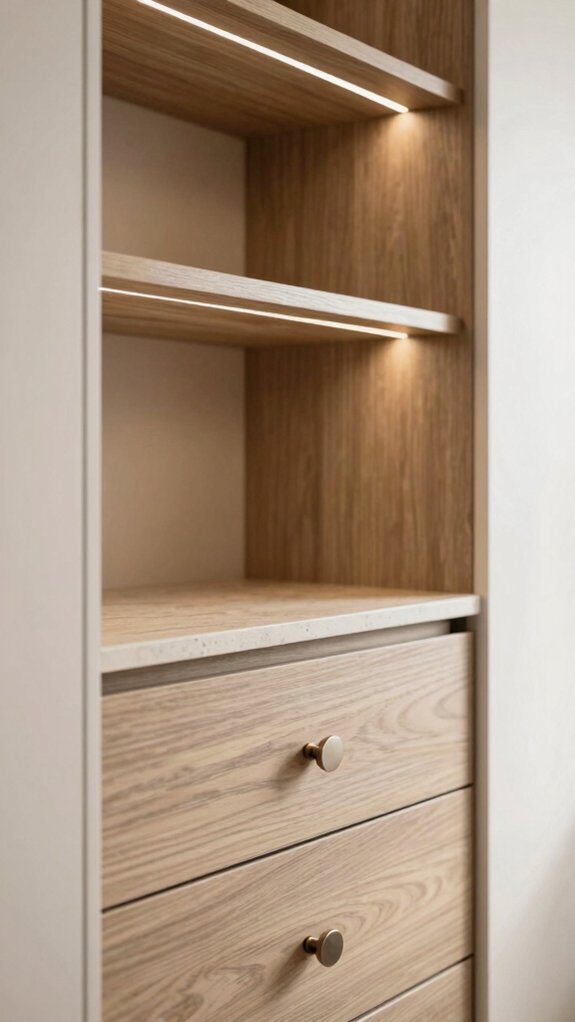
Once your adjustable shelves and rods are in place, hidden lighting strips can help every outfit and accessory stand out! Tuck concealed LEDs beneath shelves or inside cabinet tops for clean, even light—no bulky fixtures stealing space.
Try this simple setup:
- Place strips 6–10 inches from the mirror or centered above it for flattering, shadow-reducing coverage.
- Add dimming for bright daytime checks and softer evenings, creating easy Light layering.
- Hide wiring in channels, and keep the low-voltage driver accessible for quick fixes.
Choose glare control over sparkle, using a wall switch or motion sensor. You’ll feel welcomed, organized, and ready to shine!
Light Color Scheme
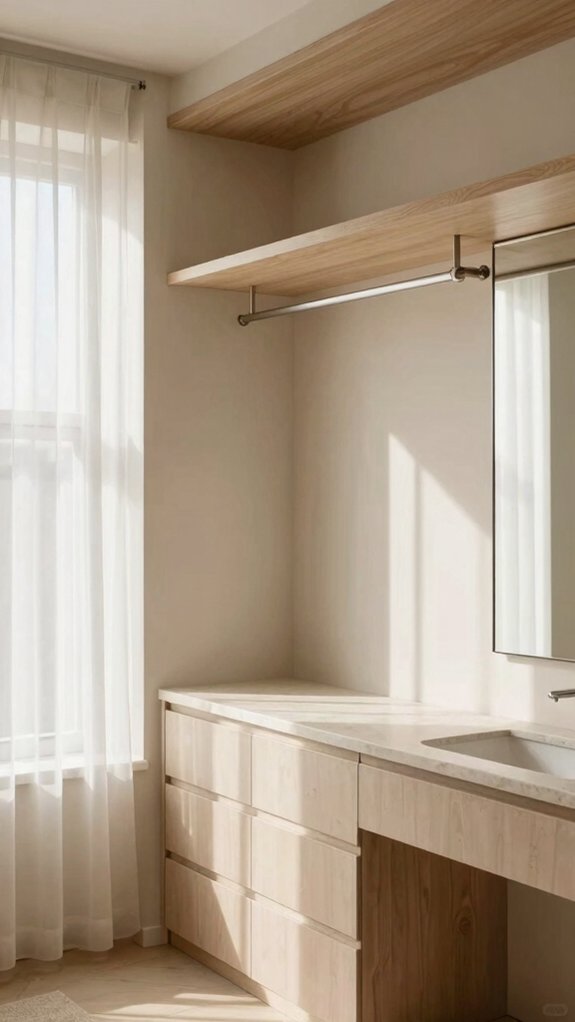
Choose a warm, light color scheme to make your dressing room feel bigger, brighter, and wonderfully inviting! Start with Warm neutrals, creamy whites, or pale blues to open the room and create a welcoming spot you’ll love using.
For a simple update, gather paint, a small roller, and painter’s tape. Paint every wall a skin-tone-flattering neutral or soothing aqua, then add bright white trim around frames and edges. Your clothes will look more accurate in the mirror, too!
Want personality? Hang one warm wallpaper pattern behind the vanity, keeping the other walls calm. Finish with patterned curtains and mild-reflective finishes for a little glamour!
Sliding Wardrobe Doors
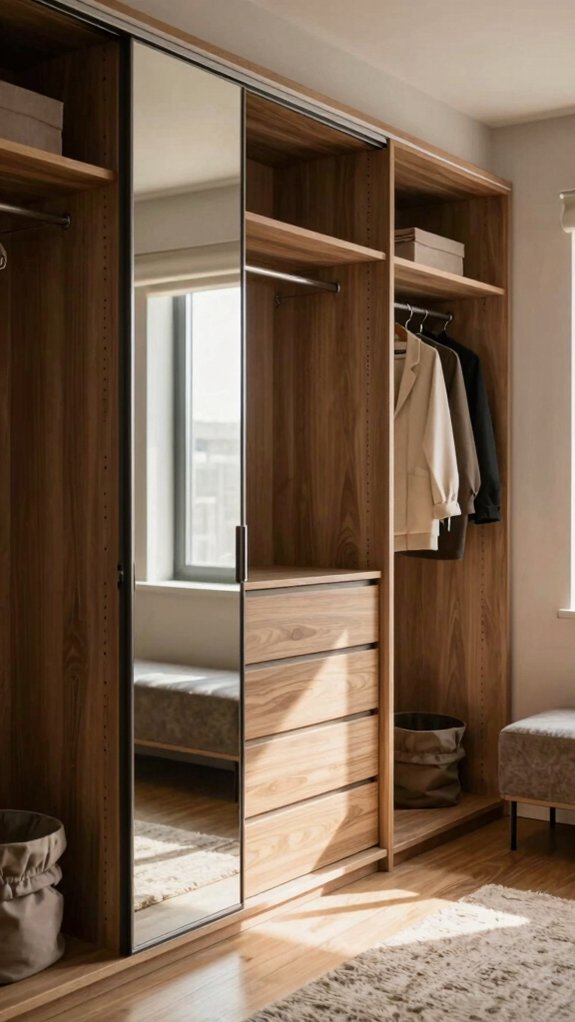
Sliding wardrobe doors keep your dressing room feeling open and tidy, especially when every inch matters! They won’t swing into your floor, leaving room for a slim bench, ottoman, or dressing table.
- Plan the fit: Match each door to the closet opening, then allow track clearance along the wall.
- Protect access: Arrange shelves and rods so you’ve got easy hanging rod access, even with doors closed.
- Add style: Choose glass panels for dust protection and glass privacy options, while still spotting coats and dresses.
Use vertical shelves, shoe rows, and adjustable rods behind the doors. It’s practical, welcoming, and wonderfully space-saving!
Ceiling Height Storage
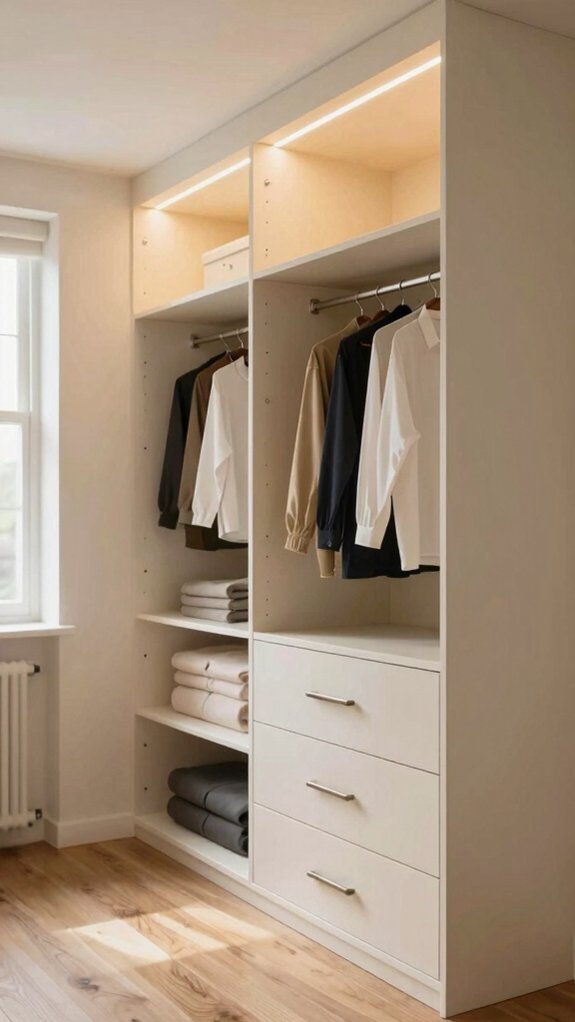
When your dressing room has extra room overhead, turn that forgotten space into a handy storage zone! Add a high shelf band, about 84–96 inches up, for out-of-season bags and shoes. It’s an easy declutter strategy: use slim, 10–12-inch-deep shelves for sweaters, scarves, or hats without making the room feel bulky.
For an 8–9-foot ceiling, install upper cabinets or stacked cubbies above your 60–66-inch hanging rods. Label each section with shelf labeling, so you won’t hunt later! Add a pull-down rack or rolling step stool for safe access.
With a low ceiling, choose vertical wall units that stop just below it—smart, welcoming storage!
Decorative Storage Boxes
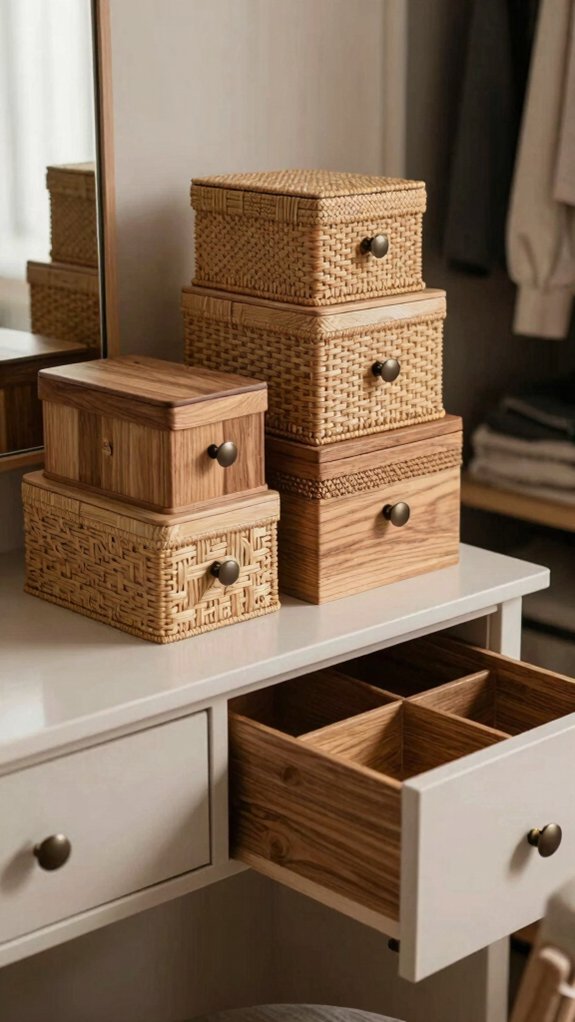
Decorative storage boxes can turn open shelves and tiny closet alcoves into tidy, stylish spots for your wardrobe extras!
Choose one color family, such as warm metal tones, so your dressing room feels welcoming, not busy. Try these easy picks:
- Use Lidded shelf boxes for out-of-season clothes; they block dust and use vertical space.
- Add Clear accessory bins or labeled boxes, so you can spot scarves and belts quickly.
- Pick lined fabric boxes for lingerie and hair clips; they keep small pieces protected.
Place heavier boxes on middle or lower shelves, and lighter ones above. Your tiny room will feel polished, cozy, and ready for you!
Clutter-Free Organization
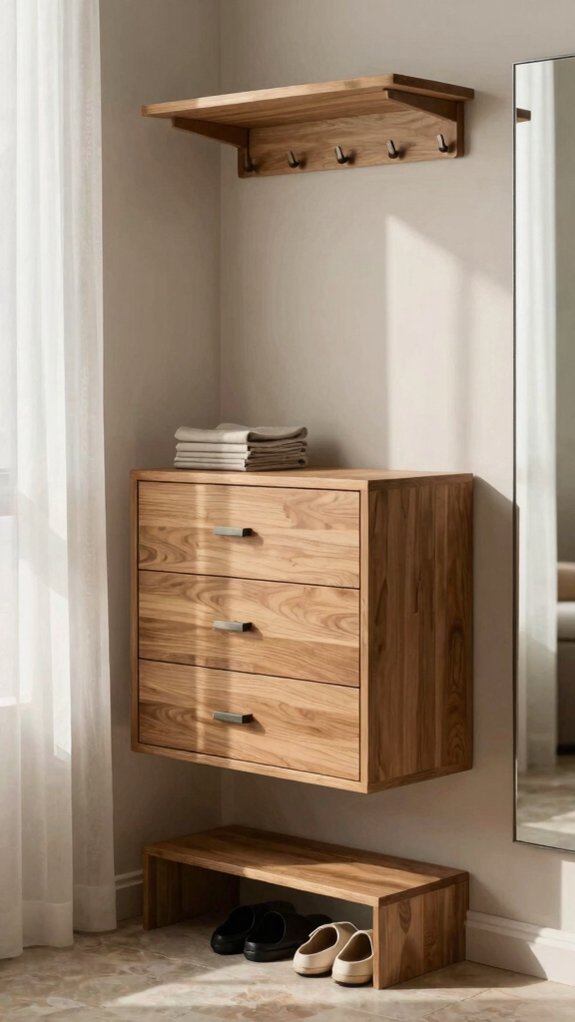
A tidy dressing room starts with breathing room, not cramming every shelf and drawer to the brim! Aim for 80% full, so every piece has a home.
Try this simple plan:
| Zone | Tool | Goal |
|---|---|---|
| Tops | 16-inch shelves | Neat stacks |
| Longwear | Adjustable rod | Easy reach |
| Small items | Clear bins | Visible categories |
| Jewelry | Drawer dividers | Tangle-free |
Group clothing by type through smart storage zoning. Create a return ready system, then follow your closet rhythm: when one item enters, one similar item leaves. Keep a donation tote nearby for quick wins!
Once a month, schedule a Declutter reset. Here’s the surprising part: open vertical storage beats deep piles every time—your room feels bigger instantly!
Frequently Asked Questions
How Much Does a Small Dressing Room Renovation Typically Cost?
You’ll typically spend $2,000–$8,000 renovating a small dressing room, though costs vary. Your Budget scope expands with custom cabinetry; compare contractor quotes carefully, and you’ll create a welcoming, organized retreat without stretching your finances.
Which Materials Withstand Humidity and Frequent Daily Use Best?
For humidity resistance and daily durability, choose sealed laminate, powder-coated metal, moisture-resistant plywood, and porcelain tile. Add scratch resistant materials, stainless-steel hardware, and washable finishes, so your welcoming dressing room stays beautiful and practical.
Can Renters Install Storage Solutions Without Permanently Altering Walls?
Yes, you can create rental friendly storage without damaging walls. Choose removable shelving, tension rods, freestanding wardrobes, and adhesive hooks. You’ll gain order without losing your deposit, making your space feel truly yours.
How Should Ventilation Be Managed in a Compact Dressing Room?
Improve ventilation by keeping doors ajar when possible, adding a quiet fan, and ensuring air circulation. Use humidity control, moisture barriers, and odor prevention habits so your compact dressing room stays fresh, comfortable, and welcoming.
What Safety Considerations Matter When Designing Storage for Children?
Prioritize sturdy, child-height storage with rounded corners, secure wall anchors, and non-toxic finishes. Add Smart lighting, clear pathways, and fire safe planning, so you’ll create a welcoming space where every child feels secure.