You can turn a plain sweatshirt into something truly cool by starting with one focal spot, like a kangaroo pocket or back panel, then layering thrifted florals, blue leaf prints, denim scraps, or gingham around it. I like keeping the palette to two or three shades, then adding white topstitching for that handmade pop my family always notices first. Mix small blocks, stars, or sleeve strips, and you’ll keep it trendy instead of chaotic, with plenty more ideas ahead.
Key Takeaways
- Choose a single focal area, like a kangaroo pocket or chest panel, to keep the patchwork sweatshirt trendy and intentional.
- Mix thrifted florals, gingham, denim, and solids in a limited palette for a balanced, unique look.
- Use small geometric shapes, staggered rectangles, or asymmetrical scraps for a modern patchwork layout.
- Add visible white topstitching and neat edge finishing to make the handmade design stand out.
- Back patches with interfacing or thin scraps so the sweatshirt stays structured, durable, and low-bulk.
Mixed Fabric Patchwork Design
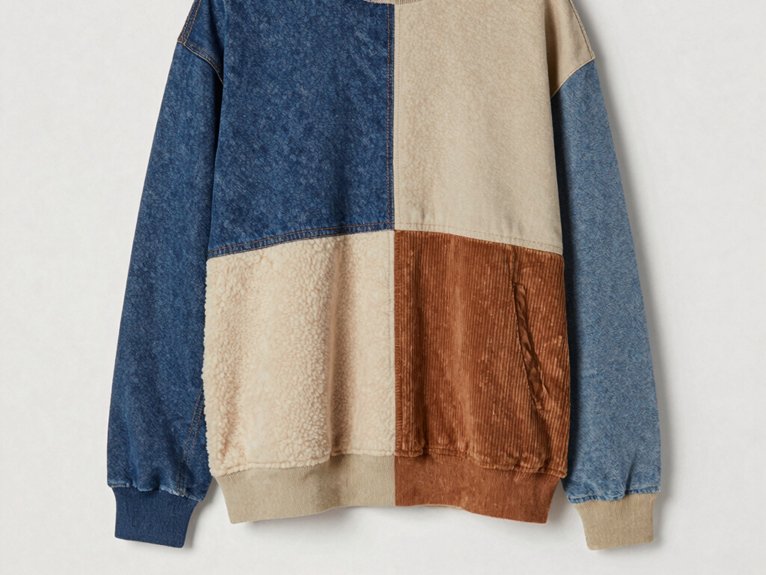
When I’m planning a mixed fabric patchwork sweatshirt, I like to start right around the kangaroo pocket, because that’s where a design can really wake up a plain grey hoodie.
You can mix blue leaf print, yellow floral, and blue-and-white gingham there, then clip them into stars or simple shapes.
I sketch first, because nobody wants a patchwork oopsie. I keep the placement asymmetrical and add hand dyed accents for warmth.
My mom taught me to use white thread for visible hand stitches, which feels homey.
Thrifted flannel and quilting scraps work great, too.
Denim Patchwork Sweatshirt
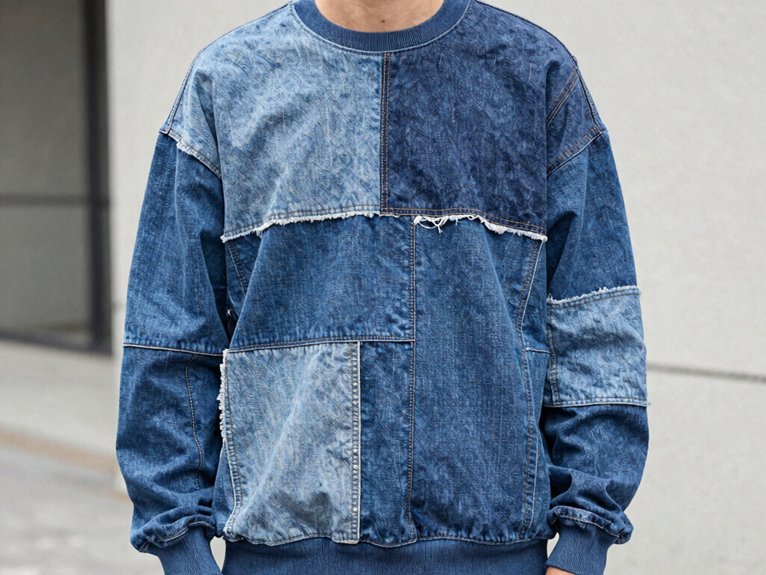
You can turn old jeans into a denim patchwork sweatshirt that feels creative and tough, and I love how those worn-in blues always look cool.
I’d cut light, medium, and dark jean scraps into uneven shapes, then stitch them onto the back of a grey hoodie with white topstitching so it looks handmade, not like it escaped a laundry basket.
If I’m adding patches near the pocket or elbows, I back them with a second thin scrap and press everything flat first, because nobody wants their sweatshirt acting like it’s made of noodles.
Upcycled jeans pieces
I love turning old jeans into a denim patchwork sweatshirt because the fabric already brings that worn-in, real-life character I can’t fake, and the best pieces usually come from the thigh and knee areas where the denim’s still sturdy.
You can cut staggered rectangles, then place them around your kangaroo pocket for a clean, friendly look.
I like mixing light, mid, and dark indigo so the hoodie feels layered, not loud.
Use white topstitching, 1 cm seams, and backstitch the stress spots.
My family even saves rivets and pocket flaps.
Recycled button embellishments and denim dye restoration help everything feel fresh.
Color Block Patchwork Style
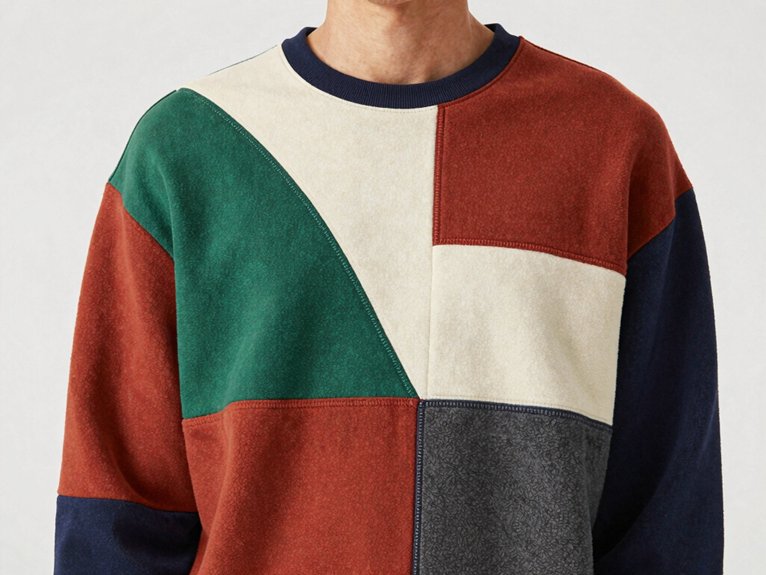
A few bold color blocks can turn a plain grey hoodie into something that looks straight off a streetwear mood board, and I love how fast this style comes together.
You can mix navy, mustard, and cream for a color gradient that feels fresh, not messy.
I like keeping asymmetrical balance by placing a diagonal chest panel with an opposite cuff block, so the whole thing looks intentional.
Choose 3–5 pieces in cotton twill, flannel, or lightweight denim.
My family calls it “fancy scrap day.” Cut clean edges, use white topstitching, and thrift your fabrics for a smart, low-cost win.
Floral Fabric Patch Details
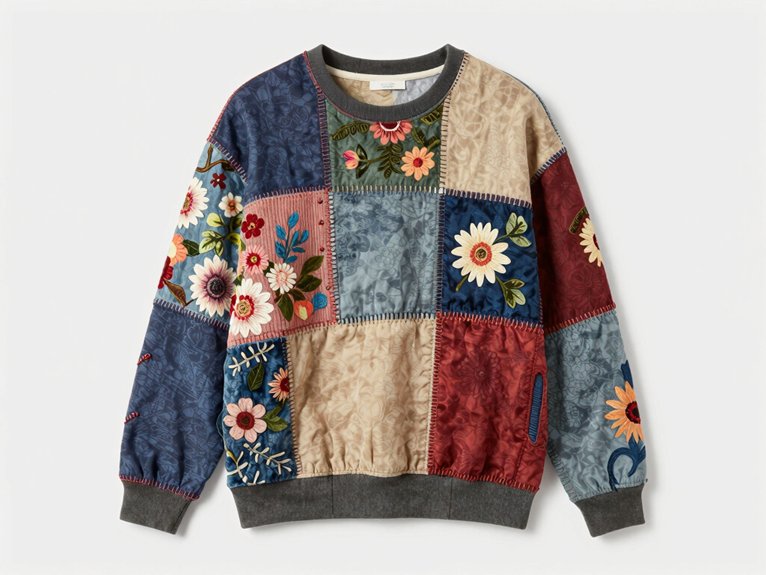
Florals can bring a little charm to a plain grey hoodie, but scale matters more than people think. I’ve learned that small-to-medium blooms, like 2–4 inch quilting scraps, feel friendly, not loud. My family likes when I stitch patches near the kangaroo pocket or down one sleeve; it looks pulled together, not random.
| Patch idea | Why it works |
|---|---|
| Star shapes | Cute, clear focus |
| Petal shapes | Soft vintage botanical feel |
| White running stitches | Strong, easy charm |
| Blue gingham pairings | Keeps contrast lively |
| Thrifted scraps | Cheap and unique |
For appliqué placement, I trust my aunt’s tip: one floral print can do the heavy lifting.
Vintage Fabric Scrap Look
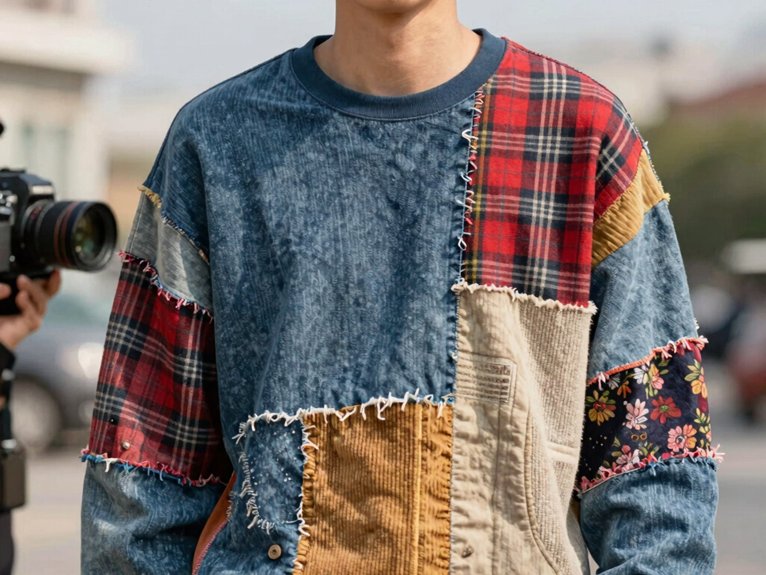
I’ve found that thrift stores are the best place to snag small vintage scraps, and you can turn 2–6 inch pieces from old flannel shirts, quilting leftovers, or even a worn dress into a sweet patchwork panel on a grey hoodie.
Try faded florals, blue leaf prints, and tired gingham, then mix in squares, stars, and pennants so the colors feel balanced instead of like your laundry basket made a cameo.
I back each piece with interfacing or a tiny denim scrap, stitch it down with white thread, and keep the sleeves plain—because sometimes the hoodie just wants to show off its pocket, not stage a full family reunion.
Thrifted material use
When I’m going for that vintage-scrap look, I start by raiding thrift stores and estate sales, because that’s where the good stuff hides.
For sustainable sourcing, I do fabric scouting in flannel shirts, old jeans, and quilting scraps, then mix florals, gingham, and faded denim on a neutral hoodie.
I cut stars, rectangles, or odd shapes and place them near the kangaroo pocket and cuffs, where old mends usually live.
I sew with white thread and big running stitches, about 6–10 mm.
Keep your palette to two or three shades; chaos can wait.
Minimal Neutral Patchwork
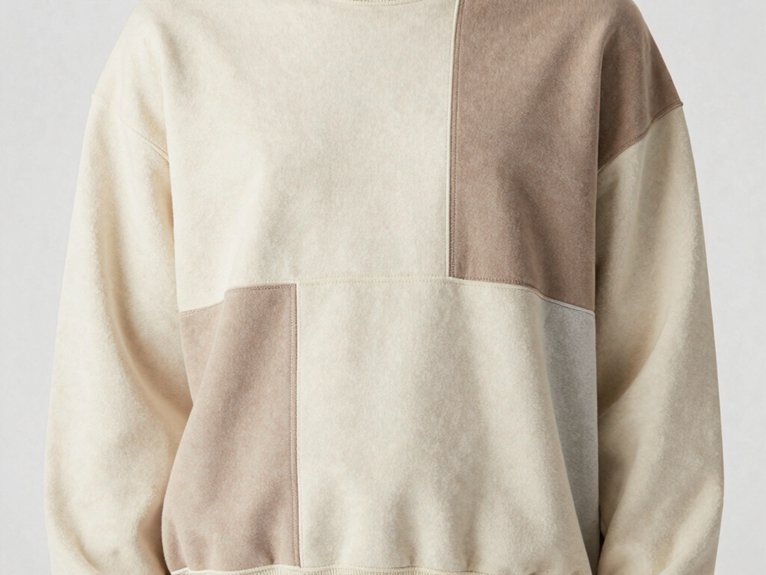
A quiet little patchwork moment can make a sweatshirt feel special without shouting about it. I like starting with a grey hoodie, then adding neutral textures like beige linen, cream flannel, and muted taupe gingham around the kangaroo pocket.
Keep the shapes small—rectangles, thin strips, or 2-inch squares—and space them evenly so the muted geometry feels calm, not chaotic. I stitch mine with white thread or pale beige running stitches, which my family says looks “fancy but still chill.”
Stick to one focal area, and thrifted scraps keep it easy, cozy, and very me.
Oversized Patchwork Sweatshirt
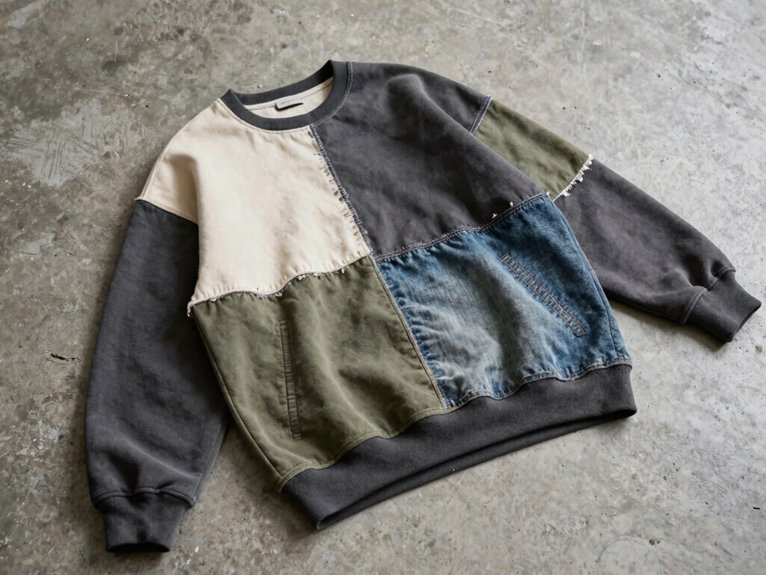
If the soft, muted look of a neutral patchwork hoodie feels a little too quiet for you, try sizing up and letting the whole thing get comfy and dramatic. I use an oversized grey hoodie, then add star-shaped appliqués near the kangaroo pocket for a friendly, lived-in vibe.
I keep the oversized silhouette balanced with big back panels and small sleeve patches, so the hoodie draping stays easy.
- I feel instantly included
- My thrift finds stay under budget
- White thread adds handmade charm
- A sketch first saves me from cringe, trust me
Geometric Patchwork Patterns
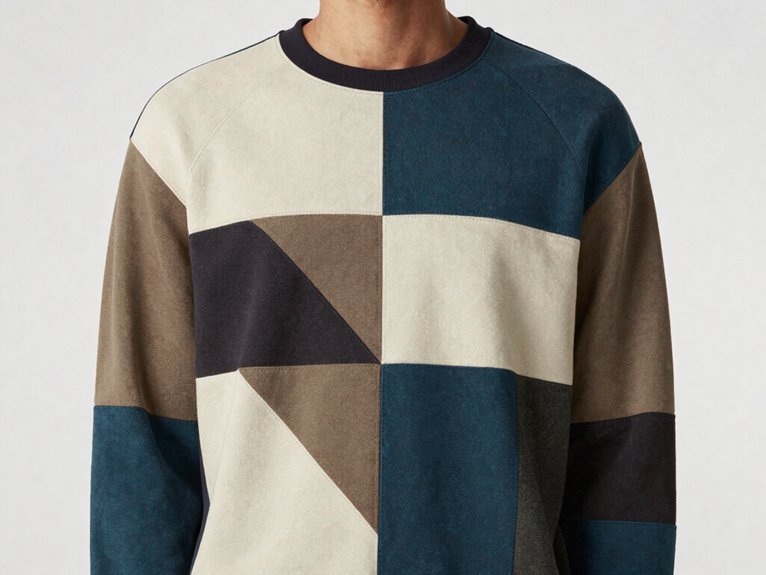
I like starting with a structured layout: on a grey hoodie, you can cut triangles, diamonds, and trapezoids from 2–3 prints, then place them around the kangaroo pocket so the whole thing looks sharp instead of “my fabric scraps got into a team meeting.”
I sketch chevrons, sunbursts, or grid blocks on paper first, keep the solid-to-pattern ratio close to 60:40, and my family always helps me sort the pieces before I move them to fabric.
For a bigger hit, I’d sew a full-back panel with 2–3 rows of evenly arranged blocks, because those 4–6 inch shapes give you real impact without making the sweatshirt look like it lost a bet.
Structured layout
When I want a patchwork sweatshirt to look tidy instead of “I found scissors in a drawer and went for it,” I start with a structured layout. I cut squares, rectangles, and triangles with rotary cutting techniques, then use interfaced appliqué methods so nothing warps on your grey hoodie. Build a grid or offset brick pattern around the kangaroo pocket and chest, mixing blue leaf, yellow floral, and gingham scraps.
- Balanced
- Cozy
- Proud
- Unmistakably yours
Topstitch with white thread, 2–3 mm apart. Keep patches 2″–4″. My family always notices the sleeve block first.
Sleeve Patchwork Accent
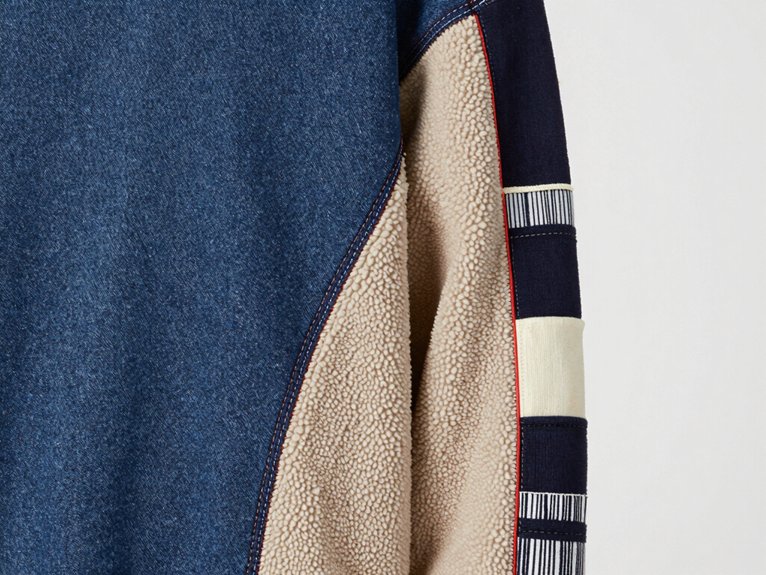
For a sleeve patchwork accent, I usually like to run a vertical strip of mixed scraps down the outer sleeve, from shoulder to cuff, because it reads plainly even from across the room.
You can mix blue leaf, yellow floral, and gingham, then add white topstitching for that honest, handmade look.
I keep sleeve embroidery simple here, since the patchwork should stay the star.
If your hoodie has an arm zipper, leave space so it still works.
I’ve found geometric pieces, like triangles or stars, help the sleeve move.
My family loves thrifted denim and flannel here, especially with interfacing.
Back Panel Statement Patchwork
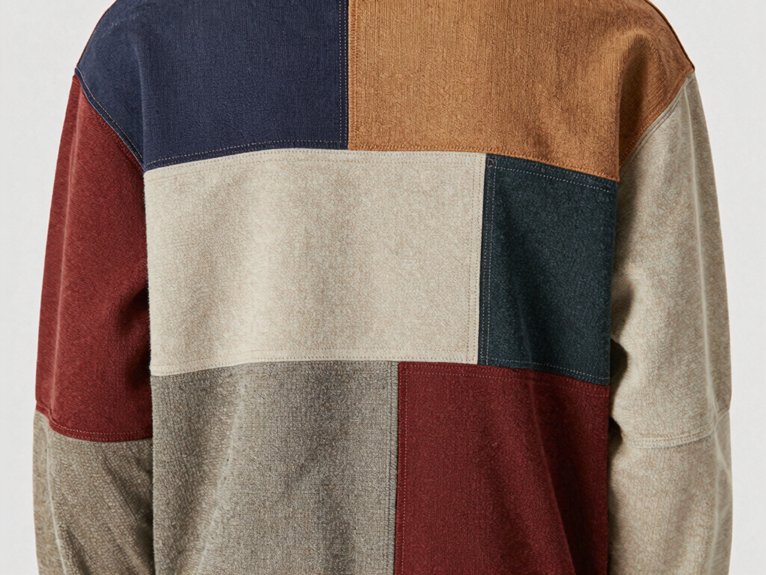
After those sleeve scraps start feeling a little too polite, I like to move the fun to the back and make the whole hoodie say something louder. I cut a 12″ x 16″ panel, then patch it with blue leaf, yellow floral, and blue-and-white gingham for bold statement placement. I sketch the layout first, because guessing is how I’ve ended up muttering at my table.
- Loved
- Seen
- Proud
- Connected
Add symbolic motifs like stars or script, then back it with interfacing. I topstitch in white, double-stitch the shoulders, and zigzag the edge so your piece feels sturdy, warm, and yours.
Contrast Stitch Patchwork
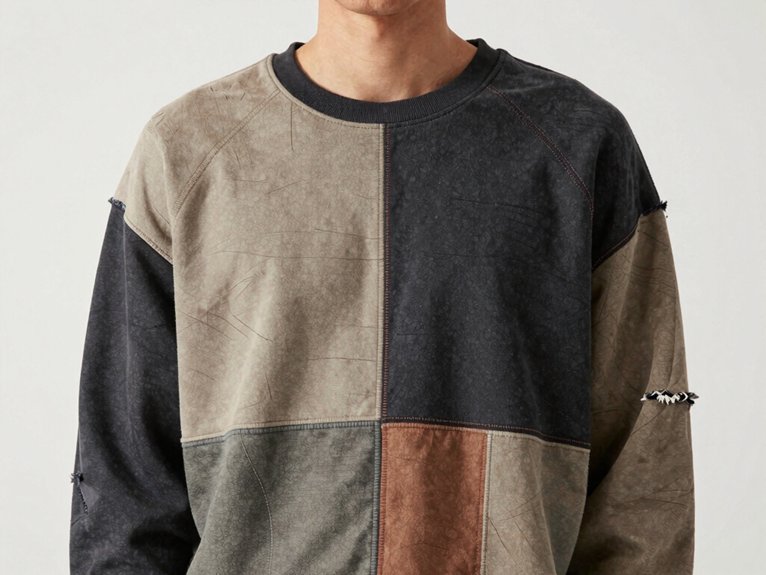
I like to use white thread on a gray hoodie or another bold contrast stitch, because it makes your patches pop and gives your sweatshirt that hand-made look my family always notices right away.
You can sketch the spots first, then stitch star-shaped scraps or other pieces around the pocket with long running lines or backstitch accents, keeping the spacing neat enough to show from across the room but not so perfect it looks like a robot did it.
Try a hidden scrap first so you can check stitch length and tension, since nobody wants a hoodie that looks like it got into a thread fight and lost.
Visible stitching detail
Running white thread over a grey hoodie can make patchwork feel instantly alive, and I love how those little visible stitches turn a plain sweatshirt into something that looks handmade on purpose.
When you add hand stitched hems and visible basting, your patches feel like part of the story, not afterthoughts. I’d use 3–4 mm spacing on appliqué edges, then stitch stars or pockets with a 2–3 mm seam allowance showing.
- It feels like your crew gets it.
- It looks cozy, not try-hard.
- It hides the “I fixed this myself” panic.
- It gives you bragging rights at dinner.
Pastel Patchwork Aesthetic
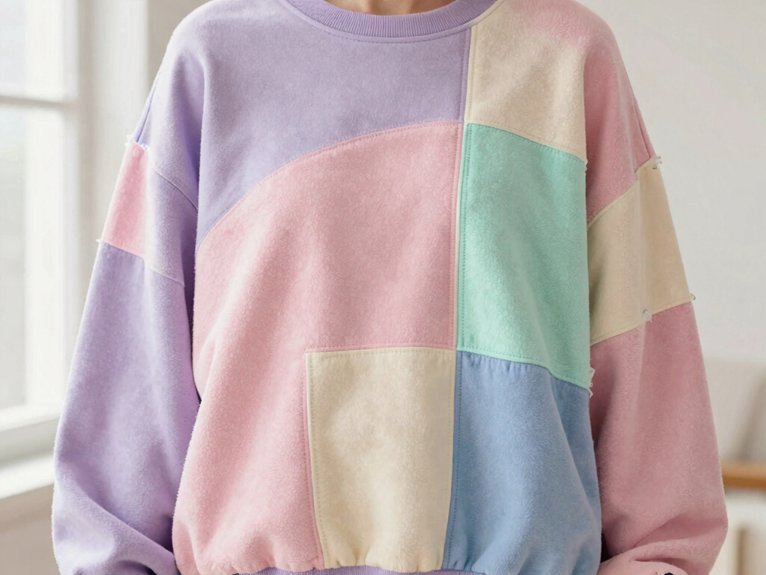
Pastel patchwork has a kind of quiet charm that sneaks up on you. I’d pick baby blue, mint, lavender, blush pink, and buttery yellow, then keep them in 3-6 blocks so your sweatshirt feels calm, not chaotic.
I like a neutral grey hoodie with pastel ombre squares and soft embroidery; it looks handmade in the best way. My sister noticed the same cozy vibe on a Sunday thrift run.
Put bigger panels on the back or sleeves, then add tiny accents near the kangaroo pocket. Mix gingham or tiny florals with solids, and keep contrast low for that friendly, Instagram-ready feel.
Random Scrap Patchwork Design
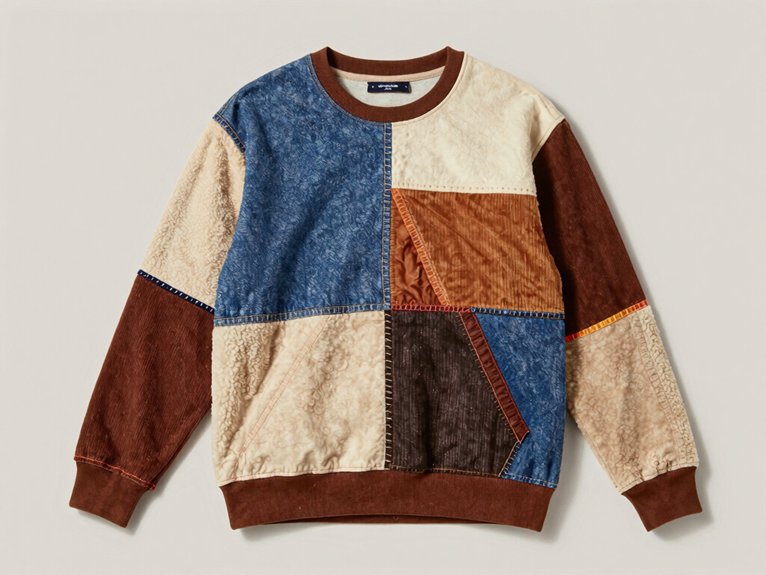
When you want a sweatshirt that feels a little more artsy than polished, random scrap patchwork is a fun place to start. I like pinning blue leaf, yellow floral, and gingham bits around the kangaroo pocket on a grey hoodie, then moving them until the balance feels right. I cut 2-to-6-inch scraps from old jeans and flannel, so nothing looks too neat. Visible white thread gives handmade texture. That asymmetrical layering makes it feel personal, like your people helped.
- Cozy
- Bold
- Friendly
- One-of-a-kind
Frequently Asked Questions
What Is the New Sweatshirt Trend?
You’re seeing patchwork sweatshirts with visible appliqué, color blocking, and asymmetrical panels, often on thrifted hoodies. You can mix fabrics, add contrast stitching, and make each piece feel personal, cozy, and uniquely yours.
How to Make a Sweatshirt Look Stylish?
You can make your sweatshirt stylish by adding color blocking, textured trims, and a focal patch near the pocket. Keep patterns limited, stitch details visibly, and choose thrifted scraps so you’ll look polished, unique, and included.
What Sweatshirt Style Is Most Flattering?
Crewneck sweatshirts flatter you most: they create layered silhouettes, balance your frame, and skim your waist. Cropped proportions suit you too, especially if you want longer legs. Pair either with fitted bottoms, and you’ll feel right in.
What Can I Make Out of Patchwork?
You can make a quilted tote, upcycled accessories, throw pillow covers, a jacket panel, or a pouch. You’ll stitch scraps into pieces that feel personal, cozy, and made for your style, helping you belong beautifully.