You can start 13 beginner hand-sewing projects with felt plush toys, bookmarks, scrunchies, coin pouches, pillow covers, drawstring bags, doll clothes, fabric flowers, and a DIY needle case. I’ve made quick ones with my family using cotton, felt, elastic, buttons, and a tiny bit of polyfill. Try blanket stitch, running stitch, or backstitch, plus a ribbon loop or snap when needed. They’re small, useful, and honestly way less scary than they sound—stick around, and you’ll see why.
Key Takeaways
- Easy beginner hand-sewing projects include felt plush toys, keychains, fabric bookmarks, scrunchies, and mini coin pouches.
- Simple materials like felt, cotton, ribbon, elastic, buttons, and polyfill make these projects affordable and beginner-friendly.
- Basic stitches—running stitch, backstitch, blanket stitch, and whipstitch—cover most beginner sewing needs.
- Small projects use simple cuts and seams, such as 1/4-inch seams for drawstring bags and 1/2-inch seams for tote bags.
- Finishing techniques like stuffing, topstitching, and ladder stitch create neat results without advanced machine skills.
Felt Plush Toys
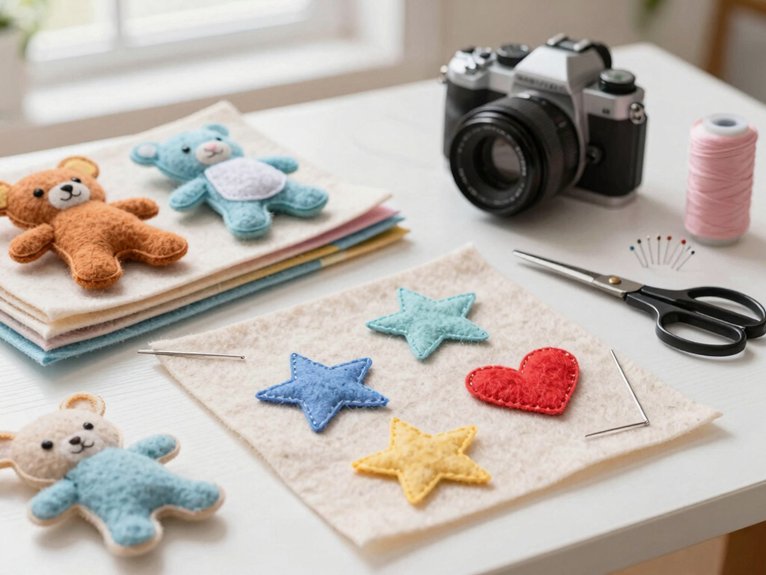
I often reach for felt when I want a beginner-friendly sewing win, because it’s forgiving in all the right ways: it doesn’t fray, so you can stitch raw edges together without hemming, and most little plush toys only need 2 to 4 pattern pieces plus a simple blanket stitch.
I’ve made tiny owls and bears with my kids at the kitchen table, and we always start with wool selection: 100% wool or wool-blend felt, about 1.5–2 mm thick, feels sturdy.
Choose 4–8 inch patterns with simple shapes.
Use stuffing techniques like small pinches of fiberfill and a chopstick. Don’t overstuff; your seams will thank you.
Fabric Bookmarks
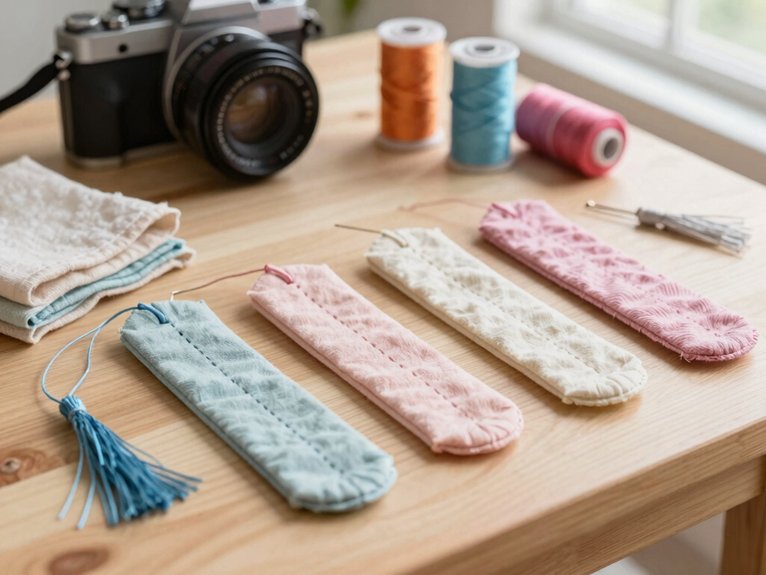
You can make a fabric bookmark with simple straight stitches, and honestly, that’s a great place to start when you want a project that feels doable instead of dramatic.
I usually grab a cotton scrap, fold it neat, and stitch along the edges with a running stitch or whip stitch, because a few steady lines can turn a tiny rectangle into something useful.
If you want it to last, add a ribbon loop or a little tassel at the top, and you’ll have a bookmark that won’t disappear into the couch like my family’s missing socks.
Simple straight stitches
Start with a pair of cotton rectangles, and suddenly you’ve got the makings of a very useful little project. I’ve made these with my family, and the simple straight stitches feel like friendly directional practice. Keep even tension as you sew, so the edges stay neat and nobody gets bookmark wonkiness.
| Step | Tool | Tip |
|---|---|---|
| Sew | Needle | Use 1/8″–1/4″ stitches |
| Press | Fingers | Flatten seams first |
| Finish | Thread | Topstitch close to edge |
Add interfacing for body, then turn, press, and enjoy a crisp finish. A ribbon loop or tiny appliqué? That’s your bonus charm.
Scrunchies
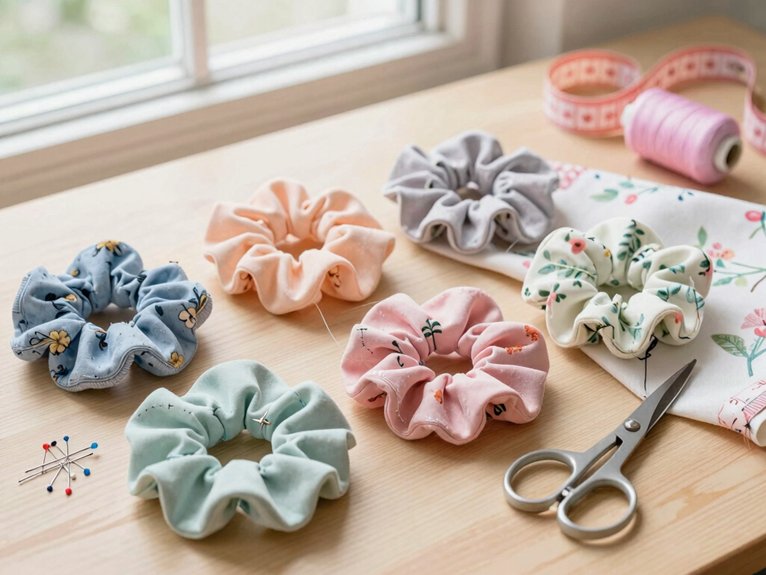
Scrunchies are one of my favorite beginner hand-sewing projects because they’re quick, useful, and honestly kind of addictive once you make the first one.
You can make travel scrunchies from an 18–22″ cotton or linen strip, 2.5–3″ wide, plus a 6–8″ elastic loop.
I like pre-cutting a few for scrunchie variations, then stitching them with a simple running stitch.
Fold the fabric lengthwise, insert the elastic, and close the seam with a ladder stitch or whipstitch.
Use sharp embroidery needles and strong polyester thread, and you’ll finish one in about 10–20 minutes—fast enough for me and my family to make a little stack.
Mini Coin Pouch
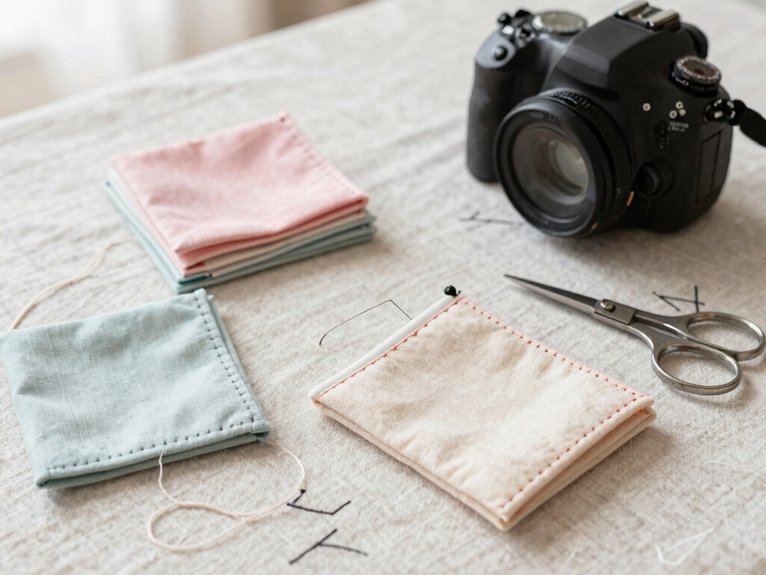
If scrunchies got you hooked, a mini coin pouch is the next tiny project I’d hand you with a grin.
I’d start with a 6″ x 8″ cotton or linen rectangle, fold it in half, and sew the sides with a running stitch or backstitch. You’ll only need about 10–12 stitches per side, so it feels friendly, not fussy. I like strong all-purpose thread and a size 9 needle.
Add a 2″ zipper, a snap, or a flap with a button. Try color blocking or a magnetic closure, then finish seams and add initials or a leather tab.
Hand-Sewn Pillow Cover
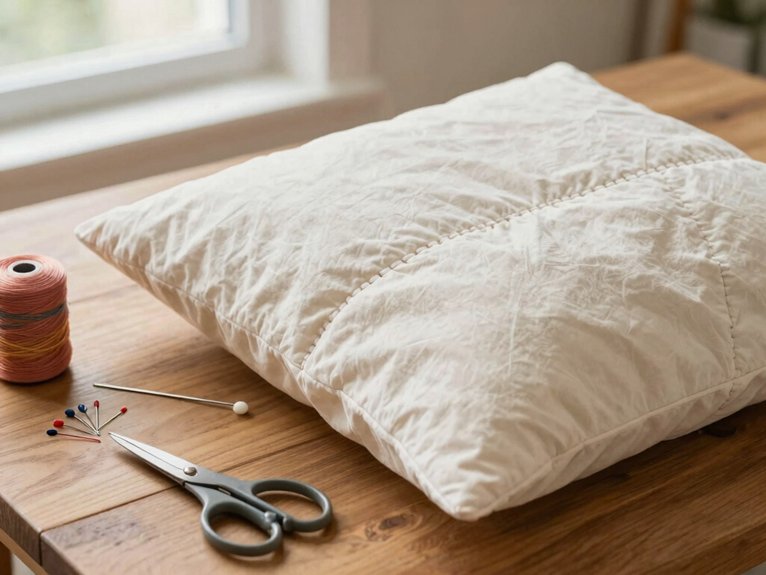
A hand-sewn pillow cover is one of those projects that looks elegant but stays very doable, which is exactly why I love it.
You’ll fit right in with this cozy win.
- Pick linen or cotton.
- Cut one front and two back panels 2–3 in shorter.
- Press, then baste with tiny running stitches.
- Finish with backstitch, whipstitch, or slip stitch.
I’ve even used vintage buttons and hand sewn closures for a sweet family touch.
A 12×12 in scrap-fabric cover can take 1–2 hours, and yes, your seams can look neat without acting elaborate.
Felt Keychains
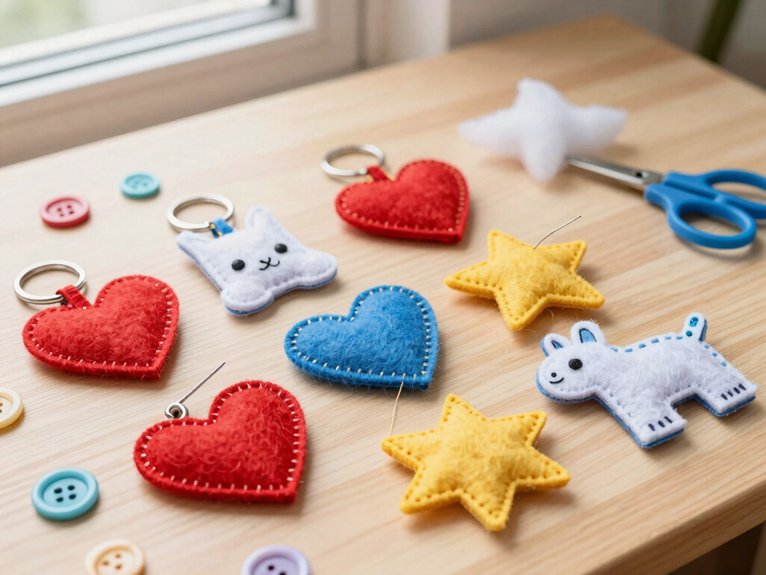
Felt keychains are perfect when you want a small project that doesn’t eat up your whole afternoon, and I’ve seen even my own family finish one between snacks.
You can cut two simple felt shapes, stitch them together with blanket or whip stitches, and add a ribbon loop or split ring so it’s ready for keys, backpacks, or that one cousin who loses everything.
In about 15 to 30 minutes, you can make something cute, useful, and just tricky enough to feel like you actually made something—without turning your table into a craft disaster zone.
Great for small projects
When I want a tiny project that still feels satisfying, I reach for felt keychains. You can fit in like the rest of us crafters with these felt accessories and tiny ornaments. They’re quick, cheap, and kind to beginners—no fraying drama, thank goodness.
Try this:
- Cut two matching 2–4 inch shapes.
- Stitch around the edge with 2–3 strands of embroidery floss.
- Add a teaspoon of polyfill, then close with backstitches.
- Reinforce a felt tab or eyelet for the jump ring.
I’ve made these with my family, and they always feel like little wins.
Fabric Headbands
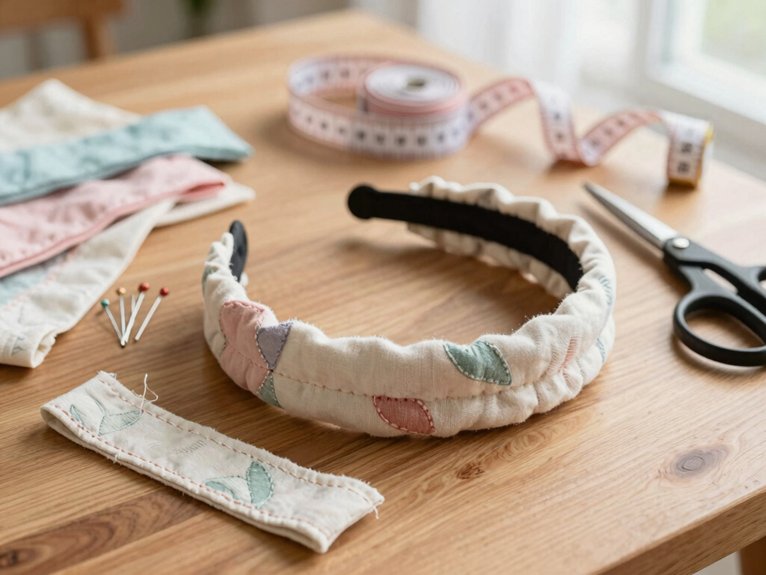
Headbands are one of my favorite starter projects because they’re quick, useful, and forgiving when your stitches aren’t perfect. I’ve made them with my family using linen and quilting cotton, and they feel welcoming to wear. Try this:
| Step | What you do |
|---|---|
| Cut | Use a 4″ x 22″ strip. |
| Sew | Stitch the long edge with a backstitch. |
| Finish | Turn, press, and close the ends. |
For elastic variations, add 1/2″ elastic, 4″ to 6″ long. I like seasonal fabrics, a thimble, and sharp scissors. You’ll look polished without wrestling a sewing machine.
Simple Tote Bag
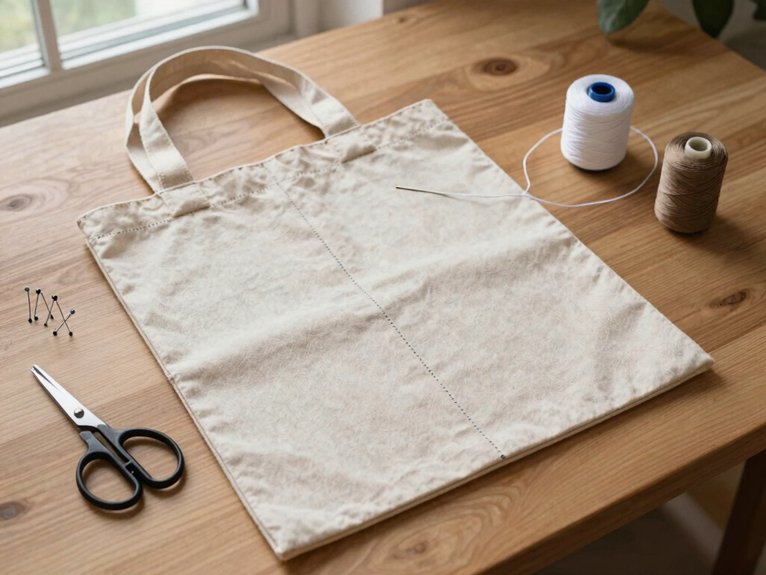
A simple tote bag is one of those projects that looks ornate but stays friendly for beginners.
I’ve made a few with my family, and they fit right in at school runs and market trips.
You can join the tote crew too.
- Cut two body pieces and two lining pieces from one yard of quilting cotton.
- Hem the top edges, then sew the pairs with 1/2″–5/8″ seams.
- Add reinforced corners by box-pleating each bottom corner.
- Check handle placement, then stitch 2″ strips or webbing with a rectangle and X.
No machine? Use backstitches and heavy thread.
Patchwork Coasters
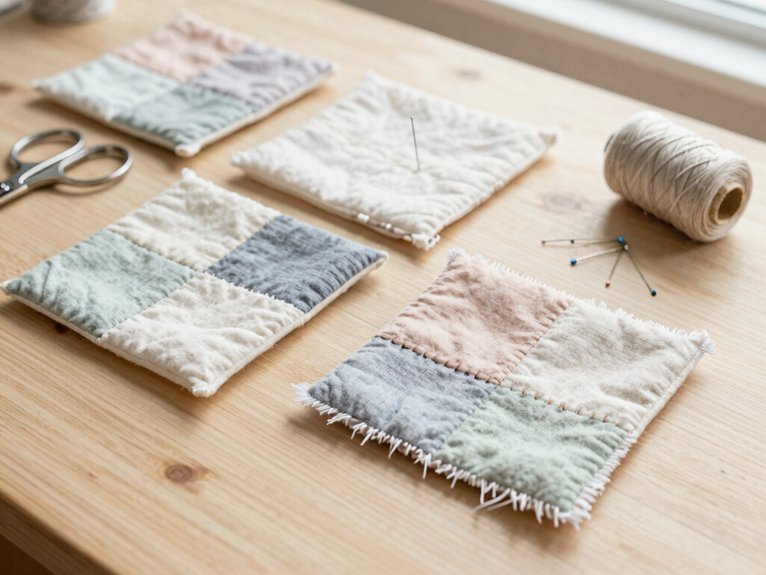
Tiny scraps can turn into something surprisingly useful. You can stitch patchwork coasters that feel like little wins for your table and your stash.
Start with a four-patch or nine-patch using 1.5″ to 2″ squares; cut them a half-inch bigger for seam allowances, then keep your 1/4″ seams steady. I like cotton scraps and all-purpose thread, especially when I’m matching seasonal themes for gifts.
Press each row, then layer a 6″ cotton batting square and backing. Trim edges, topstitch, and whipstitch the backing by hand.
Make four or six. You’ll finish fast, learn fast, and your mug gets a cozy buddy.
Drawstring Bag
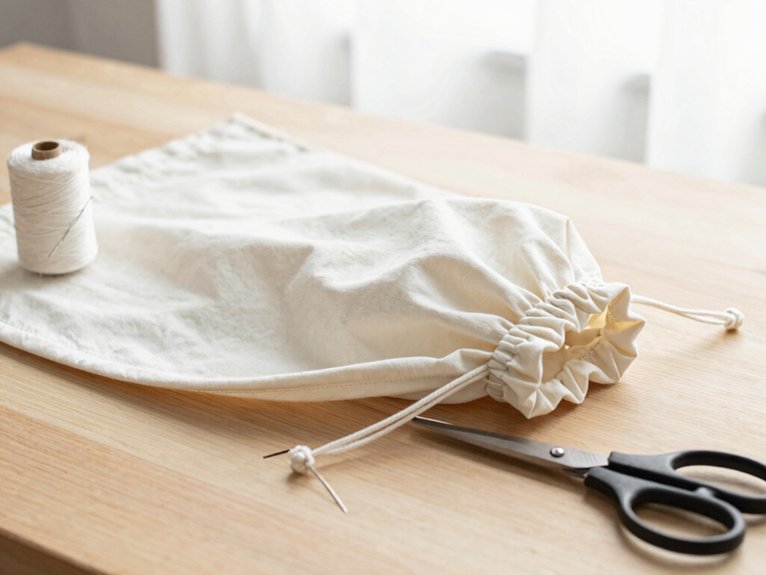
Drawstring pouches are one of my favorite quick wins, because you can make a useful little bag from just two fabric rectangles and some steady hand stitches. You’ll fit right in with this beginner-friendly project.
- Pick sturdy cotton for smart fabric selection.
- Sew the sides with 1/4″ seams.
- Fold the top twice for the casing technique.
- Thread cord through, then cinch it shut.
I use a safety pin, and my family always cheers when scraps turn into something handy. Add a button or ribbon if you want. Keep stitches small; your bag’ll last.
Handmade Doll Clothes
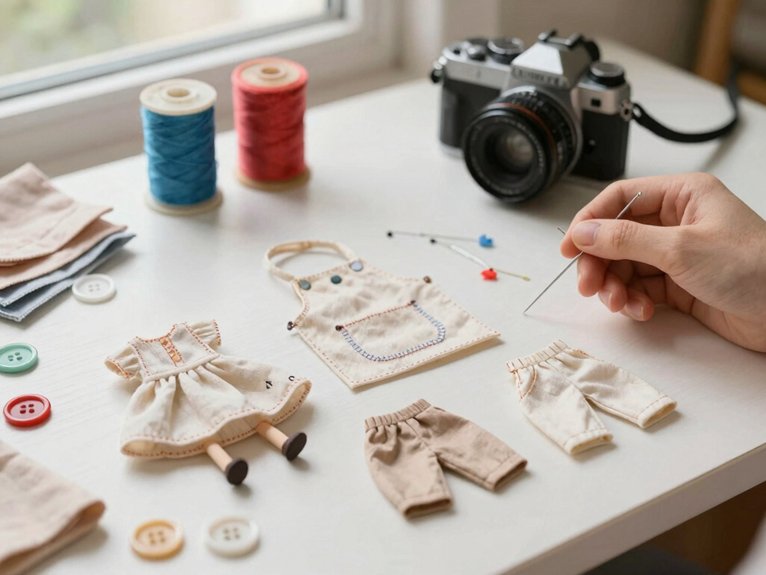
You can make handmade doll clothes as a fun beginner project, and I’d start with a simple pillowcase dress or elastic-waist pants sized to your doll’s chest, waist, and back length.
I like using scrap cotton or linen with pre-cut pieces, since fewer seams mean less wrestling with tiny fabric bits that somehow vanish into the couch.
Sew the seams with a backstitch for strength, finish the edges with a whipstitch, and add snaps, ribbon ties, or a tiny felt flower for a cute finish that won’t make you negotiate with buttons.
Creative beginner project
When I make handmade doll clothes, I like to start with a simple pattern sized to the doll’s measurements, whether it’s for a 12-inch buddy or an 18-inch favorite from the toy shelf. You’ll feel right at home once you try it.
- Trace pieces on lightweight cotton or linen.
- Pre-cut, baste, then backstitch with a 1/4″ seam allowance.
- Close necks and waists with slipstitch or ladder stitch.
- Add tiny snaps, Velcro dots, or ribbon ties.
I’ve used pinking shears and bias binding for durable finishes, and my family loves the mini theater and seasonal outfits.
Fabric Flowers
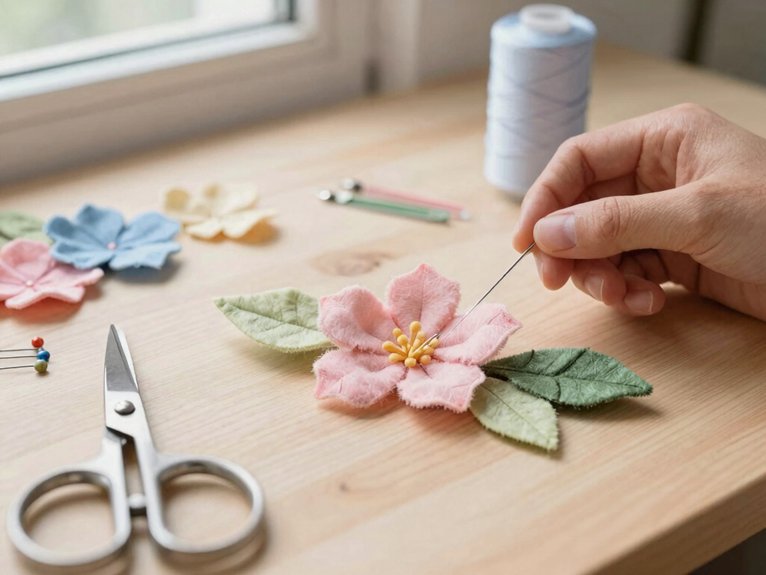
Fabric flowers come together fast, and I love that they can turn a sad little scrap bin into something cheerful in just 10 to 15 minutes. I’ve made them with my family from cotton, linen, and even recycled sari flowers, and we cheer when the pile shrinks. | Style | Time | Finish | |—|—|—| | Yo-yo | 10 min | bead center | | Layered petal | 15 min | embroidered button centers | | Appliqué | 12 min | blanket edge | Use 2 to 4 layers, a running stitch, and a button, bead, or French knot. Pack scraps, interfacing, and scissors, and you can stitch smiles anywhere.
DIY Needle Case
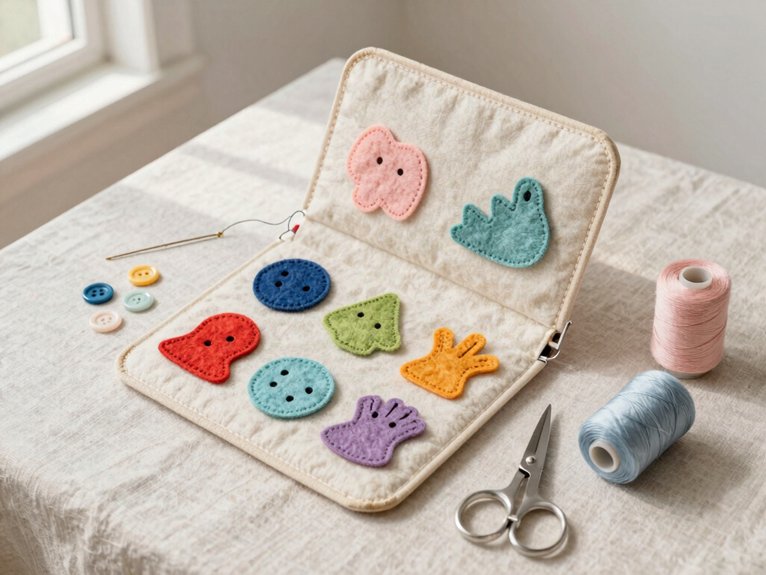
After making a pile of cheerful fabric flowers, I usually like to stitch up a DIY needle case so the tiny bits of sewing life have a safe home, too. You’ll fit right in with this one. Use a 3″ x 6″ felt rectangle, fold it, and stitch two sides.
- Slip in a 2″ x 2″ wool pad.
- Add a 1/2″ snap or elastic loop.
- Try portable pincushion ideas if you travel.
- Stitch a 1″ patch or initials.
A thin leather edge helps, and magnetic needlekeeper designs can inspire extras. My family calls mine “the no-spill zone.”
Frequently Asked Questions
What Hand Sewing Needles Work Best for Beginners?
You’ll do best with a sharp crewel needle for most fabrics and a blunt tapestry needle for embroidery or thicker weaves. You’ll feel included quickly, because both are beginner-friendly, easy to handle, and forgiving.
Which Thread Is Easiest for Learning Basic Stitches?
You’ll probably find polyester thread easiest for basic stitches—it’s smooth, strong, and forgiving, though some say embroidery floss feels friendlier. Try both; you’re not alone, and you’ll quickly uncover which thread helps you belong.
How Do I Knot Thread Without It Slipping?
You knot thread by doubling it through the needle, then tying a double knot close to the end. Leave a longer tail lengthening your grip, and gently snug each knot so it won’t slip.
What Fabric Is Easiest to Sew by Hand?
Cotton muslin’s usually easiest for you to sew by hand because it’s smooth, stable, and forgiving. You can also try a linen blend for a slightly textured feel that still welcomes your stitches.
How Can I Keep Stitches Even and Neat?
Use a guide mark, then stitch slowly; your needle obeys best when you do. Keep even spacing and consistent tension, and suddenly your wobbly line becomes a neat little club of stitches you belong to.