You can optimize space with a TV room divider that does more than hold a screen. I like freestanding units such as a Bronson-style divider with open shelves, or a swivel option like Porada Mediacenter, because they split living and dining zones without blocking light. Add closed cabinets, hidden cable runs, and floor plugs so cords don’t turn into family trip traps. If you keep going, you’ll see which setup fits your room best.
Key Takeaways
- Choose a room divider with built-in storage to separate zones and keep remotes, games, and cables organized.
- Use a swivel TV panel so one screen can face both living and dining areas without moving furniture.
- Plan hidden cable routing early with floor plugs or concealed channels for a clean, safe setup.
- Pick floor-to-ceiling or freestanding dividers with open shelves to maximize vertical storage without blocking light.
- Combine closed cabinets and shallow drawers with open shelving to balance clutter-free storage and airy style.
Why Choose a TV Room Divider
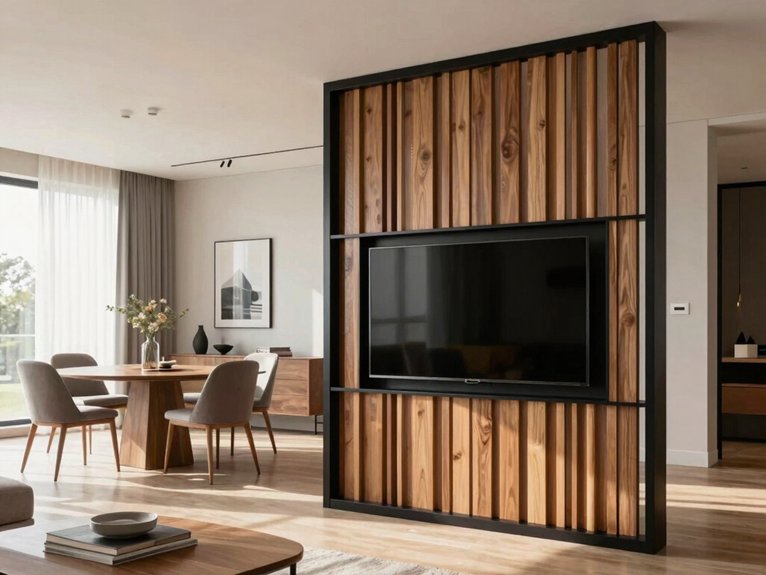
When I look at a room divider with a TV, I don’t just see a place to hang a screen—I see a smart way to make one room work harder. You can split living and dining zones, yet keep visual continuity, so everyone still feels connected.
In my home, a freestanding divider with shelves holds books, games, and the remote graveyard. That’s real space saving aesthetics. If you add a swivel panel, you can watch from the sofa or kitchen without dragging furniture around like a circus act. Plan cable feeds early, and you’ll keep it tidy, safe, and family-friendly.
Best TV Room Divider Types
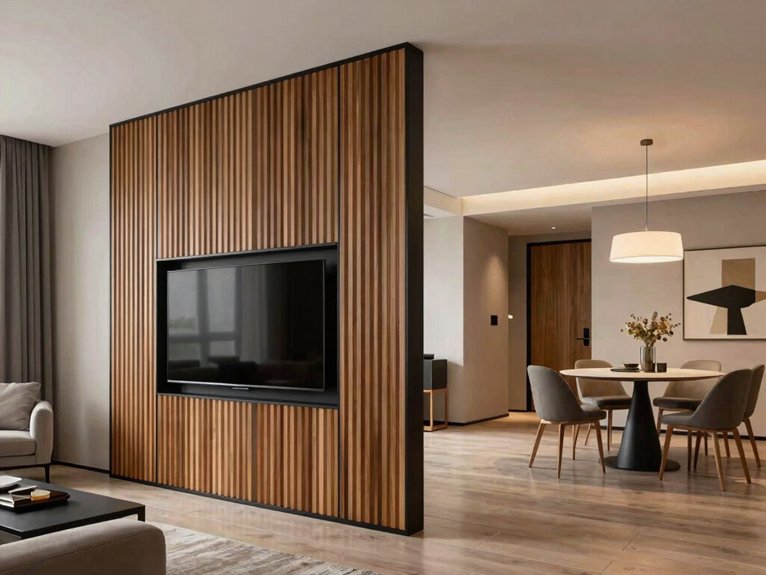
When I help my own family sort out a TV zone, I usually look at built-in storage dividers first, because they can hide cords, stash remotes, and still keep the room feeling neat.
If you want more flexibility, swivel TV panels like the Porada Mediacenter let the screen turn 360°, while soft curtain partitions give you an easy, budget-friendly way to separate space without turning your living room into a construction site.
I’d start with the option that fits how you watch TV, how much storage you need, and how much drama you’re willing to invite into the room.
Built-In Storage Dividers
You can add open shelves, closed cabinets, recessed LED lighting, integrated seating, and even acoustic panels for a calmer family hangout. For smaller rooms, the Bronson offers tall cabinets and cable management without wall mounting.
I’ve found that anchoring heavy built-ins to the floor or ceiling keeps everything sturdy, tidy, and ready for real life.
Swivel TV Panels
Spinning from one room to the next, a swivel TV panel feels like a tiny bit of magic in a busy home. I like how one screen can face your living room, then turn toward a bedroom or garden nook with a smooth rotating mechanism. You’ll need smart cable routing, too, so cords stay hidden and nobody trips during movie night.
I’ve seen freestanding units like the Bronson Room Divider, and fixed floor-to-ceiling pivots work well when you want extra strength. Add shelves or cabinets, and you’ll get storage, style, and fewer “where did the remote go?” moments.
Soft Curtain Partitions
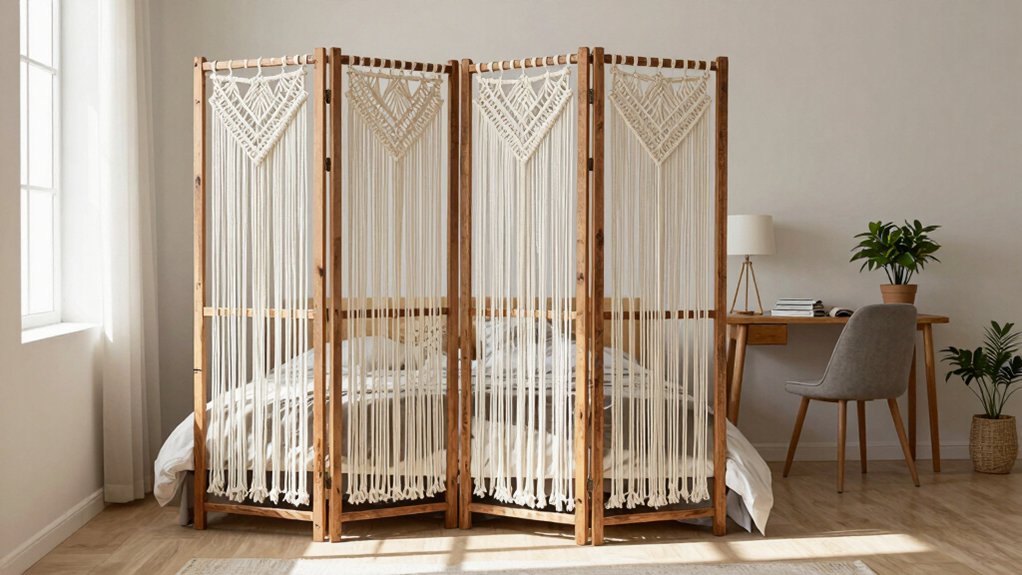
Choose acoustic drapery or blackout fabric if you want less echo and less glare; in my house, that made movie night feel kinder to everyone’s ears. Want daylight too? Try patterned sheers. They soften the view, keep things open, and add a cozy, “we live here together” feel. A colored curtain can mark your TV nook fast.
Add Storage to Your TV Divider
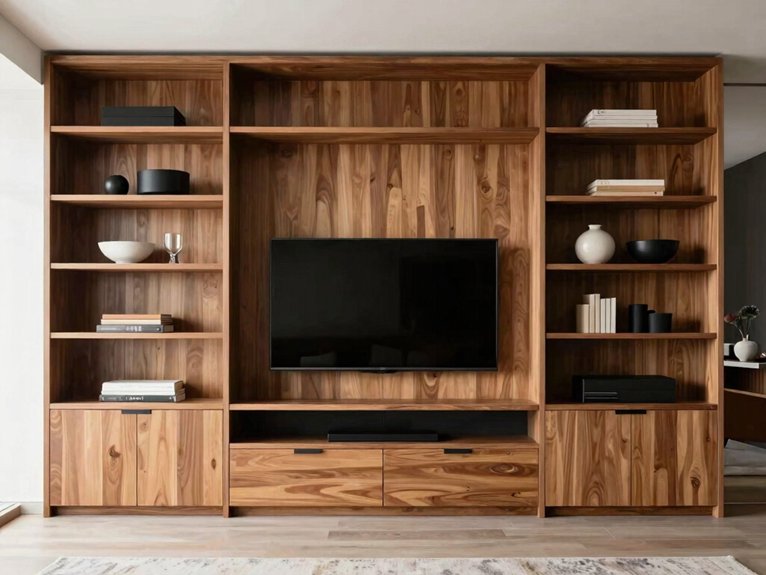
When I’m trying to make a TV divider earn its keep, I always want it to do more than just stand there looking pretty. In my house, I add hidden niches and adjustable shelving, so the unit feels made for real life. Mix open display spots with closed cabinets for remotes, games, and the mystery cords that multiply overnight. I like recessed LED strips and cable channels, because the TV can swivel without a tangle tantrum.
Choose a light wood finish, matte or glossy, and modular pieces like Bronson or Porada styles. If it carries heavy gear, ask for reinforcement.
Use a Floor-to-Ceiling Partition
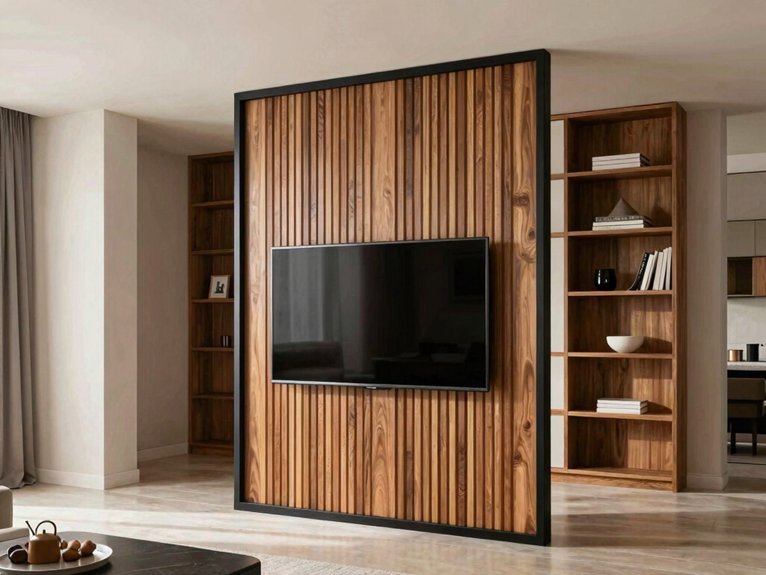
When you use a floor-to-ceiling partition, you can pack in tall cabinets, open shelves, and hidden TV storage without making your room feel boxed in.
I’ve seen this work best with light wood, black metal poles, and recessed LED strips, because the divider zones your space and still lets light drift through—no cave-like vibes here, thank you very much.
If you add a swivel TV mount and careful cable routing, you’ll get clean viewing from more than one spot, and your family won’t be wrestling cords like it’s a weekend sport.
Maximize Vertical Storage
Go all the way up. I’ve learned that a floor-to-ceiling divider can turn one wall into your family’s hardest-working spot. Add full-height cabinets, open shelves, and a TV nook, and you’ll stash linens, media, and decor without crowding the room. I like light wood with slim black metal poles; it keeps things airy.
| Feature | Benefit |
|---|---|
| Recessed LEDs | Easier browsing |
| Cable channels | Hidden cords |
| Custom joinery | Safer heavy storage |
Stacked baskets fit the lower shelves, and a vertical ladder helps reach the top. I’d hire a pro for install—wobbly TVs aren’t my hobby.
Zone Without Closing In
If you loved the floor-to-ceiling storage idea, you can take that same thinking and use it to zone your room without boxing it in. I’ve seen a freestanding partition with shelves, slim cabinets, and a swivel TV mount work wonders in a busy family room.
Pick lighter wood and slender black poles so the divider feels airy, not like a wall trying too hard. Keep cabinets shallow, about 24 inches deep or less, to protect circulation. Add acoustic textiles nearby, and you’ll soften sound while keeping natural ventilation moving. It’s neat, calm, and still feels like home.
Add Lighted Joinery
A floor-to-ceiling partition can pull a room together fast, and I love it most when it does double duty with lighted joinery. In my home, a light-wood divider with recessed LED strips gave us soft evening glow, more storage, and zero cave vibes.
Add incorporated tasklighting in shelving alcoves, then hide the controls with hidden dimmers so TV night stays calm. I’d also run cables through built-in channels and a floor or ceiling feed, so the TV can swivel without cord spaghetti. I like slim black mullions too; they keep the look open, like Bronson, but friendlier.
Pick a Freestanding TV Divider
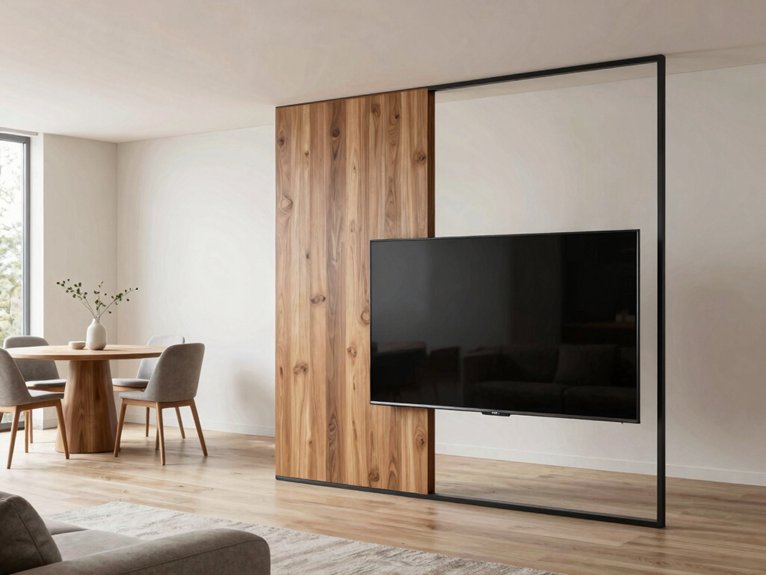
Freestanding TV dividers are one of my favorite tricks when I want to split a room without making it feel boxed in. I’ve found they fit real homes, not showroom dreams, and they help you and your family feel settled fast.
Choose placement options that keep walking paths open, then check material selection so the divider matches your style and holds up.
- Pick a fully freestanding model like Bronson.
- Use dual-sided storage for toys, books, or games.
- Choose open shelves plus closed cabinets.
- Match front and back colors for both sides.
A compact unit keeps circulation easy, even when my kids race by.
Choose a Swivel TV Wall
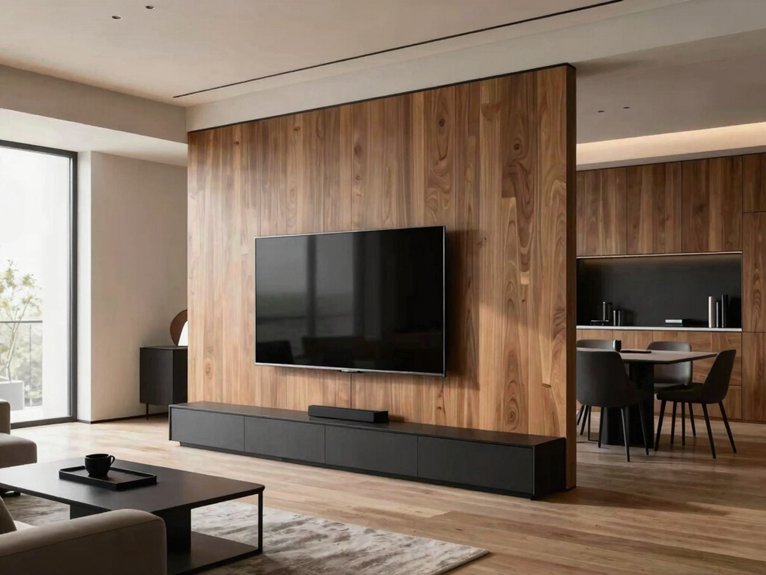
When I want one TV to do double duty, I look at a swivel TV wall, because it lets you turn the screen toward two spaces without making the room feel stuck in one layout.
I like the Porada Mediacenter for its adjustable pole and steady base, and I’d pick motorized rotation if you want easy angle changes. Run cables through the floor, ceiling, or an internal channel so nothing tugs or trips.
If you’re home with family, that flexibility feels friendly, like everyone gets a seat. Keep up with rotational maintenance, and the screen keeps spinning smoothly, not squeaking like my old chair.
Hide the TV in a Divider
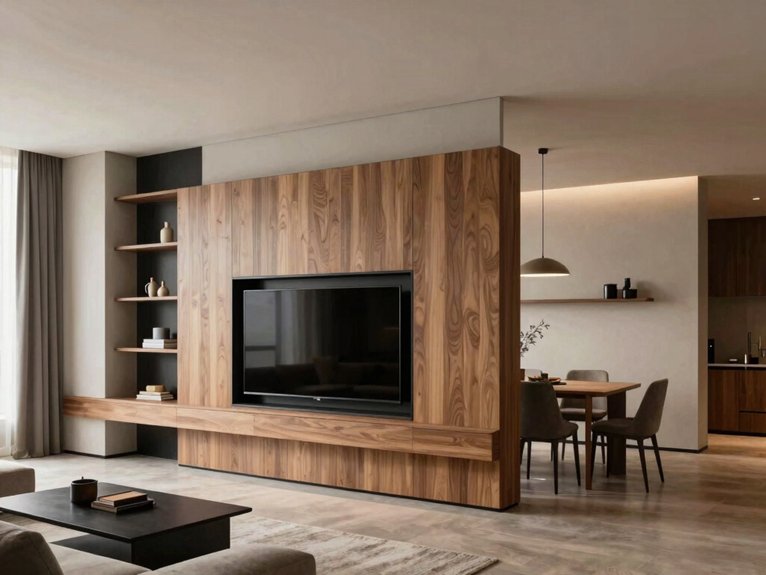
If a swivel TV wall makes one screen work hard, hiding the TV in a divider takes that idea one step beyond, and I’m here for it. I’ve seen families love this because the room still feels like theirs. You can tuck the screen into a 360-degree panel, a lift cabinet, or hinged doors.
- keep the face clean
- add acoustic insulation
- route cords safely
- match decor integration
I like light-wood joinery with recessed LEDs; it feels warm, not bossy. Matte glass or glossy fronts, like Bronson’s, let you style the divider while the TV vanishes. My kids call it “magic furniture.”
Combine TV and Fireplace
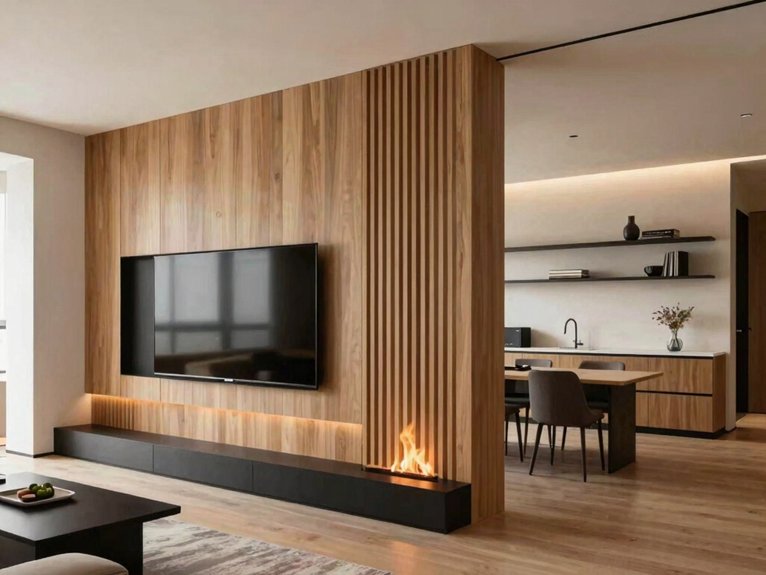
Pairing the TV with a fireplace can make one wall do the work of two, and I’m all for that kind of efficiency.
In my home, I’d choose a single partition with a warm stone or marble finish, like Diachok Architects’ organic wall, so your room feels pulled together fast. Add a swivel TV mount, and you can face the screen toward the sofa or dining nook. Keep fireplace acoustics in mind, because crackle can compete with dialogue. Build in recessed LEDs, cable paths, and ventilation integration. If the divider stands alone, hire a pro. Your family’ll feel settled, not squeezed.
Build a Double-Sided Storage Unit
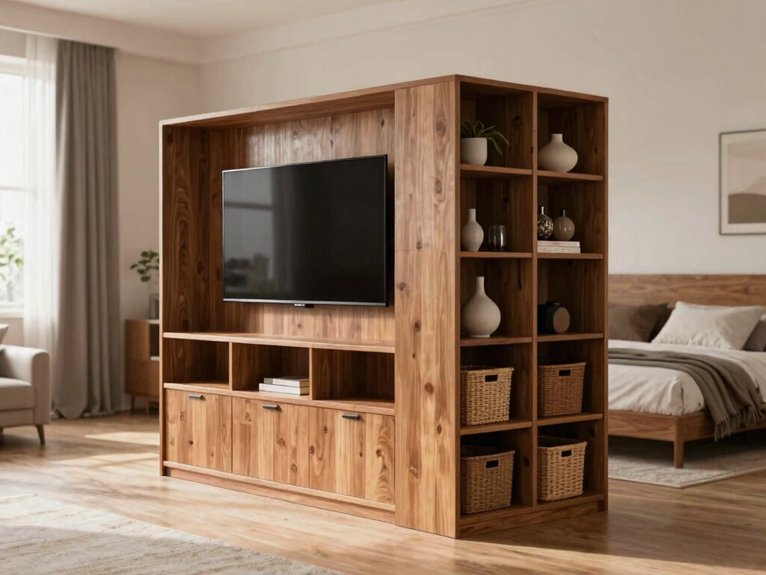
I’d build a floor-to-ceiling, double-sided storage unit like the Bronson so you get loads of vertical storage and a sturdy spot for your TV, and yes, it can still look neat enough for company.
On one side, use open shelves for books, baskets, and the random family “treasures” that somehow multiply overnight; on the other, add closed cabinets to hide remotes, cords, and all the media clutter that loves to escape.
Plan hidden cables, a swivel TV mount, and a light wood finish with black metal accents before you install it, because nothing ruins clean lines faster than a spaghetti pile of wires.
Double-Sided Storage Benefits
A double-sided storage room divider can pull double duty in a way that feels a little magical in real homes. I’ve seen family rooms breathe easier when you add tall cabinets, open shelves, and closed storage on both sides. You get acoustical insulation, easier privacy, and ergonomic reach for everyday stuff. A 96.25-inch-wide Bronson-style unit works hard without hogging space.
- Keep the depth near 24 inches.
- Use lighter wood and black metal accents.
- Build it freestanding or floor-to-ceiling.
- Add cabinets for clutter and shelves for display.
I love that it helps both zones feel like they belong.
Hidden Cables, Clean Lines
When I build a double-sided storage unit for a TV divider, I always think about the messy stuff first, because cords have a sneaky way of ruining a clean room in about two seconds flat. You’ll want cable concealment built in, with recessed channels and a center conduit for a swivel TV.
| Feature | Why it helps |
|---|---|
| 96″ x 24″ x 84″ | Fits many rooms |
| Light wood | Keeps things airy |
| Black metal poles | Add support |
| LED strips | Soft glow |
| Anchors | Stay safe |
Choose minimal profiles, and use floor or ceiling electrical feeds. My family likes the tidy look.
Open And Closed Storage
I usually start with the storage side, because a double-sided unit has to earn its keep in two rooms at once.
You can build it floor to ceiling, then mix open shelves for books and plants with closed cabinets for the stuff nobody wants to see.
I like light wood, slim black poles, and hidden niches for remotes.
Add textured backsplashes behind display items for a finished look.
- Recessed LED strips
- Soft-close doors
- Cable channels
- Floor or ceiling anchoring
I’ve found a swivel TV works best when a pro installs it.
My family loves the calm, tidy feel.
Try a Sliding TV Panel
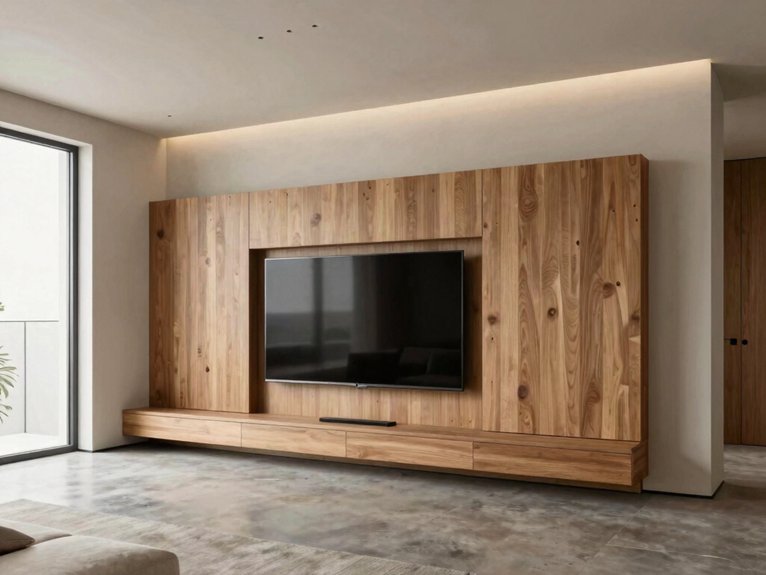
If you want your TV divider to do more than just sit there and stare back at you, try a sliding TV panel. I’ve built one for my family room, and it felt like joining the smart-space club.
| Option | Best for | Note |
|---|---|---|
| Track mount | Open plans | Keeps light flowing |
| Pocket slide | Tight rooms | Vanishes neatly |
| Shiplap panel | Cozy homes | Blends in fast |
| Bi-fold | Small zones | Opens with less swing |
Choose motorized panels for ease and add acoustic dampening if the TV backs a play area. Keep it shallow, hide cords, and hire a pro.
Use Color to Zone the Space
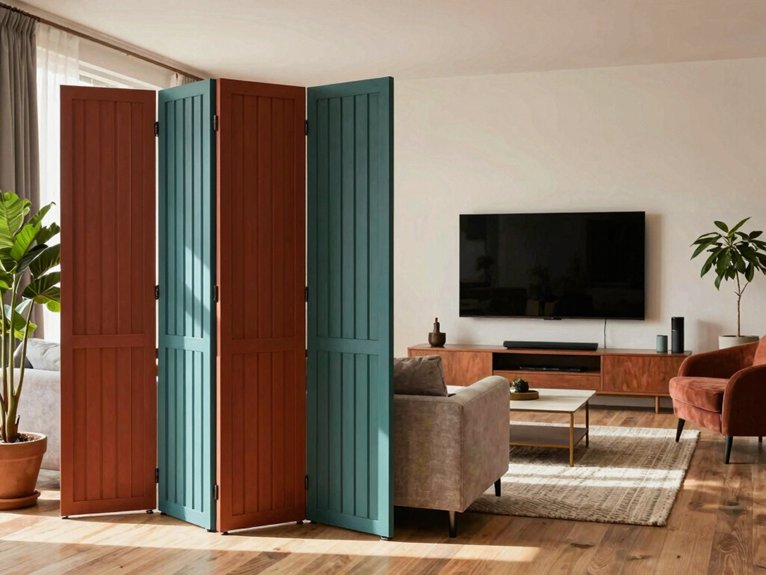
A sliding panel can hide the screen, but color is what helps the whole TV corner feel like it belongs there.
I’ve seen a warm palette make a small room feel friendly fast. Try these moves:
- Paint the TV wall ochre or deep ochre.
- Use a partial accent on the alcove back or shelving.
- Coat a freestanding divider in a contrasting hue.
- Keep the divider in pale paint or light wood.
I like color-blocking behind the screen at eye level; it cuts glare and feels cozy, not boxed in.
My family actually stops arguing over “whose side” it is.
Create a Softer Broken-Plan Layout
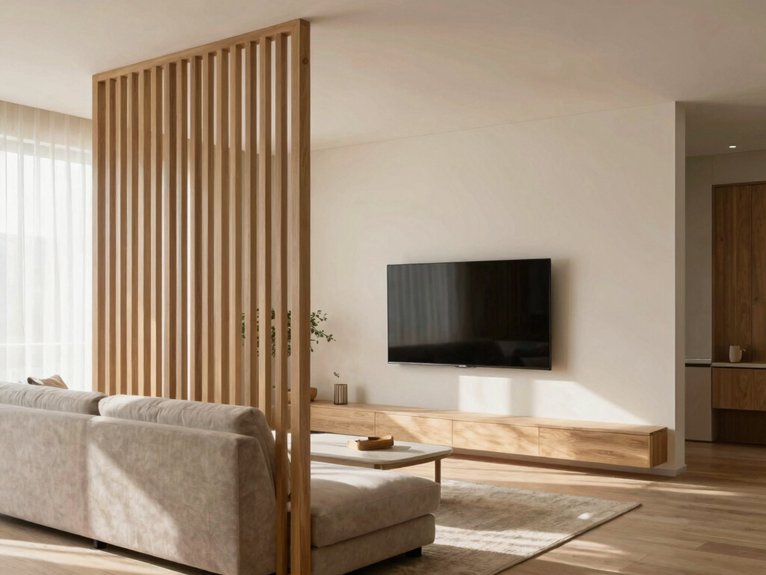
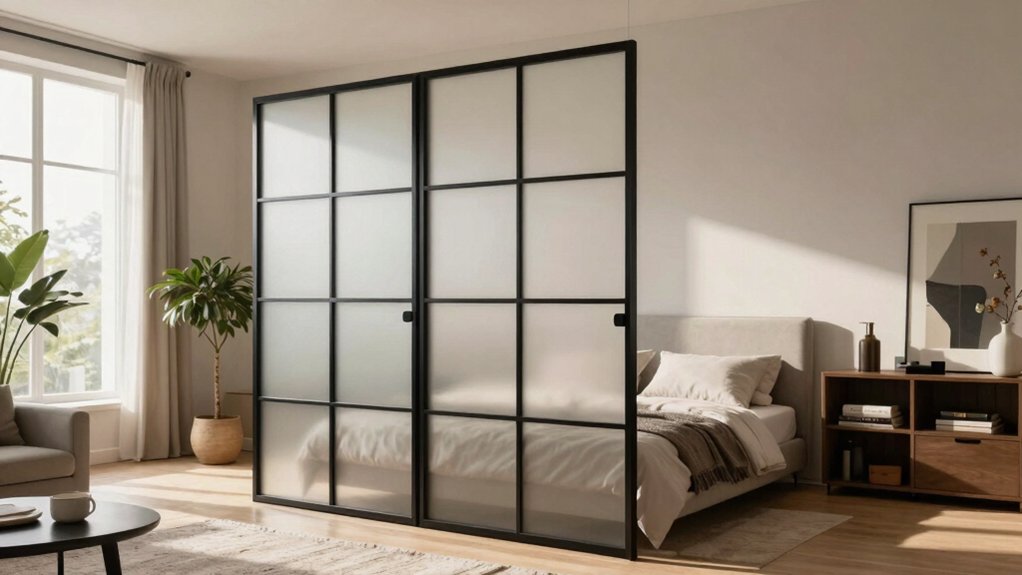
You can soften your broken-plan layout with a 4–6 ft divider, open shelving, or even floor-to-ceiling curtains, so your TV zone feels defined without boxing in the room.
I’ve found that frosted glass, lightweight screens, or a warm ochre wall can give you privacy and a clear TV corner while still letting daylight travel through—because nobody wants their living room to feel like a cave.
If you back a sofa with a console table or use a low TV unit under 42 inches, you’ll keep the flow open for family hangouts, snack runs, and those very serious “who gets the remote?” moments.
Soft Zoning With Dividers
Soft zoning with a divider can make your room feel calm without boxing it in, and I’m a big fan of that in family spaces where somebody’s always watching TV while someone else is trying to read, fold laundry, or just exist in peace.
You can keep daylight permeability and add acoustic textiles, too. I like:
- half-height shelves with open TV-side storage
- closed cabinets facing the quiet side
- light oak and slim black poles
- plants, art, and curtains below 85% room height
That mix feels friendly, not bossy. It’s like saying, “We live here together,” without the room yelling back.
Preserve Flow And Privacy
When I want a room to feel open but still give everyone a little breathing room, I lean into a softer broken-plan layout. I use a floor-to-ceiling shelf with open bays, a swivel TV mount, and acoustic textiles like linen curtains on a ceiling track. They hush sound and let you pull back privacy fast.
| Divider | Benefit | Tip |
|---|---|---|
| Open shelving | Keeps light moving | Style books and baskets |
| Swivel TV | Shares the screen | Aim it toward both zones |
| Fabric panel | Softens noise | Pick warm ochre or teal |
Add shallow shelves, a slim console, and privacy landscaping colors on the back face.
Build a Mid-Century Partition
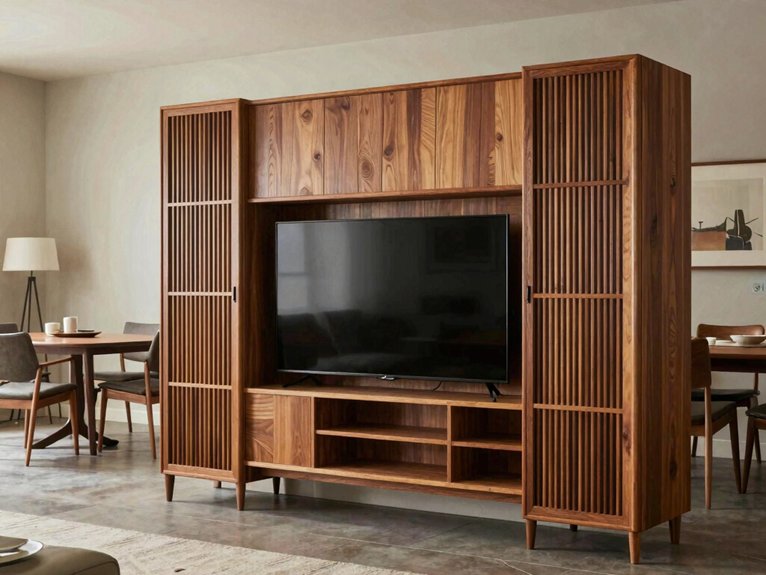
For a mid-century room divider with a TV, I’d build a floor-to-ceiling partition in light wood with slim black powder-coated metal poles, because it keeps those clean, classic lines without blocking all the sunshine.
I’d tuck in:
- open shelves
- closed cabinets
- acoustic panels
- planter integration
I like a swivel TV mount, so you can watch from the sofa or the garden side without doing neck yoga.
Add recessed LED strips and hidden cable channels for a neat finish.
If you need extra stability, anchor it lightly and use shallow floating shelves so the whole piece feels friendly, not bossy, in your family space.
Match the Divider to Bi-Fold Doors
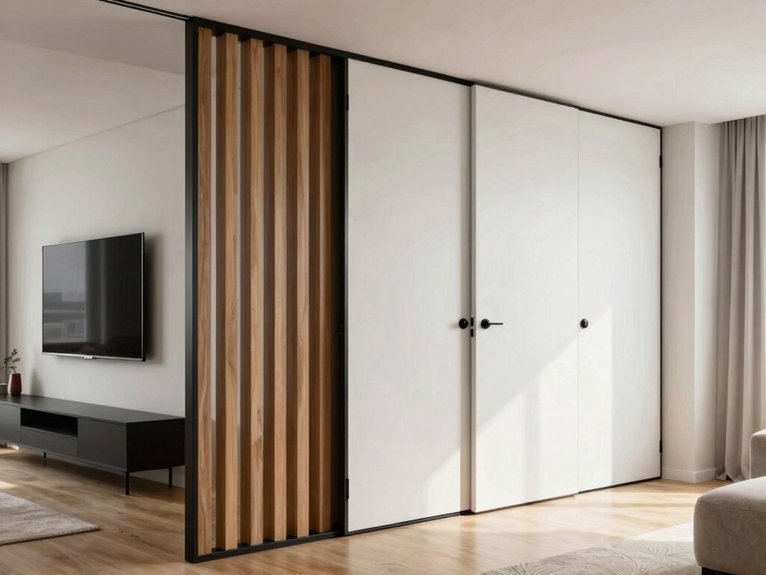
Because bi-fold doors love to steal the spotlight, I’d make the divider play nicely with them instead of fighting for attention. In my home, I’d coordinate continuity by matching black powder-coated poles to the door frame and using light woodwork so the setup feels warm, not bossy.
Keep the divider slim, tall, and in step with the door rhythm, and don’t let it block the swing. I’d add a swivel TV mount and hidden cables, so the screen turns for movie night or garden chats. My family likes that “same team” feeling, and honestly, so do I.
Add Recessed LED Lighting
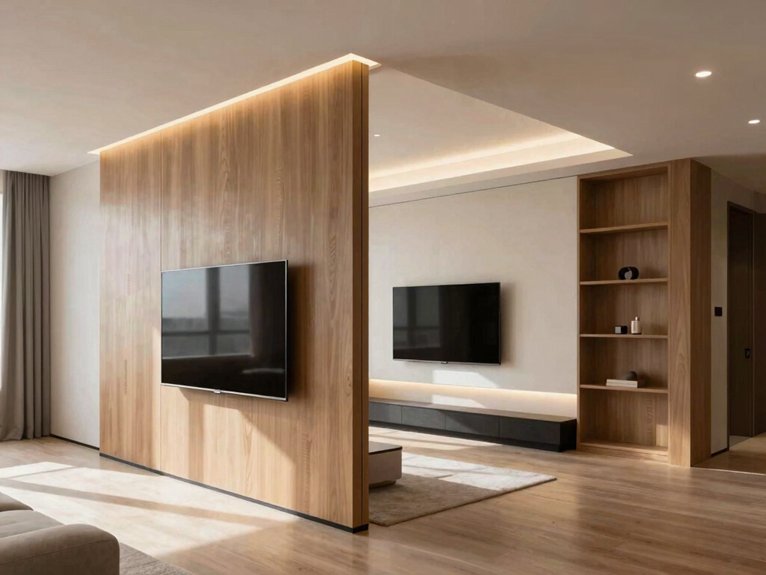
I like adding recessed LED strips to a room divider because they give you a soft evening glow without stealing the show from your TV.
You can tuck them under shelves or along cabinet edges to highlight books, decor, and storage, while hiding the wiring in the mullions or top rail so the whole setup looks neat instead of like a cable monster got loose.
I’ve found that dimmable warm-white LEDs with a wireless dimmer make family movie night feel cozy, and yes, even my kids notice when the light is gentle instead of screen-zapping bright.
Ambient Evening Glow
Want that room divider to feel cozy after dark? I’ve found recessed LEDs make it feel like home. You can tuck warm 2700–3000K strips into shelf recesses, behind the TV, or in open-back zones, then use mood dimming so the glow fits movie night. My family likes the soft halo; nobody squints at the screen, and even backlit artwork looks calm.
- Low-profile aluminum channels
- Frosted diffusers, no glare
- Bias lighting at 10–20% screen brightness
- One smart scene for shelves and cove light
I’d hire a pro for neat wiring. It’s worth it.
Highlight Shelves And Storage
For this kind of room divider, I like to build the storage right into the TV wall so it works hard and still feels airy.
I’ve found that floor-to-ceiling shelves, tall side cabinets, and shallow niches give you room for books, baskets, and the random remote that always vanishes.
Add recessed LED strips in shelf soffits and behind display niches, and your display lighting feels warm, not shouty.
I usually pick 2700K dimmable strips from Philips Hue or Govee.
Light woods keep it open, while smart storage detailing helps your space feel calm, useful, and really yours.
Conceal Wiring Neatly
Tucking away wires is one of those details that makes a TV divider feel finished instead of fussy. I’ve learned that a neat setup helps everyone feel at home, even when the cable jungle starts acting up. You can hide TV, media, and LED lines in 20–25mm cable channels, then feed them to a floor outlet or ceiling point.
- Add recessed LED strips in shelf recesses.
- Use paintable conduits and removable back panels.
- Choose 12V or 24V LEDs with a dimmable driver.
- Ask an electrician to label paths and check code.
Conceal Cables Inside the Joinery
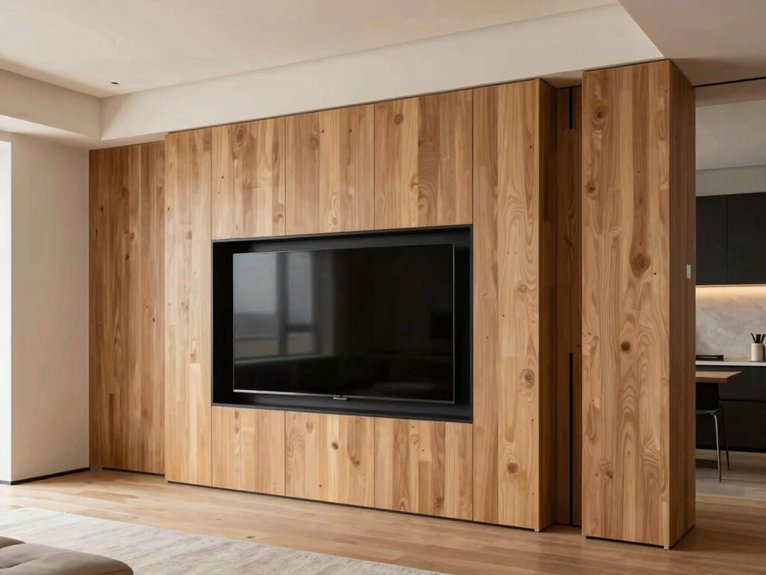
When I plan a room divider with a TV, I always hide the wires inside the joinery, because nothing ruins a clean setup faster than a sad little cable dangling like it missed the memo.
I build in cable raceways, hollow stiles, and labeled conduits for TV mains, HDMI 1, and Ethernet. You can add recessed grommets and removable panels, too, so upgrades don’t turn into a family-wide scavenger hunt.
If your TV swivels, ask for a floor or ceiling service plate. I always check paths with my electrician first, so the whole setup feels safe, smart, and part of the team.
Choose Light Wood for an Open Feel
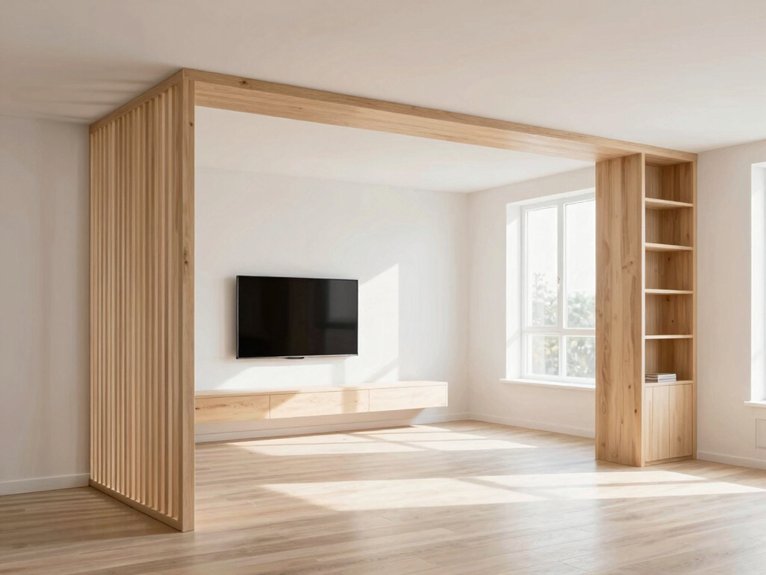
I’ve found that a light wood TV divider—think oak, maple, or ash—keeps your room feeling open instead of boxed in, especially when sunlight’s already doing the heavy lifting.
It softens the bulk of a tall partition, and if you pair pale shelves with black metal poles, you get a clean mid-century look without making the space feel grumpy and dark.
In my own home, that brighter finish helps the sightlines stay clear between the living room and dining area, which is handy when the family’s everywhere at once.
Light Wood Softens Bulk
A light wood finish can do a lot of heavy lifting without looking heavy at all. I’ve used ash and light oak in my own home, and the natural grain gives your divider Scandinavian textures that feel calm and welcoming. When you add slim black metal poles, the whole setup keeps its shape without shouting for attention.
- Pick shallow shelves, about 12–24 in.
- Use lighter case finishes near bi-fold glass doors.
- Choose built-ins with airy cabinet faces.
- Add open shelving, so your TV wall doesn’t feel like a fridge.
My family noticed the room felt bigger, and honestly, so did I.
Bright Finishes Preserve Openness
Bright finishes keep a TV divider from hogging the whole room, and that’s a relief in an open plan where every piece has to earn its spot. I’ve found oak, birch, or maple really help; they bounce daylight and keep the wall from acting like a giant mood thief.
In my home, a pale floor-to-ceiling unit with light reflective finishes and daylight enhanced joinery lets the kitchen and lounge still feel like one team. I add recessed LEDs for evening glow, plus slim black hardware for style. Choose open shelves, and your room won’t feel like a shoe box.
Use Black Metal for Contrast
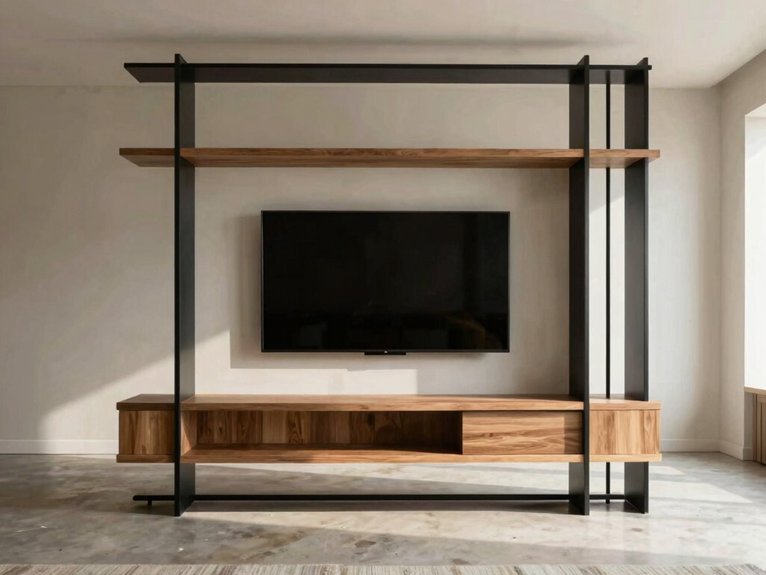
When I want a room divider to feel crisp instead of heavy, I reach for black metal. In my house, it gives the TV wall a calm, collected look, and it fits right in with our black frames and matte hardware.
- Use slim powder-coated poles.
- Pair them with light wood joinery.
- Choose pivot parts in black for a neat accent.
- Add matte black shelf edges or LED trim.
That mix keeps the divider airy, not like a wall that stole the room’s lunch. Ask for corrosion-resistant fixings too; your busy family will thank you later.
Make the Divider Work From Both Sides
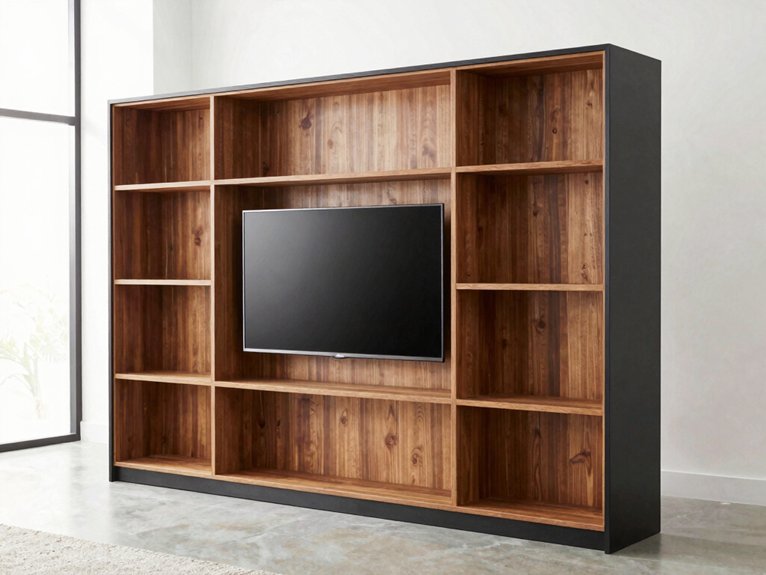
After using black metal for a clean frame, I like to make the divider earn its keep from both sides. I’ve seen a Porada Mediacenter swivel TV help one side watch, while the other side stays calm and tidy. Use reversible finishes so both faces feel finished, not like a back alley. | Side | Best use | Finish |
| — | — | — |
|---|---|---|
| Living room | TV view | Warm wood |
| Bedroom | Quiet side | Soft paint |
| Garden side | Shared flow | Match the room |
Plan rotation testing before you bolt it down. I always route electrical supply through a floor plug, because tangled cords turn family movie night into a wrestling match.
Add Open Shelves for Display
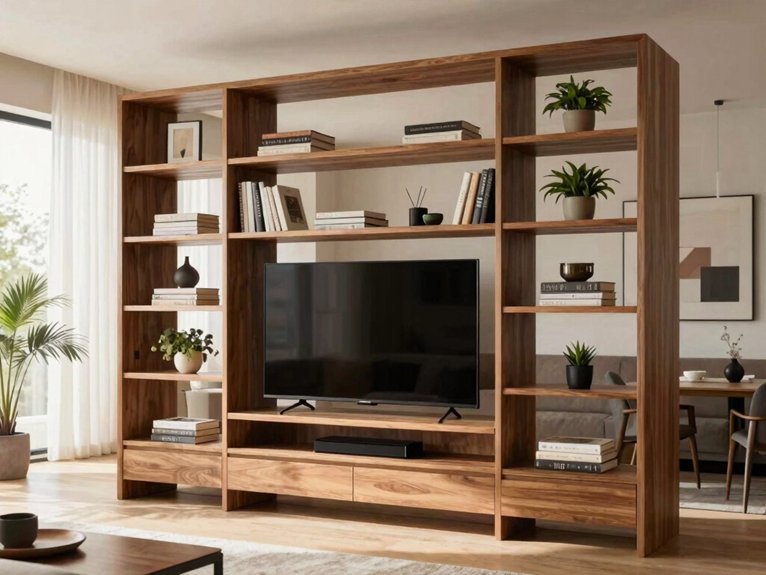
I like to break up a TV divider with open shelves, because they give you a place to show off a stack of books, a small plant, or that one ceramic bowl your aunt swears is “art,” while still letting light and sightlines pass through.
I’ve found shallow shelves, 8 to 12 inches deep, work best.
- Use adjustable heights for styling vignettes.
- Try lighter wood or open-backed frames.
- Add recessed LED strips for cozy evenings.
- Plan seasonal swaps with easy-to-move decor.
I keep the TV centered, and I run cords through hidden channels so the whole setup feels neat, welcoming, and easy to live with.
Include Closed Storage for Clutter
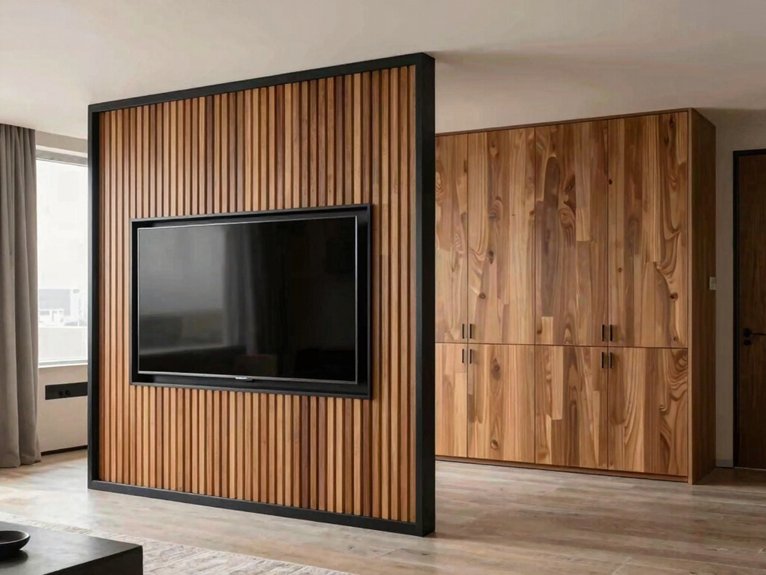
I’ve found that closed cabinets do wonders for a TV divider when you want the room to feel calm instead of cluttered, especially if you’ve got remotes, game controllers, and those mystery cords that seem to multiply overnight.
Try a freestanding unit with tall cabinets on both sides of the screen, light wood finishes, and recessed handles, then add cable channels and a plug feed so everything stays tidy and the TV can swivel safely.
In my house, a mix of drawers and 10–16 inch-deep cabinets gives us real storage without crowding the walkway, which means less mess and fewer “Where did I put that?” family moments.
Concealed Storage Solutions
When clutter starts creeping in, I like to make the TV divider work harder by turning it into a real storage wall, not just a pretty screen. I’ve tucked hidden compartments and fabric pockets behind panels, and it feels like the room finally breathes.
You can do this too:
- Add tall cabinets beside the TV
- Use recessed shelves with soft-close hinges
- Run cords through built-in channels
- Mix display spots with closed drawers
Keep the divider 24″–30″ deep, use light wood, and anchor freestanding units for safety. My family loves how tidy it stays.
Closed Cabinets Reduce Clutter
Slide closed cabinets right into your TV room divider, and you’ll feel the clutter problem calm down fast. I use them in my own living room, and they make the whole family feel at home. The Bronson Room Divider’s tall cabinets hide controllers, games, and cables. Choose shallow drawers for remotes and deep bins for consoles.
| Space | Best Use | Tip |
|---|---|---|
| Drawer | Remotes | Keep near TV |
| Cabinet | Consoles | Add hidden ventilation |
| Tall unit | Games | Use minimalist hardware |
Light wood keeps things airy, and floor-to-ceiling storage gives us more room without the visual mess.
Plan a TV Divider for Small Spaces
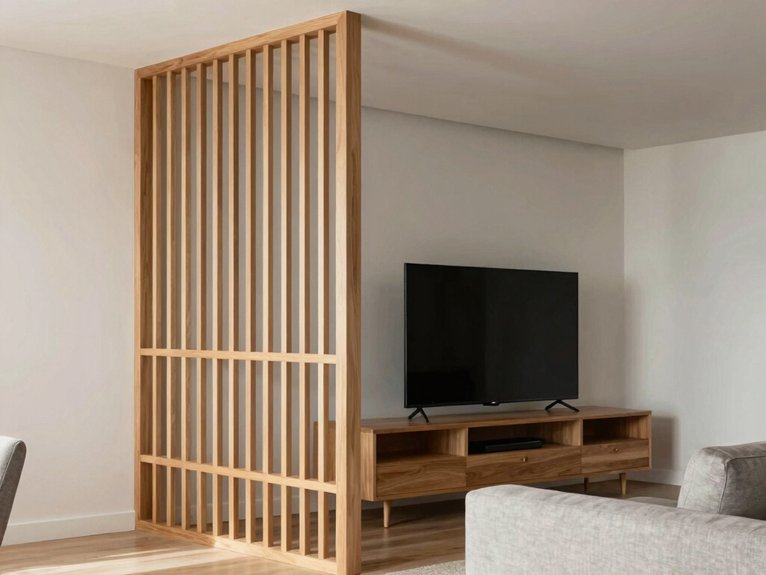
For small spaces, I like to start with a TV divider that works as hard as it looks good, because every inch has to earn its keep. I’ve learned that good furniture flow keeps your room calm, and acoustic panels can soften noise when the kids are loud or the show gets dramatic.
- Try a freestanding Bronson Room Divider.
- Use a swivel TV, like Porada Mediacenter.
- Choose light wood and open shelves.
- Add LED strips, or paint the TV corner.
I keep cords hidden, and nobody trips. That’s a win in my house.
Borrow Hotel Suite Ideas
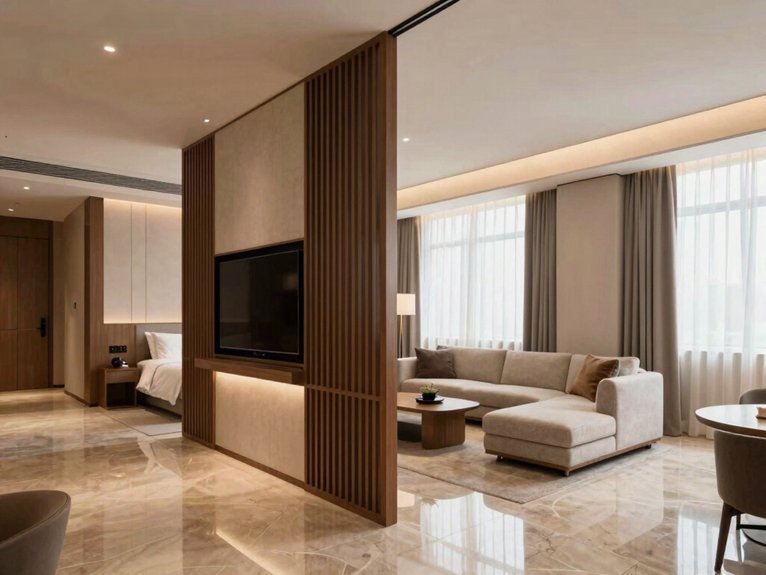
If you want your home to feel a little more like a polished hotel suite, I’d borrow the same trick I see in places like Thompson Chicago: a freestanding TV divider that does more than just hold a screen. I’ve watched this work in my own family room, where everyone wants their corner.
| Feature | Why I like it |
|---|---|
| Open shelves | Display books, baskets |
| Closed cabinets | Hide remotes, snacks |
| Oak finish | Feels warm, rich |
| Routed wiring | Keeps cords off floors |
These hotel aesthetics and concierge features make small spaces feel cared for, not crowded. Choose tempered glass or walnut.
Use a Rotating Media Column
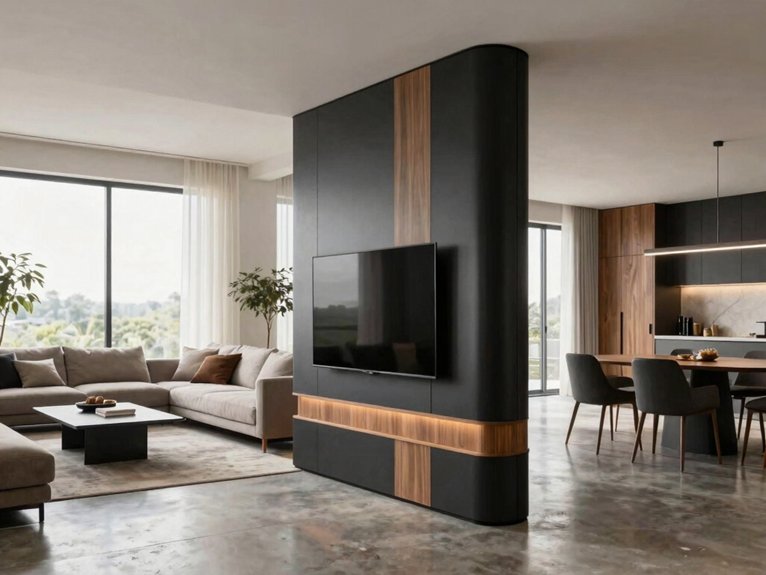
I’ve used a rotating media column to let the TV swivel between two rooms, and it’s such a smart fix when you want one screen to do double duty. Pick a model with solid cable management, like the Porada Mediacenter, and plan the wiring through a floor box or ceiling feed so you’re not wrestling with rogue cords like they’ve got a personal grudge.
In my home, this setup saves space, keeps the room open and bright, and gives my family a clean, flexible spot to watch without buying a second TV.
Swivel For Dual Views
Turning one TV to face two rooms can feel a little magical, especially when you’re trying to make one space work hard without looking crowded. I’ve seen families light up when the screen swings from the living room to the bedroom.
- Try a 360-degree swivel column.
- Choose Porada Mediacenter for rotating aesthetics.
- Check mechanical maintenance and load ratings.
- Leave 24″–36″ around each side.
Bronson-style dividers can add storage and privacy, too. I like tempered-glass shelves and oak or walnut finishes because they feel calm and welcoming. Hire a pro for installation. Your home can feel shared, easy, and yours.
Flexible Cable Management
A swivel TV setup only feels clean when the wires behave themselves, and that’s where flexible cable management saves the day.
When I used a 360-degree rotating media column, I ran cables through the pole and added swivel channeling so the TV could serve both rooms without the dreaded cord spaghetti. Magnetic clips kept loose leads snug, which my family appreciated more than my “just ignore it” speech. Models like the Porada Mediacenter use multi-plug outlets and adjustable supports, while a Bronson-style divider hides wiring in internal conduit. Measure cable length, plan the route, and choose a slip-ring connector.
Maximize Small-Space Functionality
When space is tight, a rotating media column can feel like a magic trick that actually earns its keep. I’ve seen families use one to share a TV between the living room and bedroom, and it really does help everyone feel included.
- Pick space saving tech with rotating shelving.
- Choose Porada’s Mediacenter or another slim unit.
- Add cable management and an electrical feed.
- Check load ratings, then get pro install if it’s heavy.
I like lighter woods, recessed LEDs, and hidden storage because they keep the room open, not crowded.
Mount the TV on a Double-Sided Console
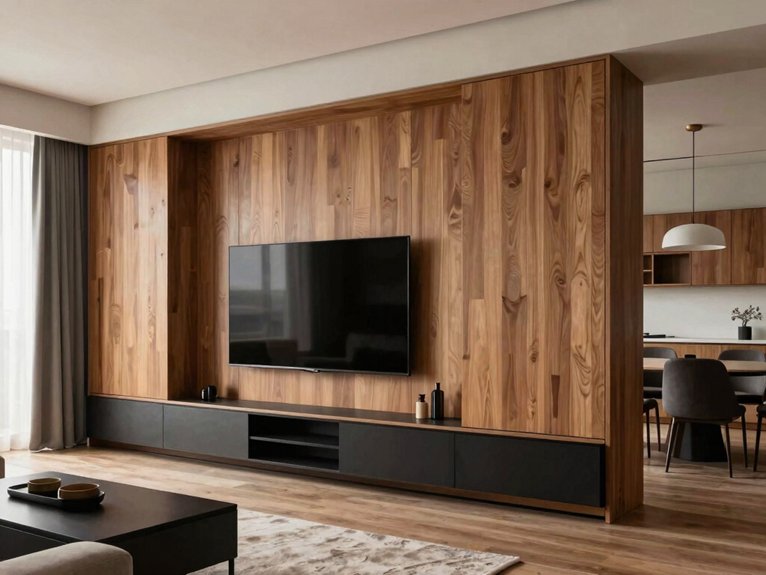
I love the trick of mounting a TV on a double-sided console because it lets one screen do double duty without making the room feel crowded. You’ll give your living room and dining area a shared anchor, and everyone feels included.
Pick a freestanding unit with cable access and smart weight distribution, so cords don’t flop around and the whole thing stays steady. I’d choose a light wood, slim profile, and matching front-and-back finish. Add closed cabinets for boxes, open shelves for books, and a swivel mount if you want easy viewing from both sides. My family says, “Finally, a divider that works!”
Add Rugs to Define Zones
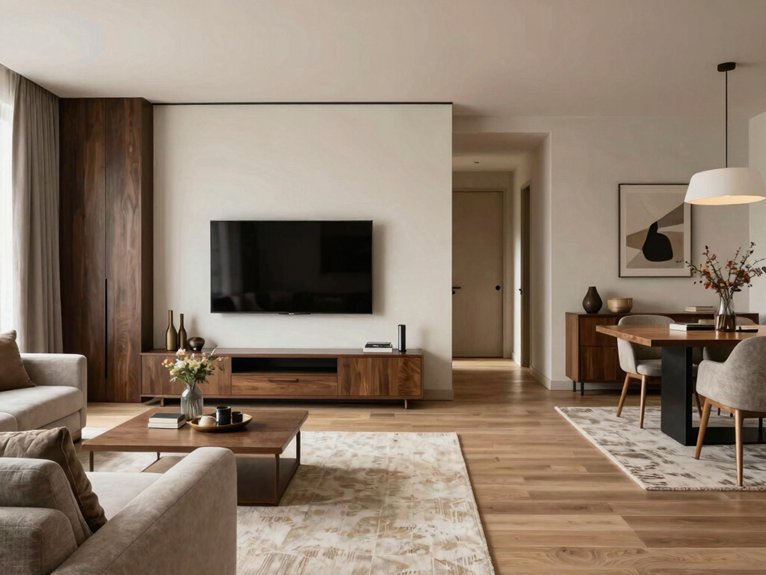
Rugs are one of my favorite ways to make an open room feel calm instead of chaotic, and they do it without building a single wall. You can claim each zone with ease, and your family will feel it too.
- Choose a rug that reaches 18–24 inches past seating legs.
- Use pattern contrasts, like ochre for TV and neutral for dining.
- Layer a large base rug with a smaller textured one.
- Match rug textures to use: flatweave for paths, plush for lounging.
Keep clear pathways around the divider. I’ve tripped on less.
Use Lighting to Separate Living Areas
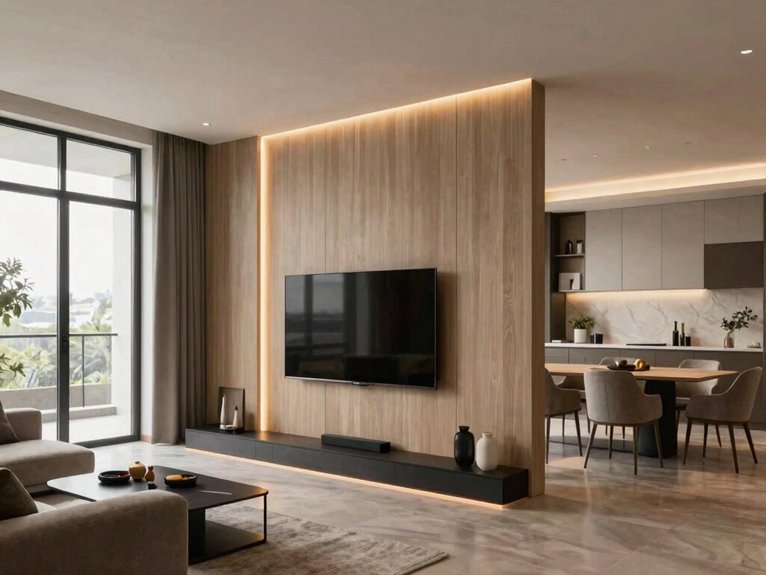
I like to layer ambient light in a room divider with TV, because it helps you split the living area from the screen zone without making the space feel chopped up.
You can tuck recessed LED strips into a tall partition, add dimmable spotlights on shelves, and use a warm 2700–3000K glow so the TV doesn’t glare like it’s trying to steal the show.
I’ve found that a backlit halo behind floating shelves or the TV surround gives the divider real depth, and honestly, it makes movie night feel a lot fancier than it should.
Layer Ambient Light
When I want a room divider to do more than just stand there and look pretty, I layer in ambient light so it quietly splits the space for me. You’ll feel right at home with warm dimming and indirect layering.
- Add 2700–3000K LED strips in shelves.
- Use frosted glass or trim to soften the glow.
- Pick dimmable drivers for TV time.
- Hide cables, so the wall doesn’t snitch.
I keep the light at 300–800 lm per meter, which helps my family relax and keeps the screen from squinting back at us. Cozy wins.
Highlight With LEDs
For me, LEDs do the heavy lifting when a room divider needs to separate a TV area without making the space feel boxed in. You can tuck LED profiles under shelves and into the face of the partition, then add Bias lighting behind the screen for easier viewing. Set warm 2700K for movie nights, or cooler 5000K when you’re reading receipts you’d rather ignore.
| Spot | Light | Feel |
|---|---|---|
| Shelf | Strip | Soft |
| TV | Bias | Easy |
| Base | Glow | Calm |
| Face | Recessed | Clean |
| Edge | Dimmed | Cozily |
Keep cables hidden; my family loves the tidy look.
Define Zones Visually
To define zones visually, I like using lighting as the quiet boundary between a TV nook and the rest of the room. In my home, it helps everyone feel like they’ve got a spot. Try ambient zoning with these moves:
- Add recessed LED strips in a divider for a soft line.
- Paint one side ochre; it’s cheap and clear.
- Use dimmable shelf LEDs to cut glare.
- Choose backlit shelves or light wood finishes so the divider doesn’t sulk in the corner.
Plan cable channels and separate lighting circuits early. Those material contrasts make your space feel welcoming, not crowded.
Keep Sightlines Open With Partial Screens
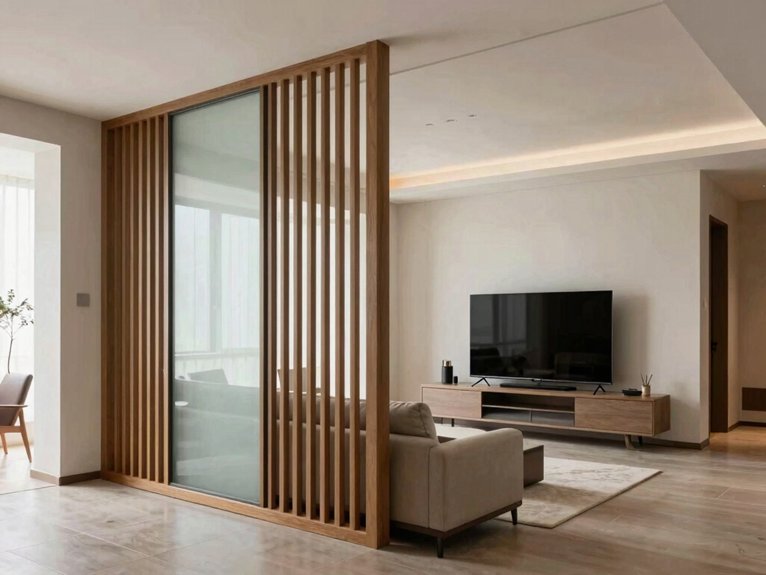
I’ve found that a partial screen can work wonders when you want the TV zone to feel set apart without turning your room into a cave. I like transparent panels or a floating bench look, because they keep everyone in the loop while the screen stays defined.
Use a floor-to-ceiling divider that’s only 12–18 inches deep, with open shelving or staggered slats. Pick light wood or slim metal frames, so daylight still flows in. Add LED strips and hidden cable channels for calm evenings. A swivel TV panel helps you watch from both sides.
Make the Divider Feel Custom-Built
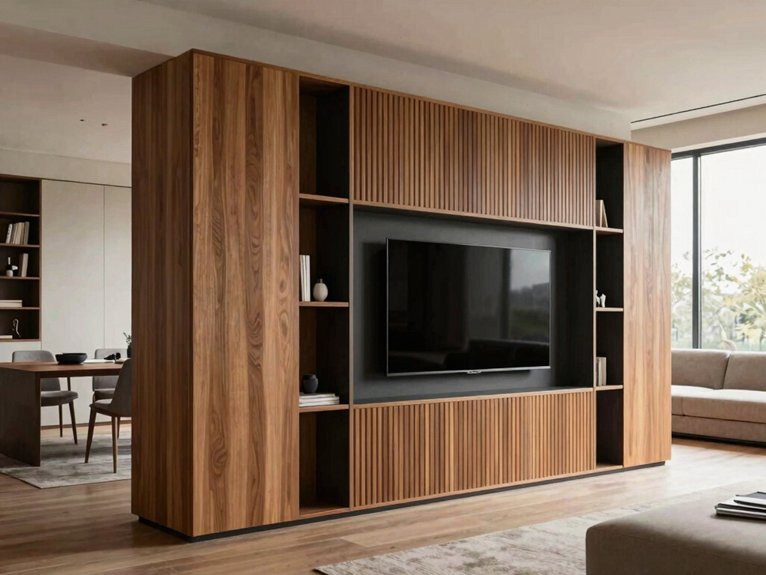
I like to make a TV divider feel like it was built just for the room, because that’s when it stops looking like a random add-on and starts acting like part of the house. You can do that with custom joinery, slim lines, and material shifts that match your doors and trim. I’ve found these details help families feel settled, not staged.
- Add recessed LED strips.
- Hide TV cables inside channels.
- Mix open shelves and closed cabinets.
- Use acoustic panels for quiet comfort.
Keep it demountable, so move-day doesn’t become a sitcom. Pick lighter wood and a pro installer for a clean, safe fit.
Choose Materials That Suit the Room
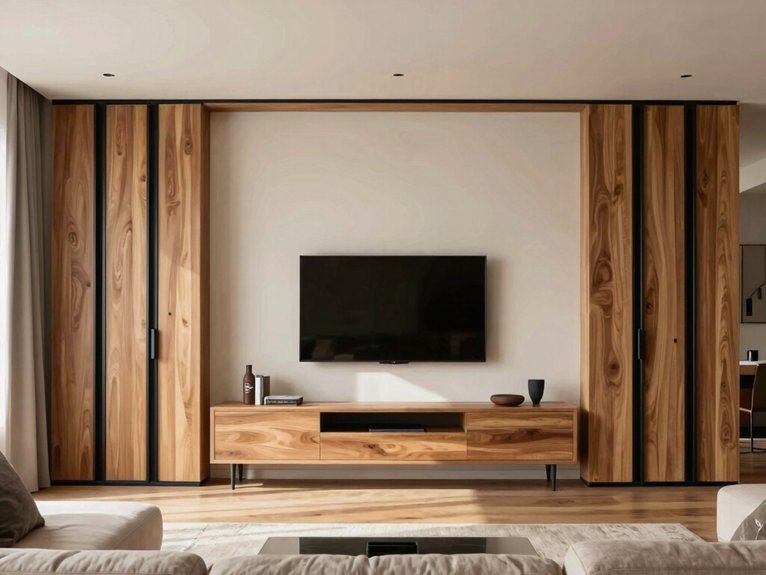
Pick the material first, and the whole divider starts making sense. I’d choose light oak or canaletta walnut in a pale stain for a tall TV panel; it keeps your room bright and doesn’t boss everyone around.
If you want a swivel mount, look for metal poles or tempered-glass cases with cable channels, so the cords don’t throw a tantrum when you turn it. I’ve also liked open shelves with matte fronts, sustainable veneer, and closed cabinets for the stuff my family swears we’ll sort later.
For warmth, use fabric panels; for stronger lines, try stained glass or wood. Tactile hardware helps, too.
Add Privacy Without Closing Off Light
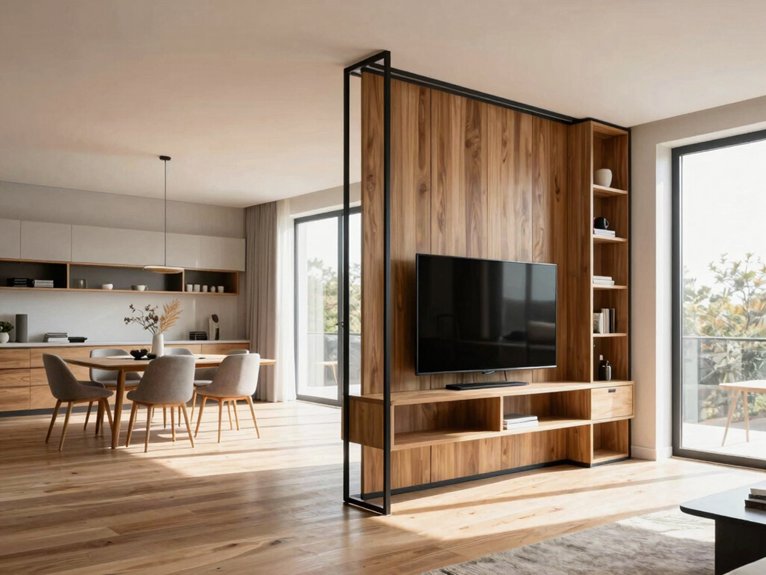
Once you’ve got the right material, the next trick is making the divider feel private without turning your room into a cave.
I’ve found that a floor-to-ceiling open shelf in pale oak does the job beautifully, and my family still gets daylight.
Try these:
- privacy glazing for soft daytime screening
- low bookcase dividers for sightline privacy
- frosted glass or open metal frames
- recessed LED strips to calm glare
Keep the depth shallow, under 24 inches, so it won’t loom like a wall.
Add cable management, and your TV zone feels neat, friendly, and still bright.
Place the TV for Multiple Viewing Angles
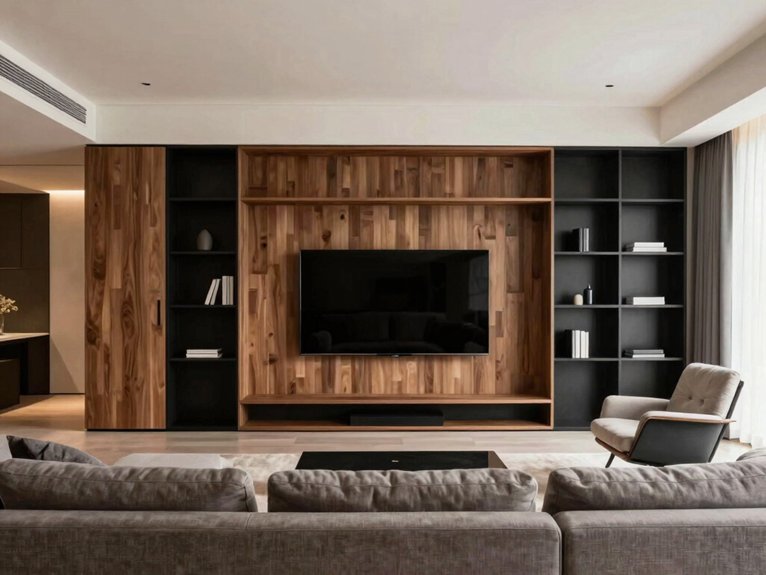
To make a room divider work hard for the whole house, I like to center the TV where it can swing with the day. You’ll get better viewing angles when you use a 360-degree revolving mount or a recessed swivel pole. My family cheers when the screen faces dinner, then turns for movie night.
| Zone | Benefit |
|---|---|
| Living room | Cozy shared focus |
| Dining area | Easy meal-time viewing |
| Bedroom side | Quiet late-night catch-up |
| Garden doors | Fresh-air hangouts |
A Porada Mediacenter-style unit or a double-faced cabinet keeps swivel ergonomics smooth, and you’ll still keep storage. Feel included, not crowded.
Make the Divider Safe and Stable
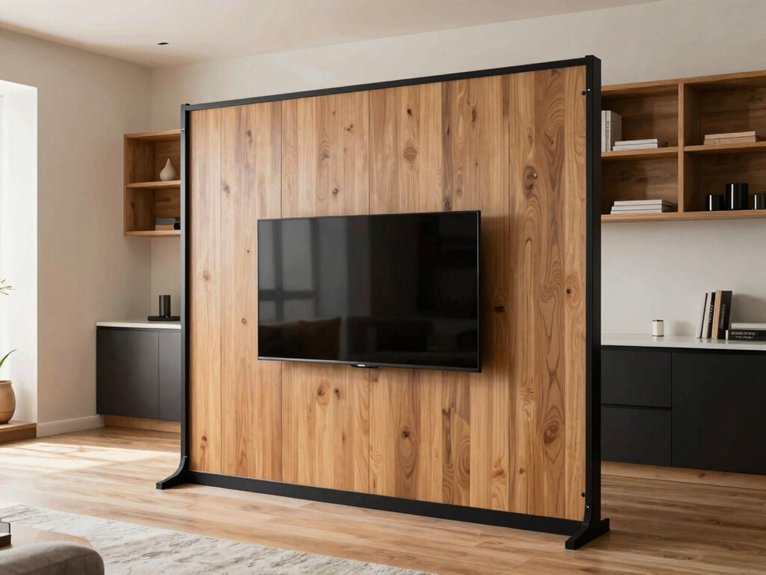
Because a TV divider does double duty, I treat safety like part of the design, not an afterthought. I’ve learned that a steady divider helps everyone relax, from kids to guests.
Choose a deep base or add base weights, and use anchor systems if it’s tall. I check steel brackets and load ratings, too—your TV and shelves should stay under the limit by 25% or more.
- Keep heavy items low.
- Route cords through channels.
- Use floor or ceiling feeds.
- Spread weight near center.
My family calls this the “no-wobble zone,” and honestly, that’s the goal.
Work With a Professional Installer
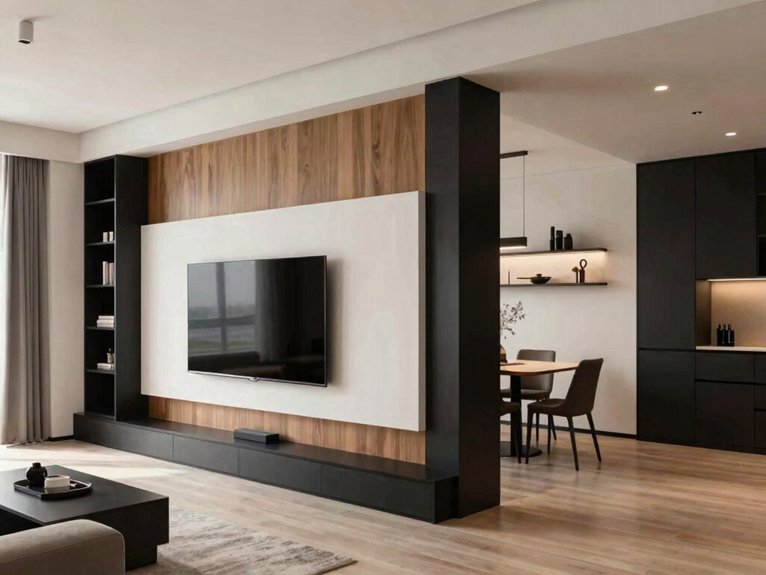
When I’m planning a freestanding TV divider, I bring in a professional installer early, and honestly, that saves a lot of stress later. I’ve learned you need an installer checklist for anchoring, load math, and cable routes before anyone drills a single hole.
Ask for floor or ceiling support, special electrical supply for swivel TVs, and hidden chases for cords, LEDs, and flush mounts. I also check finish samples with my family, because oak and matte-black can look different at home.
Get a written scope, timeline, and warranty confirmation, so your space feels solid, polished, and ready for movie night.
Frequently Asked Questions
How Do I Choose the Right TV Size for a Divider?
Measure your viewing distance first; 7–8 feet usually suits 55-inch screens. You’ll want balanced screen proportion so the divider feels inviting, not overwhelming. Choose a size that fits your shared space and keeps everyone comfortable.
Can a Room Divider With TV Work in Rental Apartments?
Yes, you can make it work in rental apartments if you use temporary mounts and get landlord permissions. You’ll keep things flexible, protect your deposit, and still create a cozy, shared space.
What Clearance Do I Need Around a Swivel TV Divider?
You need enough wall clearance for the TV’s swivel radius, plus a few inches so it won’t scrape, pinch cords, or hit nearby furniture. Measure your mount’s full turn before you install, and you’ll feel at home.
How Can I Reduce Glare on a Divider-Mounted TV?
You can reduce glare by repositioning your divider-mounted TV, adding anti glare coatings, and using adjustable lighting. You’ll create a cozy, shared viewing space where everyone feels comfortable, connected, and welcome.
Is a TV Room Divider Suitable for Open-Plan Homes?
Yes, you can use a TV room divider in open-plan homes if you want open plan flow and privacy zoning. You’ll create cozy zones, keep conversation connected, and make everyone feel right at home.