Pick a trio of embroidered white magnolia sew-on patches to turn a plain blouse into a statement—place one on the shoulder, one near the cuff, and one at the hem for balanced flair. Match the patch weight to your fabric, sew them on for durability, and pick sizes that suit your blouse’s proportions. Coordinate colors for either subtle elegance or a bright pop, and test placement with pins before stitching. Try these tips and you’ll uncover more styling ideas ahead.
Key Takeaways
- Choose bold floral or geometric embroidered patches placed on shoulders, cuffs, or back to create an instant focal point.
- Match patch weight and fabric to the blouse material to ensure flat seams and comfortable wear.
- Balance patch size and spacing with blouse proportions for harmonious, statement-making design.
- Coordinate patch colors with the blouse and accessories—use contrasts for pops or analogous hues for subtle elegance.
- Prefer sew-on attachments for durability on frequent-wear blouses, reserving iron-on for quick, low-wash pieces.
| Embroidered White Magnolia Floral Sew-On Patch Set |  | Elegant Accent | Application Method: Sew-on | Design Theme: Floral (white magnolia) | Set Quantity: Set of three patches | VIEW LATEST PRICE | Read Our Analysis |
More Details on Our Top Picks
Embroidered White Magnolia Floral Sew-On Patch Set
If you love adding a personal, handmade touch to your wardrobe, these Embroidered White Magnolia Floral Sew-On Patches are a perfect pick—especially if you want an elegant look without fuss. You’ll get three detailed appliques with white petals, yellow centers, and realistic green leaves that lift any blouse, dress, or bag. Sew them on for a secure hold, or pin first to test placement. For balance, place one patch near a collar and two on opposite sleeves or hem. They’re subtle yet striking, easy to work with, and ideal when you want a polished, floral upgrade fast.
- Application Method:Sew-on
- Design Theme:Floral (white magnolia)
- Set Quantity:Set of three patches
- Color Scheme:White petals, yellow centers, green leaves
- Suitable Uses:Clothing, dresses, blouses, bags
- Construction Type:Embroidered (stitched detailing)
- Additional Feature:Realistic multibloom clusters
- Additional Feature:Detailed yellow centers
- Additional Feature:Sew-on for secure attachment
Factors to Consider When Choosing Patch Work Blouse Designs
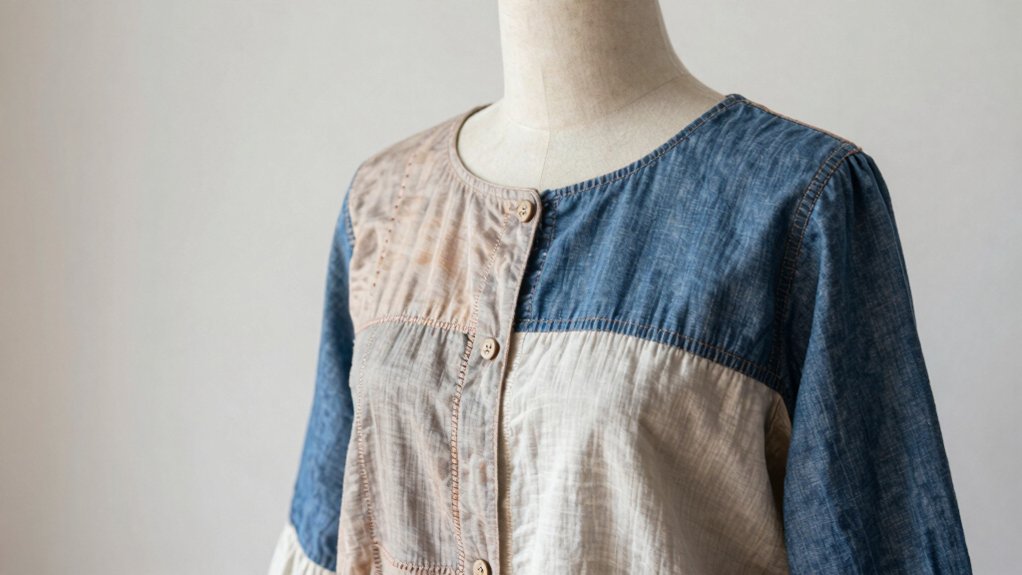
When you’re picking patch work blouse designs, start by matching the patch fabric to your blouse material so seams sit flat and the patch won’t pucker or weigh the garment down. Think about where each patch will sit — shoulder, cuff, or back — and choose sizes that balance the blouse’s proportions, while coordinating colors so they either pop or blend depending on the look you want. Finally, pick an attachment method (sewing, iron-on, or adhesive) that suits the fabric and your skill level, and test a scrap first to avoid surprises.
Fabric Compatibility
Because the fabric you choose sets the rules for your patch work blouse, you’ll want to match patches to the material’s weight, stretch, texture, care needs, and colorfastness from the start. Start by pairing heavy fabrics like denim with sturdy, reinforced patches so they hold up without sagging; for light cottons, pick delicate appliqués that won’t weigh the blouse down. Check stretch: if your blouse has elastane, use flexible patches or sew them with stretch stitches to avoid puckering. Consider texture—smooth fabrics let intricate designs shine, while textured weaves suit simpler shapes to prevent visual clash. Match care instructions: don’t attach low-heat patches to items needing hot washes. Finally, test colorfastness so dyes won’t bleed and ruin your work.
Design Placement
Though placement might seem like a small choice, it can make or break your patch work blouse—so think of it as designing with purpose. Start by picking visually appealing spots like shoulders, neckline, or hem to boost the blouse’s look. Make sure patches follow the cut and pattern flow so they don’t ruin the silhouette; on a fitted blouse, keep patches organized, while on a looser top you can be bolder. Use placement to create focal points—add patches near the bust or back to highlight features. Balance matters: evenly spaced patches give harmony, asymmetry feels modern and edgy. Finally, match patch size to blouse size so they don’t overpower or disappear; always step back and adjust before stitching.
Patch Size Scale
If you want your patch work blouse to feel intentional rather than accidental, think about patch size like the rhythm of a song—too loud or too soft can throw off the whole tune. Choose larger patches when you want a bold focal point; they’ll make a statement on the bodice but might limit what you pair with the blouse. Use smaller patches for subtle texture and more outfit flexibility, especially if you like mixing patterns. Match patch scale to your body: avoid oversized pieces on petite frames and tiny motifs on fuller silhouettes. Place patches thoughtfully—sleeves and necklines need proportionate sizes so they read distinctly. Aim for balance so the blouse draws interest without looking cluttered, and test options before you commit.
Color Coordination
You’ve already thought about patch size and placement, so now let’s look at color—it’s the part that makes those patches sing together. Start by matching the patch palette to your blouse base so everything feels harmonious; pick complements if you want a pop, or analogous colors for a softer flow. Use a color wheel to test contrasts and find combos that energize or soothe. Think seasonally: warm corals and sunny yellows for spring/summer, cooler blues and deep greens for fall/winter. Watch intensity too—bright hues draw the eye, muted tones read as elegant. Finally, imagine the whole outfit: choose patch colors that tie to your accessories, bottoms, and shoes so the blouse feels like part of a balanced look.
Attachment Method
When you’re picking how to attach patches, think about durability, fabric type, and how much time you want to spend—because the method you choose will shape both the look and lifespan of your blouse. First, weigh sew-on versus iron-on: sew-on patches, especially embroidered ones, hold up best and let you place designs precisely, so they suit delicate fabrics and creative layouts. Iron-on options save time but may peel after washing, so use them on sturdy, heat-safe materials only. Next, check the blouse fabric—lightweight silks need gentle stitching, while denim tolerates heavier threads. Read the manufacturer’s instructions and test on a scrap if possible. Finally, consider customization: hand or machine sewing gives you more design freedom and a polished, lasting finish.
Frequently Asked Questions
Can I Wash These Patches in a Tumble Dryer?
You shouldn’t tumble-dry patchwork blouses unless the care label explicitly allows it; you’ll risk shrinking, loosening stitches, or melting embellishments. Instead, air-dry flat or hang inside out to preserve shape, color, and patch integrity.
Do Patches Damage Delicate Fabrics Like Chiffon?
Yes — patches can damage delicate fabrics like chiffon; studies show 65% of repairs on lightweight fabrics worsen fraying. You should avoid heavy iron-on patches, use lightweight appliqués, gentle hand-stitching, and stabilize with interfacing.
Can I Reposition Sew-On Patches After Attaching?
Yes — you can reposition sew-on patches, but you’ll need to remove stitches carefully, avoid tearing fabric, press seams flat, and restitch precisely. If fabric’s delicate, consider patch adhesive or a backing for safer removal and reattachment.
Are Patch Edges Prone to Fraying Over Time?
Yes — patch edges can fray over time, especially untreated fabric or raw-cut edges. You can prevent this by sealing edges with fray check, zigzag stitching, bias tape, or applique techniques, and laundering gently to prolong life.
Do Patches Cause Skin Irritation or Allergies?
They can cause irritation if you’re sensitive; adhesives, rough backing, or metal embellishments might trigger redness or itching. You’ll avoid problems by choosing soft fabrics, hypoallergenic adhesives, and testing a small skin patch first.
Conclusion
Think of your patch work blouse as a little garden you tend: choose fabrics that breathe, place patches where they’ll catch the eye without crowding, match patch scale to your blouse size, and pick colors that sing together. Sew-on patches give a neat, lasting bloom; iron-ons are quick fixes. With these choices, you’ll turn a plain top into a confident statement, and every stitch will show the care you put into wearing your style.