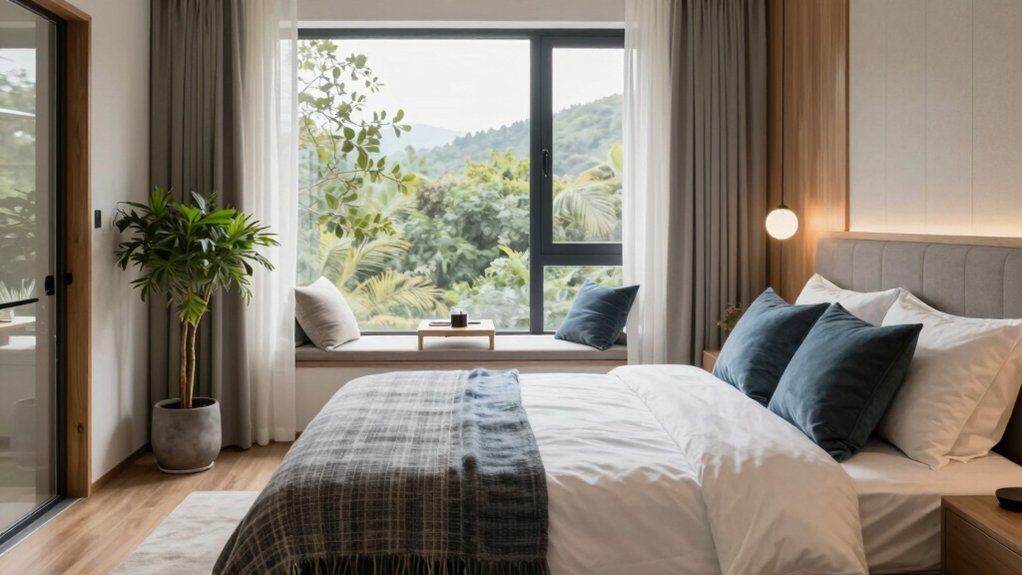
You’ll love how Japandi pares things back while still feeling warm and lived-in! Think low teak sofas, matte oak floors, linen curtains, and a raw concrete accent wall for subtle contrast—you’ll add handwoven throws, a clay vase, and a few green plants for soul. Keep lines horizontal and furniture low, stick to sandy beiges, soft grays, and muted blues, and use soft paper lanterns for glow. Keep going and you’ll pick up easy tips to finish the look.
Key Takeaways
- Choose low-profile, clean-lined furniture in matte wood finishes to create calm, uncluttered sightlines.
- Use a muted earth-tone palette—warm whites, sandy beiges, soft grays—with occasional muted blue or green accents.
- Layer natural textures (linen, wool, raw wood, stone) and handmade pieces for tactile warmth and authenticity.
- Keep decor minimal and purposeful: one or two art pieces, a textured vase, and a handwoven throw.
- Install soft, warm lighting (paper lanterns, warm-toned lamps) and add plants for a gentle, balanced atmosphere.
Natural Wood Elements
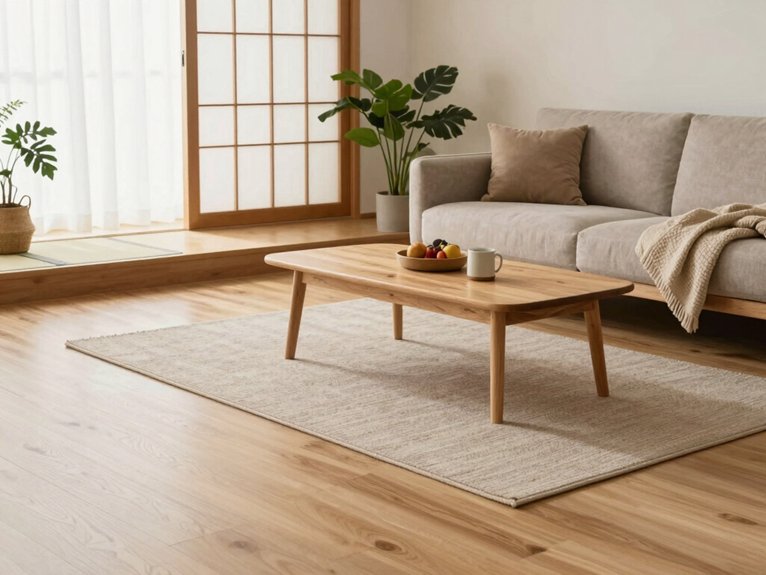
Wood really sets the tone in a Japandi living room—think warm oak floors, a low teak platform sofa, or bamboo panels that whisper calm the moment you step in. You’ll love how natural wood elements give the room a grounded hug, mixing Japanese simplicity with Scandinavian coziness. Choose matte wood finishes that feel soft to the touch and show natural textures; avoid glossy shine so the space stays peaceful. Low-profile furniture, exposed beams, or simple wall paneling connect you to nature without clutter, and plants nearby make everything sing together! You’ll find comfort in muted grains and honest joins, and those subtle imperfections make the room feel lived-in, welcoming, and utterly yours.
Neutral Earthy Tones
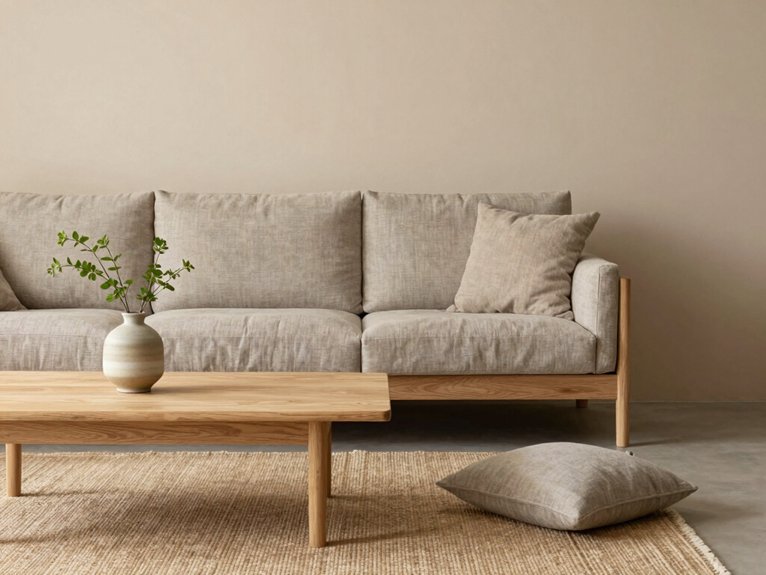
When you step into a Japandi living room painted in neutral earthy tones, you’ll feel the noise of the day melt away—warm whites, sandy beiges, and soft grays wrap the space like a calm blanket, making it easy to breathe and relax! You’ll notice how color psychology plays a quiet role, guiding your mood toward calm and focus, and how those muted hues create a cozy, shared refuge. Earthy aesthetics tie everything together through wood, stone, and woven fibers, so the room feels honest and welcoming. Add deeper charcoal or black accents for contrast, and you’ll get depth without drama. It’s simple, balanced, and inviting—perfect for gathering, unwinding, and feeling like you belong!
Low Furniture Profiles
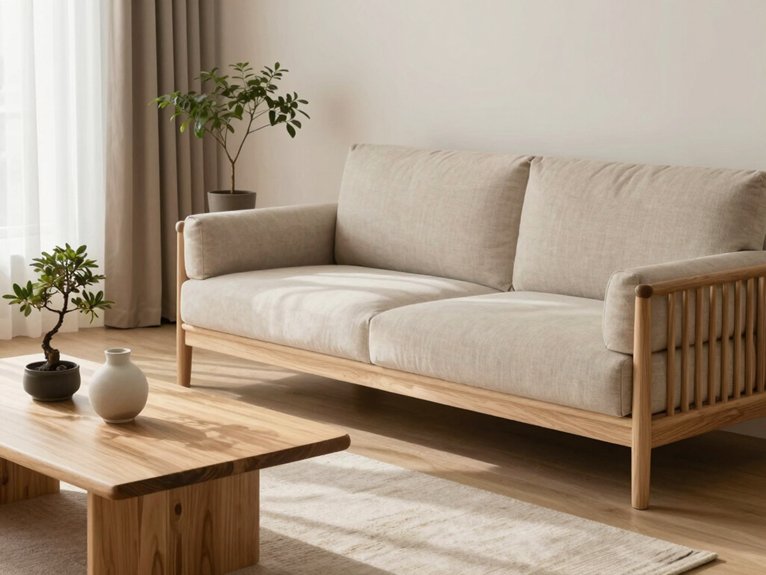
Because low furniture keeps you rooted and relaxed, a Japandi living room instantly feels calmer and more inviting—you’ll want to flop down and stay a while! You’ll love how low seating pulls everyone closer, creating a cozy, communal vibe where conversations flow and laughter feels natural. Choose a low sofa with clean lines, a wooden frame, and linen cushions for a warm, tactile touch that connects indoors with nature. The unobstructed sightlines make the room feel airy, while simple pieces reduce clutter and honor the “less is more” spirit. Together, these choices build a grounded atmosphere that welcomes you home, offers comfort without fuss, and makes your space feel both peaceful and perfectly lived-in.
Minimal Decor Styling
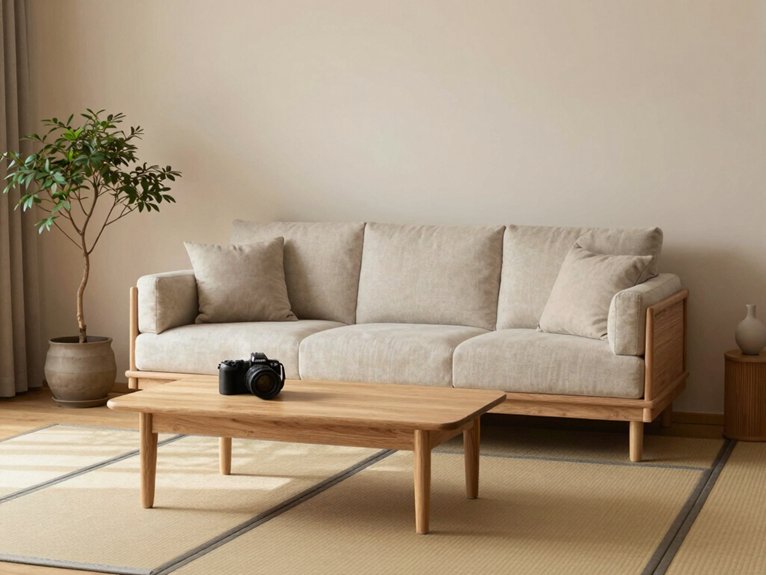
If you pare things down to just what matters, your living room will breathe—and you’ll love the calm it creates! Embrace a “less is more” mindset: choose vital furniture that works hard and looks simple, leave space to move, and let natural wood and stone pieces show their craftsmanship. Pop a single handcrafted pottery piece or unique sculpture where it can be admired, and hang minimal art that whispers, not shouts. Stick to soft earth tones for a gentle, shared vibe that says “welcome.” Add subtle details like a small tray for keys and soothing scents in a reed diffuser to tie the room together. You’ll feel belonging and balance, like your space finally knows how to relax with you!
Soft Textured Fabrics
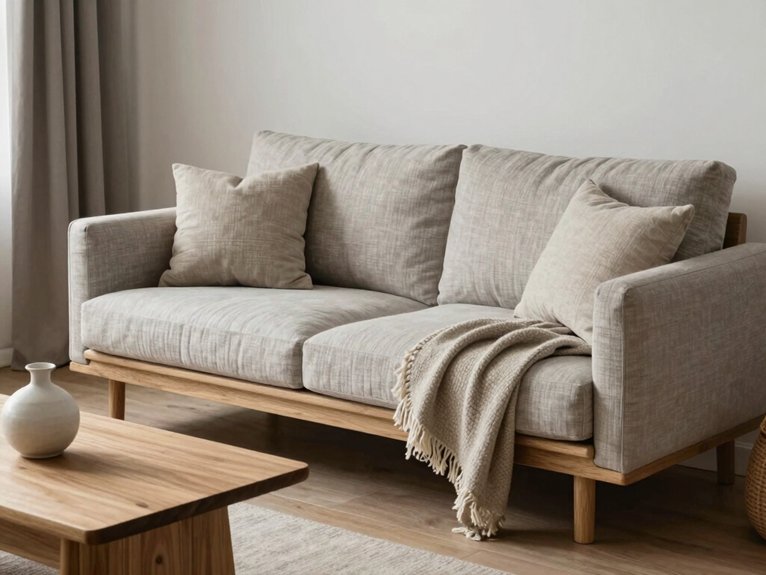
Start with three cozy pieces and you’ll feel the difference—soft textured fabrics are the secret handshake of Japandi living rooms, and they make your space feel instantly inviting! You’ll want natural fibers like linen, cotton, and wool for breathable comfort, and you’ll mix muted cushions and throws so everyone feels welcome. Try simple fabric combinations and gentle texture layering to keep things calm yet warm, no loud prints allowed.
- A wool throw that begs for a movie night!
- Linen cushions in soft beige, hugging your back.
- A woven rug that grounds the room, whispering calm.
- Cotton slipcovers that clean up easily and smile.
You’ll create a cozy, uncluttered space that invites lingering and togetherness.
Functional Layout Design
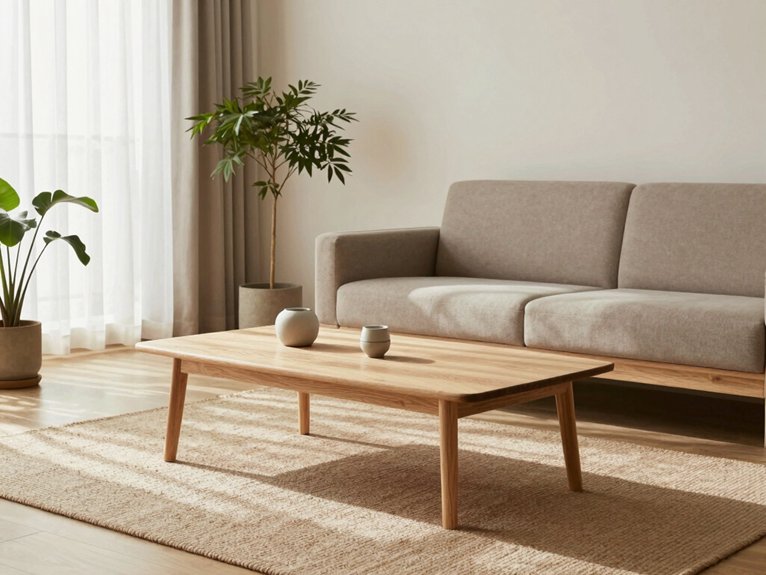
When you arrange your Japandi living room with intention, the whole space breathes—and everyone feels invited to stay a while! You’ll create spatial harmony by leaving open pathways that let people move easily, which feels so welcoming and calm. Choose low-profile furniture—think low sofa and a few floor cushions—to keep things cozy and grounded, and mix seating so your room adjusts to lounging, chatting, or a quiet cup of tea. Arrange pieces to encourage conversation, facing seats toward one another, and leave intentional empty spaces so the eye can rest. Zone areas for relaxing versus socializing to support a smooth, functional flow, and don’t be afraid to edit—less really can feel like more here!
Organic Material Accents
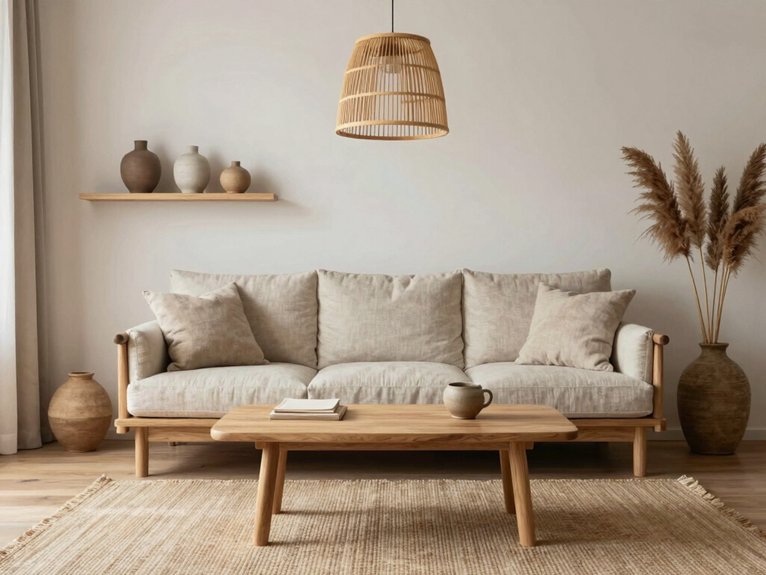
You’ve set up a calm, breathable layout—now let those empty spaces sing with natural touches! Bring in reclaimed wood, bamboo, and stone to warm the room and make everyone feel welcome, because home should hug you back. Choose eco friendly materials and pieces showing sustainable craftsmanship, and you’ll tell a story of care and quiet joy. Texture matters: woven throws, ceramic vases, and a rattan basket add cozy layers without clutter. Small changes make a big difference!
- Reclaimed wood coffee table that whispers history and warmth
- Slim bamboo shelving for lightness and tidy display
- Hand-thrown ceramic bowl as a quiet focal point
- Woven linen throw to invite sitting, staying, smiling
Balanced Negative Space
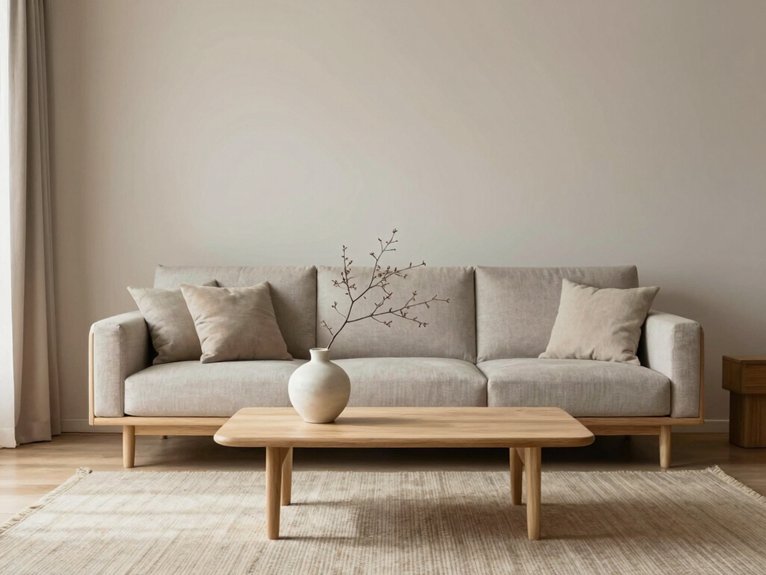
Think of negative space as the room’s breath — it’s what keeps the whole Japandi look feeling calm and uncramped, and you’ll love how a little emptiness makes everything else pop! You’ll find that leaving deliberate gaps around a low sofa, a simple wood table, or an artful plant brings calmness and mental clarity, since there’s no visual clutter to trip you up. This empty room rhythm improves airflow and lets light dance across surfaces, creating visual harmony that feels like a warm invitation. Arrange pieces so people can move freely, sit, and stay — it’s welcoming, not sparse. When positive and negative space balance, your living room becomes a cozy, uncluttered haven that reflects simplicity and belonging — yay for thoughtful design!
Warm Minimal Lighting
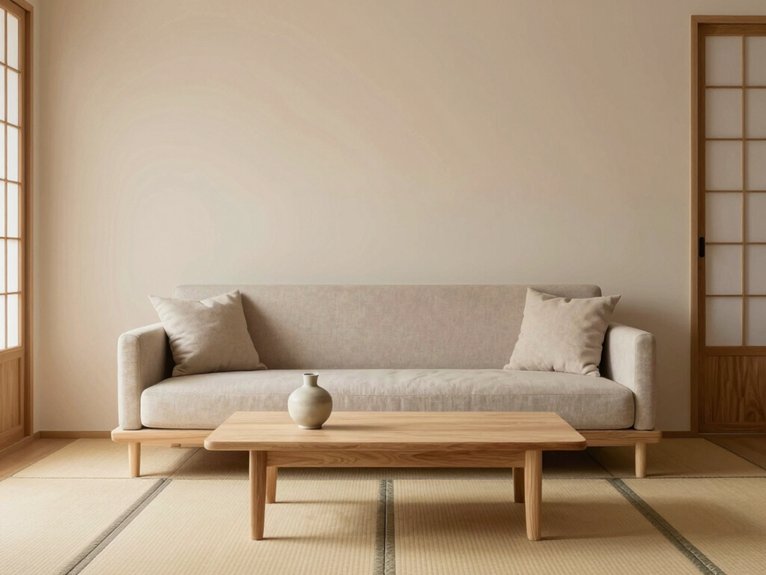
Because soft light shapes the mood more than any single piece of furniture, warm minimal lighting is your secret weapon for a cozy Japandi living room — and yes, it’s easier than you think! You’ll want to aim for a gentle ambient temperature, choosing warm-toned LED bulbs that feel like candlelight but save energy, and use layered lighting to build calm, not clutter. Keep windows clear or add sheer curtains to welcome natural glow, then place paper lanterns, frosted glass fixtures, floor lamps, or wall sconces to highlight wood and woven textures. You’ll create a space that feels inviting and familiar.
- Soft lanterns that tuck into corners for quiet comfort
- Dimmers that let evenings breathe slowly
- Sheer curtains for daytime warmth
- Sconces to frame meaningful moments
Intentional Decor Choices
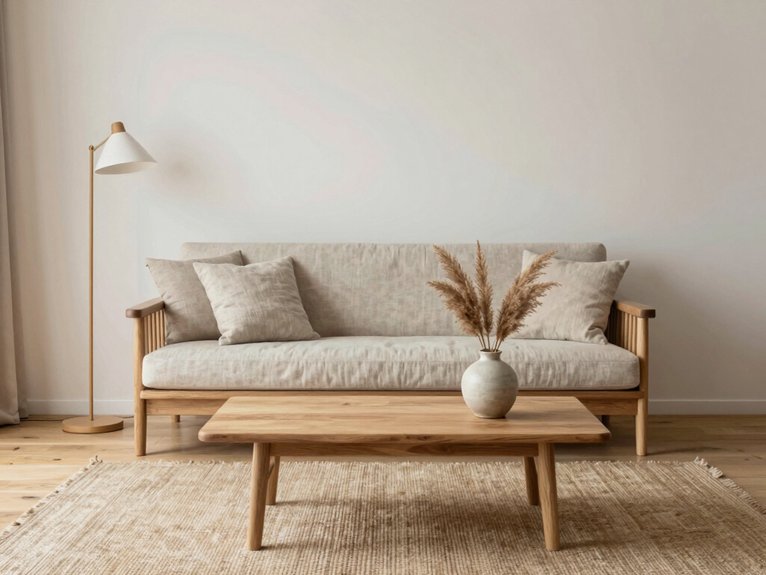
Soft, warm lighting set the stage — now let’s pick the pieces that will actually live in that calm, cozy room! You’ll choose with decorative simplicity and purposeful design in mind, keeping only items that matter and spark joy. Pick natural materials like a wooden coffee table, linen cushions, and a stone bowl to add texture and warmth, and let a single statement vase or artwork be the room’s nod to personality. Bring in a few healthy plants to soften corners and link you to the outdoors, they’ll breathe life into the space! Think neutral, earthy tones so each piece can be appreciated, and don’t be afraid to edit often — fewer items, more meaning, more belonging.
Muted Color Transitions
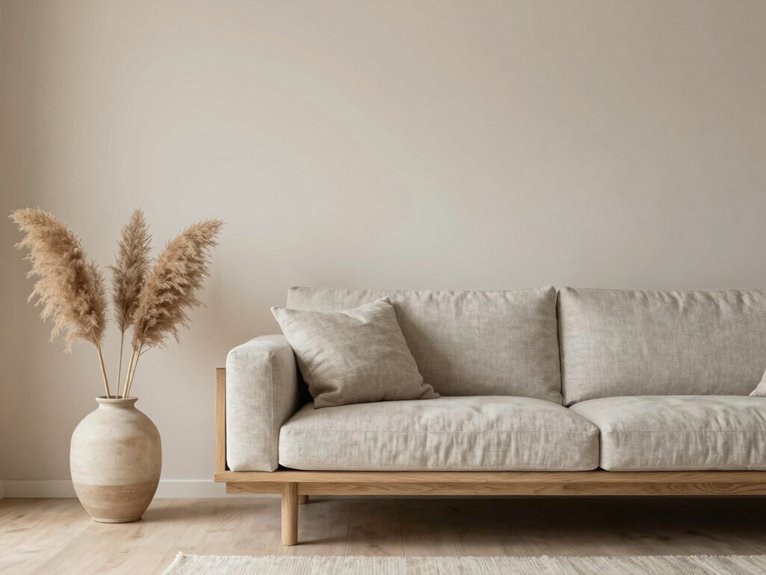
When you let colors drift gently across the room, the whole space breathes easier—muted shifts are the secret to that calm, collected Japandi vibe! You’ll create color harmony by using sandy beiges, warm whites, and soft earth tones that flow from one zone to the next, so everyone feels welcome and at ease. Gradual moves from light taupe to deep charcoal add depth without drama, and pops of muted blue or green refresh the palette like a friendly nod.
- Linen curtains in pale beige invite you in.
- A warm white wall eases into a taupe sofa.
- Deep charcoal anchors the corner quietly.
- Soft green accents whisper calm, not shout.
This visual flow wraps the room in comfort!
Simple Handmade Decor
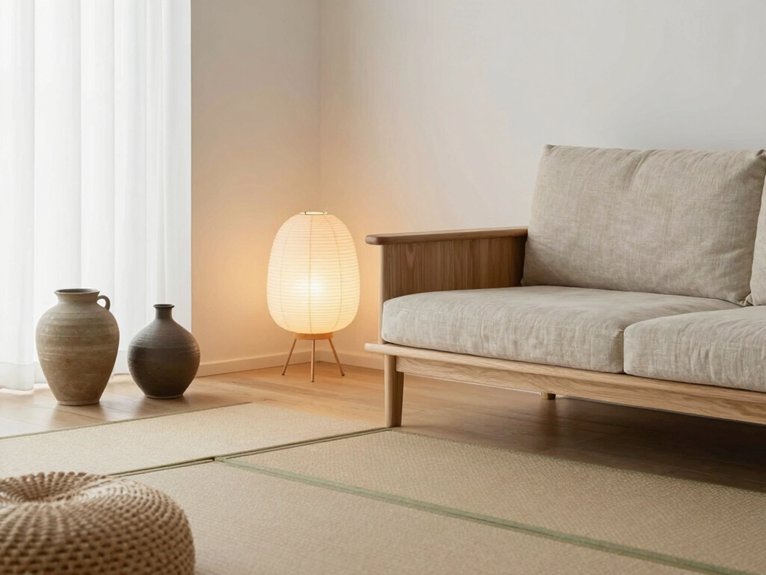
Now that the colors are gently settling into place, bring in a few simple handmade pieces to give the room personality and soul—no clutter, just character! You’ll love how handmade ceramics, like a textured vase or a shallow bowl, add warmth and remind you of the wabi sabi philosophy, celebrating small imperfections that make things feel lived-in and loved. Add a handwoven throw on a low wooden bench, and you’ll invite touch and comfort without breaking the calm. Place items with intention so every piece has purpose. Enjoy this little guide!
| Piece | Material | Feeling |
|---|---|---|
| Vase | Clay | Grounded |
| Throw | Wool | Cozy |
| Table | Wood | Connected |
Clean Horizontal Lines
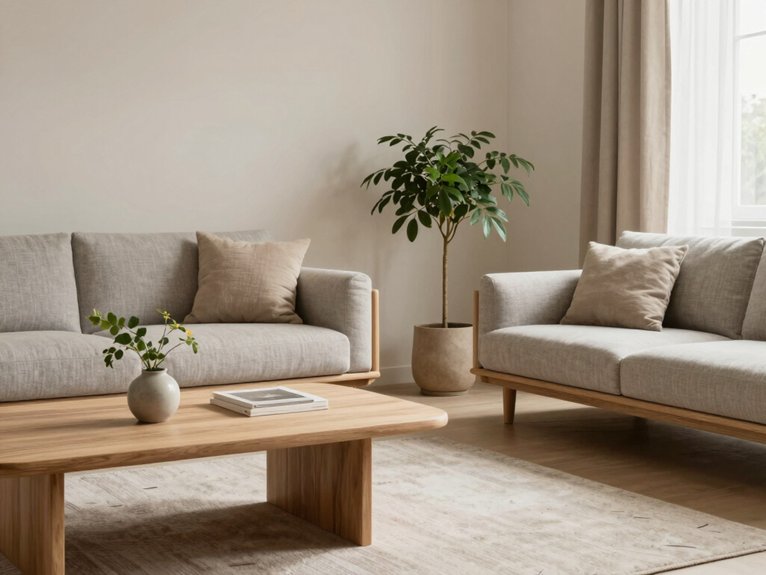
Because your eye naturally follows the horizontal, clean lines in a Japandi living room will instantly calm and ground the whole space—you’ll feel it the moment you walk in! You’ll love how low-profile furniture and long shelving open up horizontal space, making the room breathe and inviting you to sit and stay a while. Line harmony here means every piece has purpose, simple shapes, and a soothing rhythm that says, “you belong.” Try arranging a low sofa, a wide wooden coffee table, and a long, lean shelf to keep sightlines tranquil and connected.
- Cozy, grounded seating that welcomes you home
- Wide rugs that hug the floor, neatly defining zones
- Slim shelving for calm display and order
- Simple art positioned to calm the eye
Soft Natural Contrast
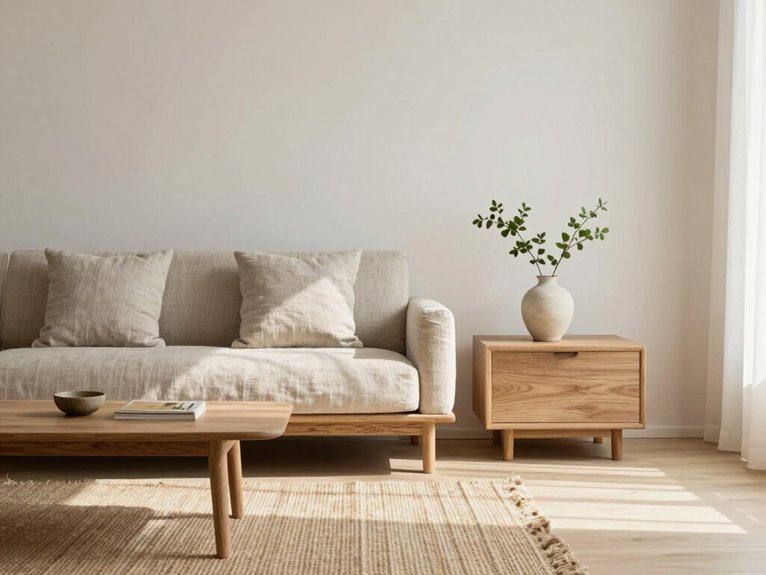
One smart way to make a Japandi living room feel warm and interesting is to pair rough, natural textures with soft, muted colors—think a raw concrete accent wall next to a honey-toned wooden sofa, and you’ve instantly got contrast that feels balanced, not jarring! You’ll love how raw textures meet soft beiges and warm grays to create an inviting atmosphere that says “stay awhile.” Add paper lanterns or warm-toned lamps to soften edges and bring depth, and toss wool throws and linen cushions on the sofa for cozy touchpoints. Pop in a few plants to link the room to nature, grounding the space and lifting spirits. It feels calm, lived-in, and inclusive—like your home finally recognizes you!
Quiet Visual Rhythm
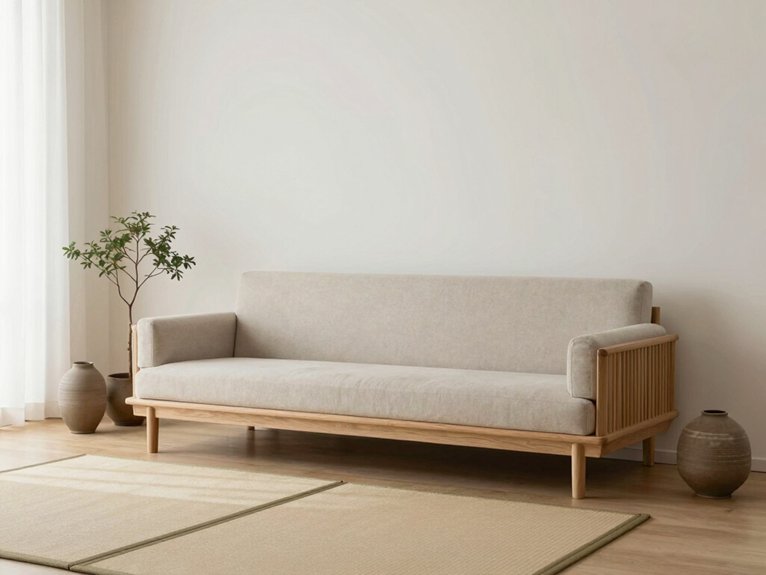
When you arrange furniture with a quiet visual rhythm, the room seems to breathe—and yes, it really does make you want to sit down and stay a while! You’ll create visual harmony by placing low-profile pieces—platform sofas, simple coffee tables—so the eye moves calmly, not frantically. Natural wood and stone bring texture and warmth, and soft paper lanterns or warm bulbs add gentle glow, all guiding an aesthetic flow that feels like a welcome hug. You’ll find belonging in a deliberately uncluttered space, where every item matters and relaxes you.
- Low furniture that grounds the room, inviting closeness
- Natural materials that warm your heart and hands
- Soft lighting that whispers, not shouts
- Neutral tones that let you exhale
Frequently Asked Questions
How Do I Childproof a Japandi Living Room Safely?
Of course you’ll want chaos-free serenity: you’ll anchor furniture, add soft corners and cordless window treatments, secure cabinets, use non-slip rugs, and designate a cozy play nook—prioritizing child safety in your living room so everyone feels included.
Can Houseplants Thrive in Low-Light Japandi Spaces?
Yes — you can grow low light plants in japandi decor; you’ll choose hardy varieties like snake plants, ZZs, and pothos, arrange them thoughtfully, and you’ll create a calm, inclusive space where everyone feels welcome and cared for.
What Floor Materials Work Best With Radiant Heating?
You’ll favor hardwood options like engineered oak and warm tile choices such as porcelain; they conduct heat well, won’t warp, and feel inviting — like gathering around a hearth despite the smartphone-era pace, creating cozy shared belonging.
How Do I Incorporate Technology Without Breaking the Aesthetic?
Hide speakers and hubs in woven baskets or low cabinets so you’ll keep smart integration discreet; choose muted finishes for screens and cables to maintain aesthetic harmony, and you’ll feel included in a calm, connected space.
Are There Budget-Friendly Sources for Authentic Japandi Pieces?
Absolutely — you can: like finding hidden gems, scout thrift store finds and online marketplaces for authentic pieces; you’ll bargain, upcycle, and connect with sellers, creating a warm, shared space that feels truly yours.