You can split a studio into real zones with curtains, bookcases, or sliding panels, and the best choice depends on your light, budget, and landlord rules. I’ve had good luck with a tension-rod curtain, sheer panels, or an IKEA Kallax turned sideways, because they hide the bed without turning the room into a cave. For renters, try ceiling hooks, a canopy frame, or a foldable screen; for a bigger lift, a closet nook or sliding track works wonders, and there’s more to compare next.
Key Takeaways
- Measure your studio and check ceiling and window placement before choosing a divider.
- Use renter-friendly curtains, tension rods, or ceiling hooks for reversible separation.
- Add open bookcases or low shelving to divide space while keeping light flowing.
- Try mobile dividers like clothing racks or pegboard panels for flexible, portable privacy.
- Choose closed cabinets, sliding partitions, or platform beds for stronger privacy and storage.
How to Choose a Studio Divider
Before you pick a studio divider, I always tell people to start with a tape measure and a clear head. I check window placement, ceiling considerations, and whether rental permissions let me drill, because a bad guess can make your room feel like a closet with opinions.
In my family, we’ve used sheer curtains for one-window studios, open bookcases for daylight, and IKEA PLATSA for extra storage. If you need privacy, sliding panels or half-walls work better, but they cost more. Curtains stay cheap, movable, and landlord-friendly. Measure twice, buy once, and keep your little home feeling friendly.
Why Studio Room Dividers Work
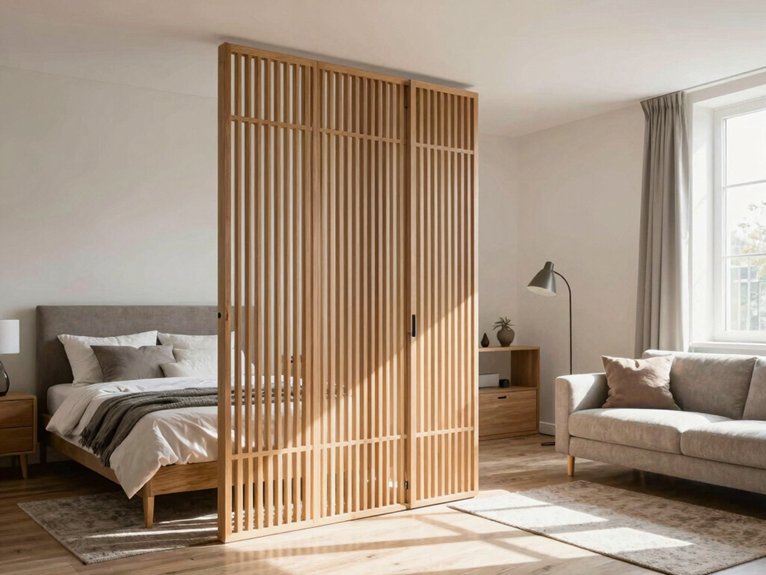
Once you’ve measured your space and figured out what your landlord allows, a room divider starts doing real work in a studio. I’ve seen one bookshelf make a bed vanish and give you psychological comfort fast. It also sets visual boundaries without boxing you in. | Benefit | Example |
| — | — |
|---|---|
| Privacy | Hide the bed |
| Light | Sheer, glass, open shelves |
| Storage | IKEA Pax, tall bookcases |
| Flexibility | Sliding doors, foldable screens |
| Space | Loft beds, half walls |
You can keep the room bright, add storage, and feel like you belong. My family called it “apartment magic,” and honestly, they weren’t wrong.
Curtain Room Dividers for Studios
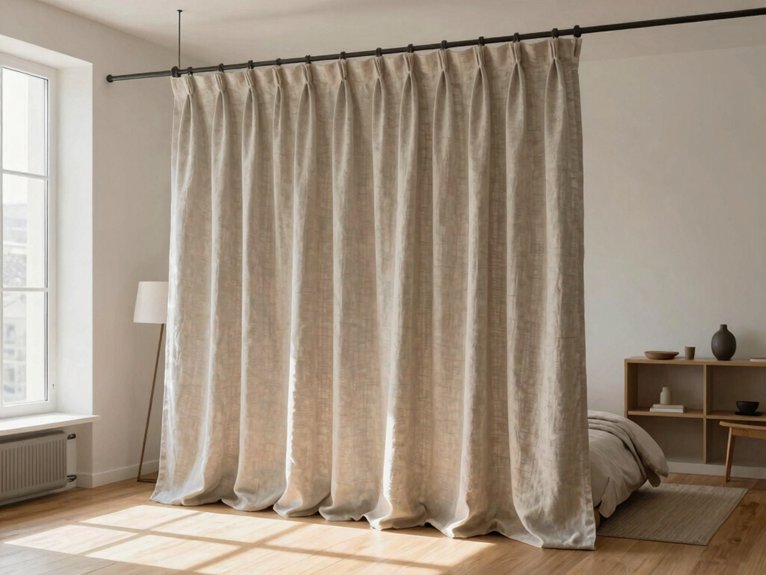
Curtains can completely change the feel of a studio, and I’ve watched them work their magic in the simplest ways.
You can hang sheer panels around your bed with ceiling suspension for a private nook, or choose blackout fabric when you want real sleep, not “I can hear the fridge” sleep.
I’ve seen curtain room dividers make one room feel like a small home.
Add tiebacks, a bookshelf, or a curved track, and you get flexible zones without drilling drama.
They’re affordable, reversible fabric artwork that lets you swap color fast.
My family loves that kind of easy win.
Curtain Behind the Sofa
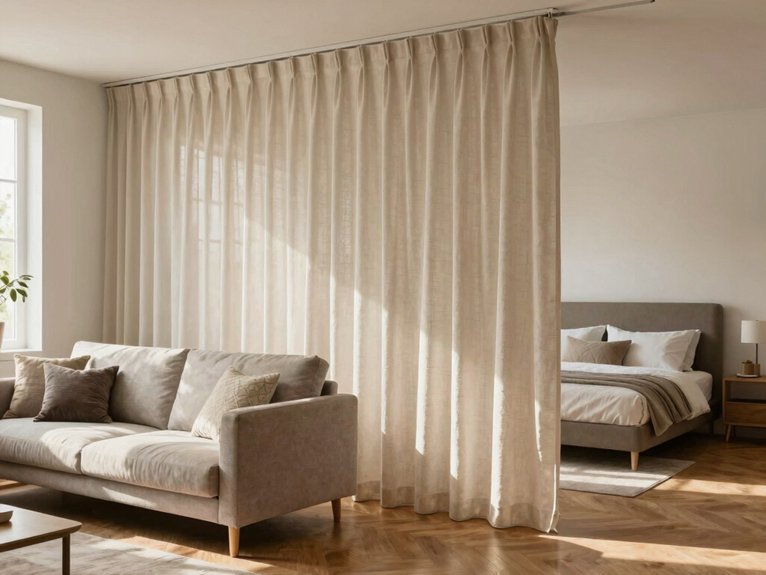
If you liked the soft, flexible feel of curtains in a studio, hanging one behind the sofa can work even harder.
I’ve seen a ceiling-mounted rod turn a cramped corner into a cozy sofa backdrop that feels like it belongs. Place the couch with its back to the living zone, then hang two panels or one wide curtain behind it.
Sheer linen keeps daylight moving; blackout fabric gives privacy and hush. It can even act like a fabric headboard.
In rentals, I’d use tension rods or ceiling hooks, then swap colors seasonally—because your space should change with you, not trap you.
Curtains Around the Bed
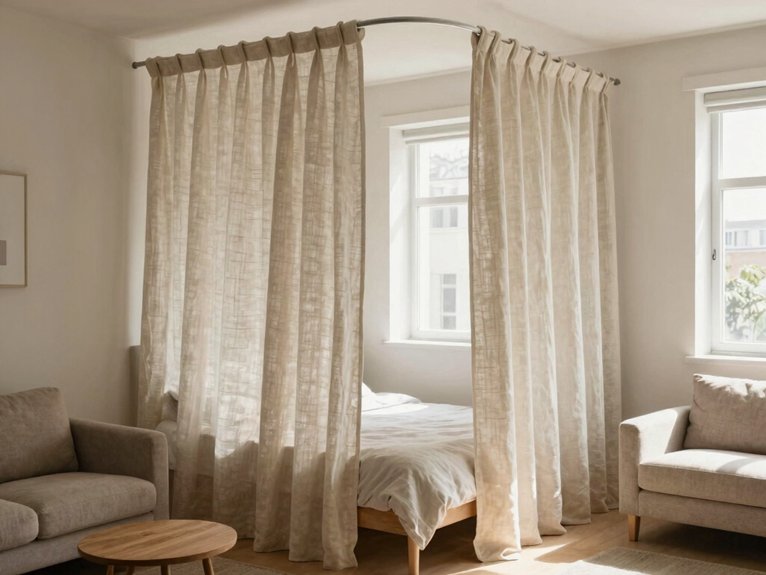
You can use curtains at the bed’s sides and foot, mounted on a ceiling track or bedframe rods, to turn your sleeping spot into its own little room—no construction required, thank goodness.
I’ve found that sheer panels keep the light soft and the room airy, while blackout curtains bring the privacy and cozy cave vibe my family somehow always votes for.
With two curtains on each side, you can open them up for a breezy layout or close them for a clear bed zone divider, which is handy when your studio needs to stop pretending it’s one giant room.
Side And Foot Curtains
Creating a soft bedroom cocoon around the bed is one of my favorite room divider tricks, because it gives you privacy without making the whole space feel boxed in.
You can mount ceiling tracks at the head and foot ends, then hang side and foot curtains to make a privacy canopy, a temporary enclosure that feels cozy, not fussy.
I’ve tied panels to a bedframe in rentals, and it worked like a charm.
If wall mounting’s off-limits, use a light canopy frame. Add two side panels and a foot curtain to block sightlines, and your studio suddenly feels more like home.
Sheer Or Blackout Options
For a bedroom divider that still feels light, I usually start with sheer curtains—think linen or gauze—because they let daylight drift through and keep the room from feeling like a cave. I’ve used them for my kids’ studio nook, and they make the space feel kind. | Option | Light filtration | Best for |
| — | — | — |
|---|---|---|
| Sheer | Soft | Daytime calm |
| Blackout | Full | Better sleep quality |
| Mix | Flexible | Privacy at night |
Choose blackouts if you need real darkness, especially for naps and sleep quality. Ceiling tracks keep both choices rental-friendly, reversible, and easy to love.
Curtain Bed Zone Divider
I love how curtains can wrap around a bed and instantly turn one open room into a true sleep zone.
In my studio, I’d hang two panels on ceiling tracks, one on each side, so I can close them at night and slide them open by morning. Sheer fabric keeps sunlight soft; blackout cloth makes the nook feel cozy and private.
I’ve tied panels to a bedframe for a temporary canopy, and my sister joked it looked like an elegant fort.
Pair them with fabric headboards, and you’ll create a calm space that feels like yours, not just a corner.
Curtains Between Bed and Living Area
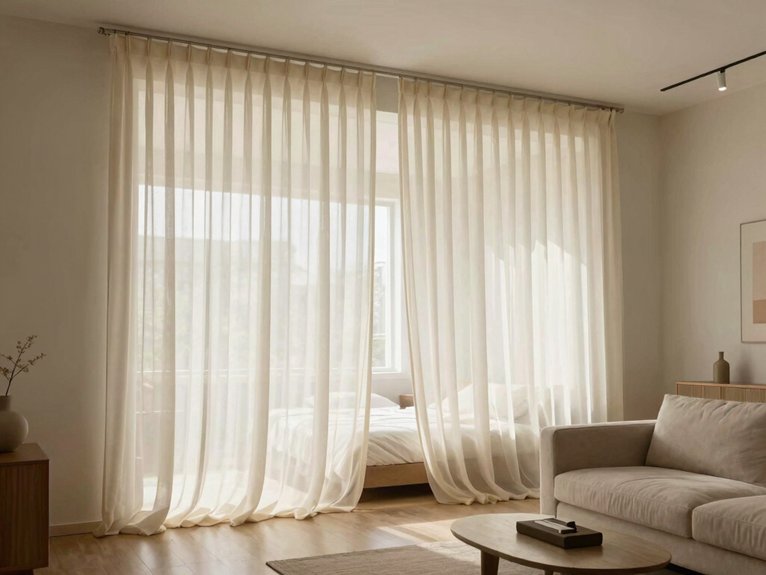
You can use a ceiling-mounted curtain track or a steel frame to separate your bed from the living area, and it gives you soft privacy without making the room feel boxed in.
I like how sheer panels keep daylight moving through, while thick blackout curtains can turn bedtime into “don’t talk to me till morning” mode.
If you want a one-bedroom feel without any permanent build, two side curtains or a curtain behind the sofa can open and close as needed, which is pretty handy when family life gets a little loud.
Soft Privacy Divider
Hanging curtains around a bed can turn one open room into two calmer zones fast, and I’m a big fan of that kind of low-drama magic.
You can mount a ceiling track above the bed and hang sheer linen panels so daylight still drifts in. If you need real hush, I’d choose thick blackout curtains on side and foot tracks; shift workers in my family swear by them.
I like two or three panels for easy flex. Add fabric tension, acoustic panels, or a patterned layer, and your studio feels kinder, cozier, and less like a roommate prank.
Open Or Closed Feel
If the soft privacy trick worked for your bed nook, the next question is how open or closed you want the whole room to feel.
I’ve used a ceiling-mounted curved track with sheer curtains, and it gave my studio a one-bedroom vibe without trapping daylight. Add thicker blackout panels on the bed side if you need real sleep armor.
For more flexibility, I’d hang two curtains or a center-opening canopy.
My family liked the mix of a bookcase and curtain on a steel frame, because it feels cozy, reversible, and renter-friendly.
These ambient shifts keep visual permeability where you want it, not where you don’t.
Curtain and Bookcase Combinations
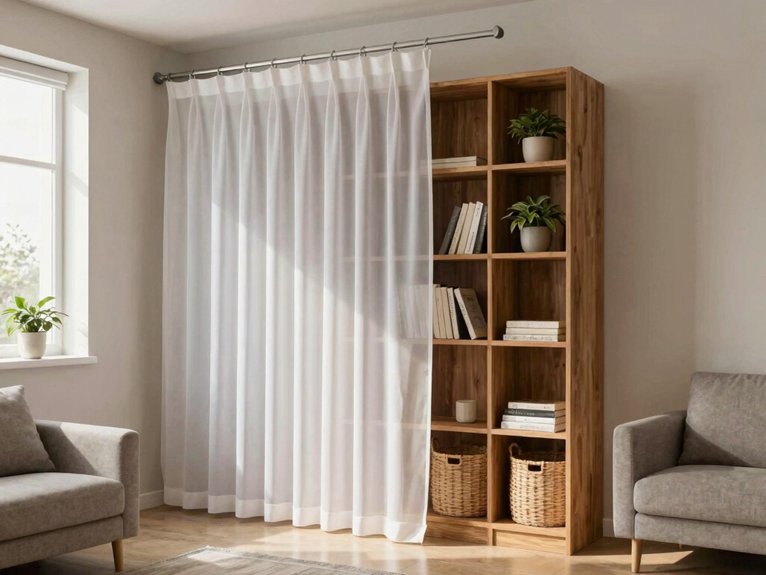
One of my favorite tricks is pairing a freestanding bookcase with ceiling-mounted curtains, because it gives a room both storage and privacy without making the space feel boxed in.
I’ve used a curtain bookshelf with an IKEA Kallax at the foot of my bed, then hung a privacy curtain behind it. You get books, plants, and a calmer sleeping corner.
In my rental, I clipped the curtain to the bedframe; no drama, no holes. Try sheer fabric by day, blackout at night. It feels cozy, like your studio finally knows who it is.
Open Bookcase Room Dividers
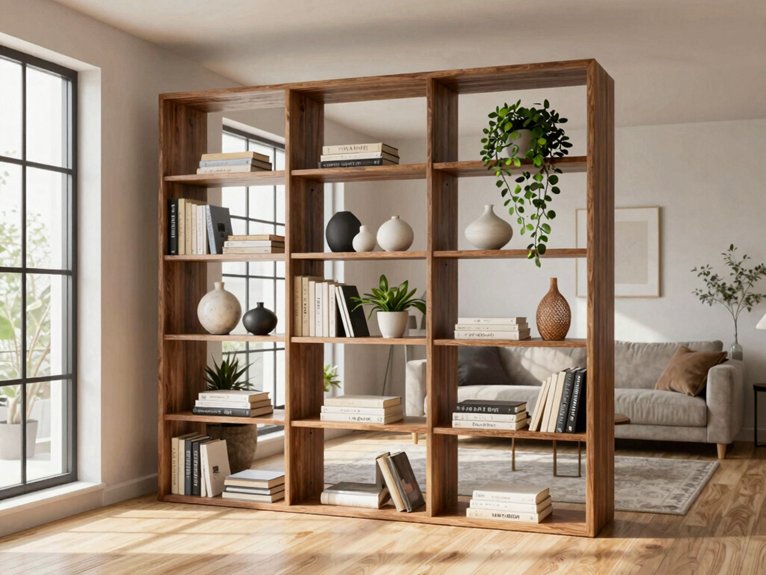
You can use an open bookcase divider, like an IKEA Kallax, to split your studio without stealing the sunlight from that one precious window—because nobody wants a dark cave with better storage. I’ve seen it work best when you keep the shelves open for books, baskets, and bins, then place it at the foot of the bed or between zones so the space still feels airy and easy to move through. If you want a little more personality, paint the back panels or add wallpaper, and you’ll get a clean, flexible look that keeps the room balanced without closing it off.
Light-Friendly Storage
| Spot | Benefit | Tip |
|---|---|---|
| Bed foot | Soft divider | Use low height |
| Entry edge | Clear zone | Keep shelves open |
| Wall side | Extra storage | Add baskets |
| Window path | Light stays | Skip heavy backs |
| Rental nook | Personal touch | Try wallpaper |
Pair it with sheer curtains.
Kallax Divider Style
The Kallax cubed-divider is a smart little workhorse. You can place it at the foot of your bed or between your sofa and bed, and it helps you carve out your zone without blocking that precious window light.
I’ve seen family rentals feel instantly calmer when you add baskets, books, and a few favorite objects. Paint the back or line it with colorful backs wallpaper for a look that feels like yours.
I also love rotating displays, since you can swap decor with the seasons. Anchor it, and try plants or a sheer curtain for a softer screen.
Open Layout Balance
When I want a studio to feel open and still give the bed its own little world, I reach for an open bookcase divider like an IKEA Kallax and set it perpendicular to the window. You keep natural brightness moving through both zones, so nobody gets stuck in a dark cave, and the sightlines stay friendly.
I’ve done this in my own place, and my family loved the calm, lived-in feel. Try taller shelves at the bed’s foot, add plants, baskets, or boxes, and use a painted back panel for a soft partition rhythm. It’s practical, cozy, and oddly satisfying.
Closed Bookcase Dividers With Storage
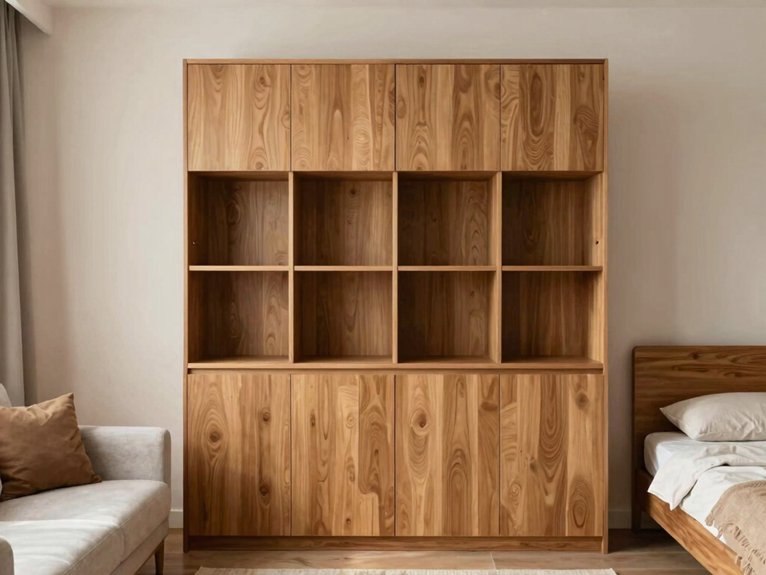
I love a closed bookcase divider because it does two jobs at once: it splits your room and hides the mess, which feels a little like magic on laundry day.
You can place one to mark your sleep zone and keep clothes, books, and chargers tucked away.
I’ve seen Pax frames and Ivar cabinets stacked like built in cabinetry, and they’re solid when you need more privacy. Paint the back or add paper for a renter-friendly pop.
If noise bugs you, pair it with acoustic panels nearby. You’ll get a cozier nook, less light spill, and a room that finally feels yours.
Bookcase at the Foot of the Bed
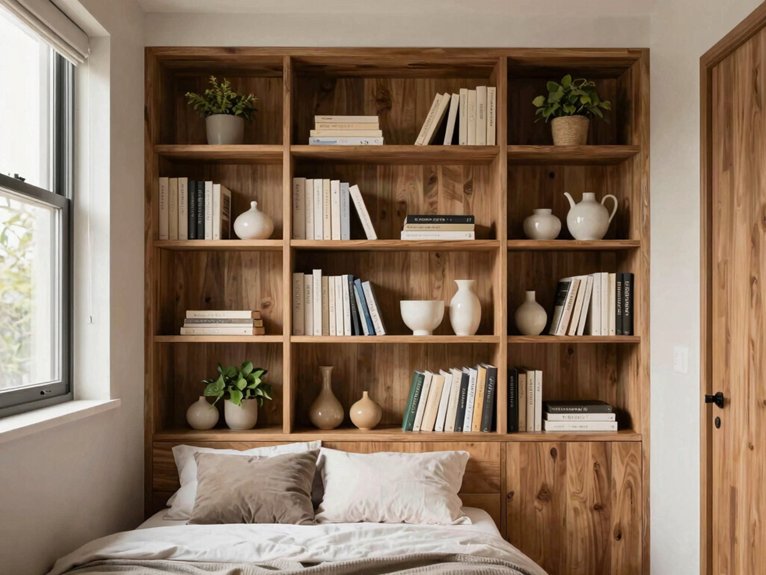
A bookcase at the foot of the bed can feel like a small trick with a big payoff. In my place, it helps me claim my own corner without losing light, which matters in a single-window studio. You can choose an open IKEA Kallax or a wide Stetson-style bookcase; both feel sturdy and friendly.
| Style | Benefit |
|---|---|
| Open shelves | Airy divide |
| Varying heights | Plants, books, decor |
| Trailing plants | Softer edge |
| Removable wallpaper | Rental-friendly color |
I like plant styling on top, plus lightweight objects, so the room stays calm, not bossy.
Bookcase and Headboard in One
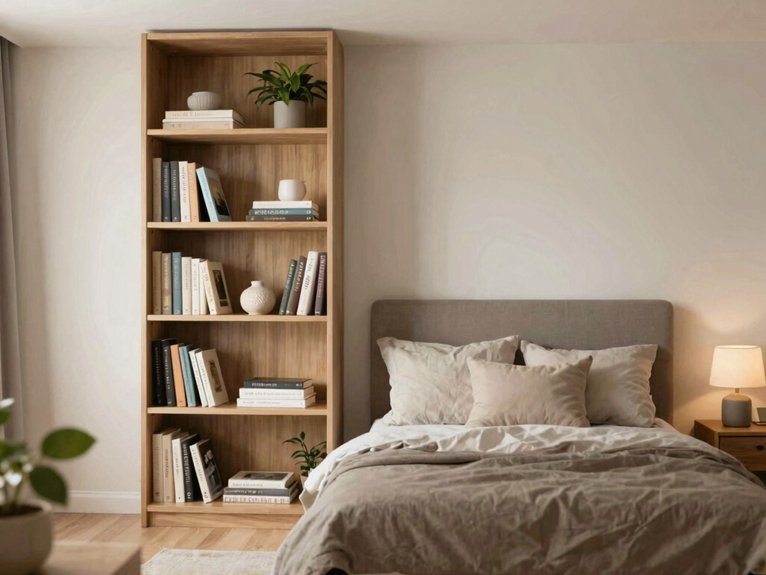
Build the headboard and storage into one piece, and suddenly the bed stops feeling like it’s just parked in the room. In my own tiny studio, I’d pick an IKEA Kallax or Pax frame, then add hidden lighting, maybe acoustic panels, for a cozy zone that feels like home.
- I store books and baskets up top.
- I keep a lamp and alarm close.
- I let open shelves share daylight.
- I paint the back for renters.
- I vary shelf heights for plants and clothes.
It saves floor space and makes you feel tucked in, not boxed out.
Floating Bookcase Dividers
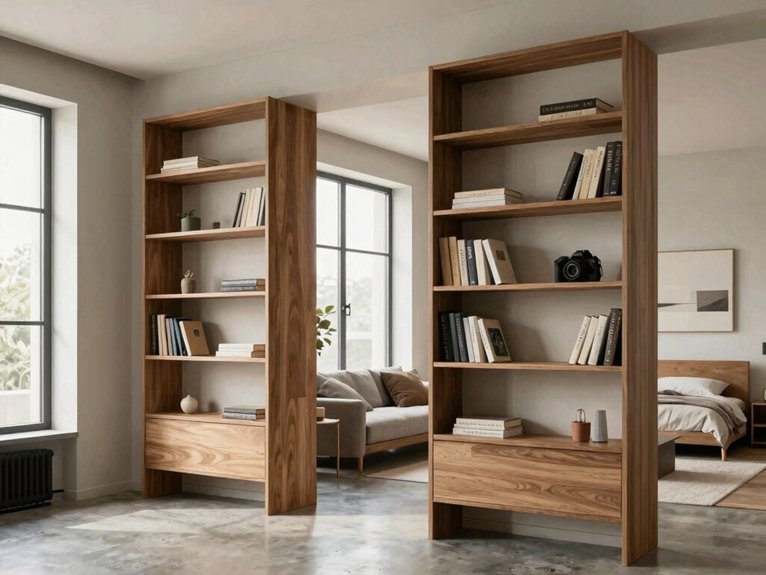
If your bed’s headboard and storage already feel like one smart move, floating bookcase dividers take that idea one step beyond. I’ve seen a Kallax-style shelf mounted midway make a studio feel like a real home, not a shoebox with opinions.
You can anchor it to studs at the bed’s foot or head, then style the top with books, mounted greenery, and a lamp with hidden wiring. Open backs let sunlight move through both zones. Paint the back for personality, or add a sheer panel for privacy. My family loved how easy it felt to live there.
Platform Bed Room Dividers
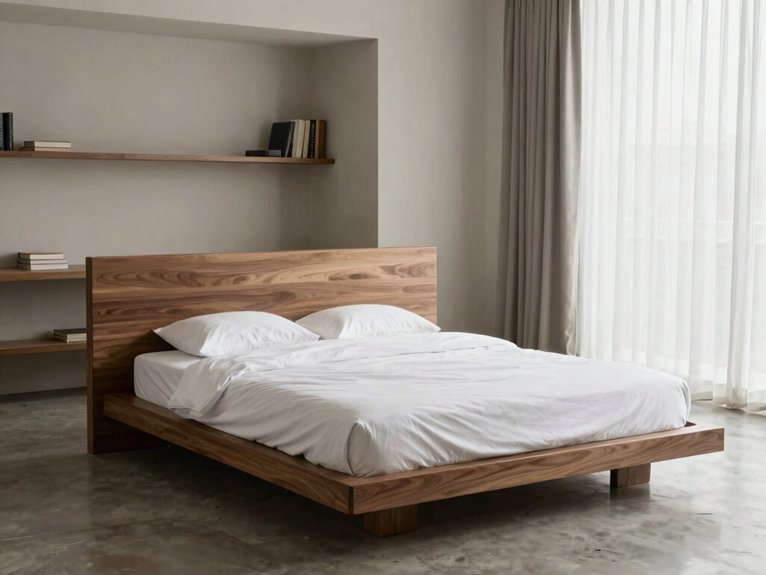
When I used a platform bed in my own tiny place, it did double duty fast: you got a low divider for the room and sneaky storage under the platform, which feels like a magic trick with socks.
You can build one with drawers, a headboard bookcase, or even an IKEA Platsa or Pax setup, so your bed helps organize the space instead of bossing it around.
In a studio, lifting the mattress like this gives you a clear sleeping zone, keeps the living area open for walking, and makes the whole room feel calmer—even when my family’s stuff is doing its best to take over.
Space-Saving Platform Beds
I’ve seen a platform bed do more than just hold a mattress—it can quietly split a studio into “sleep zone” and “everything else” without making the room feel boxed in. In my family’s tiny place, that low deck felt like a hug, not a wall.
- Add hidden storage to dodge dresser chaos.
- Pick tactile finishes, like oak or linen, for warmth.
- Use a lofted section when ceilings are tall.
- Try IKEA Platsa drawers under the frame.
- Match wood tones for a calm, together feel.
If you build in a headboard-bookcase, you’ll get a neat boundary and a spot for books, lamp, and socks that mysteriously vanish.
Built-In Storage Solutions
After a platform bed has already started pulling double duty, built-in storage takes the whole idea even further.
I’ve seen a Platsa setup from IKEA turn a studio into a cozy hangout, with wardrobes and a headboard that stash clothes, blankets, and the stuff you swear you’ll sort later.
You can build modular cabinetry into the frame, add hidden compartments, and even raise the bed to claim more room underneath.
My family loved a wood block design with a desk tucked in. It feels smart, warm, and nicely shared, not crowded.
Zoned Sleeping Areas
Because a platform bed lifts the sleep zone off the floor, it can give a studio that nice low-and-high split that makes the room feel organized fast. I’ve seen it work like micro lofting with ambient zoning, especially when you tuck storage below and keep the path clear.
- Add an IKEA Platsa or Pax wardrobe.
- Build in a bookcase headboard.
- Pair it with a desk block.
- Use matched wood for calm flow.
- Try arched cutouts to soften corners.
You’ll get a cozier, one-room-home feel, and your family won’t trip over the bed on midnight snack runs.
Platform Bed With Storage and Desk
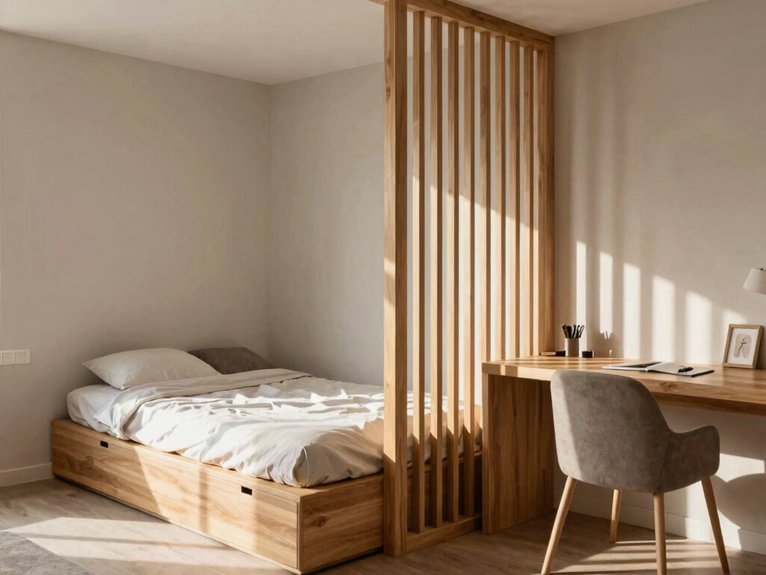
A platform-bed setup can turn one small studio into two clear zones, and I love how neatly it does the job.
In my own loft conversion, hidden wiring kept cords tidy, and the raised wood platform felt like a cozy perch. You get guest accommodation without a sofa bed circus, plus modular finishes that match your style.
Drawers and cubbies under the bed swallow blankets, shoes, and the random stuff families collect. Add a pull-out desk at the edge, and you’ve got a compact work nook.
It’s smart, warm, and makes your studio feel like it actually belongs to you.
Loft Bed Room Dividers
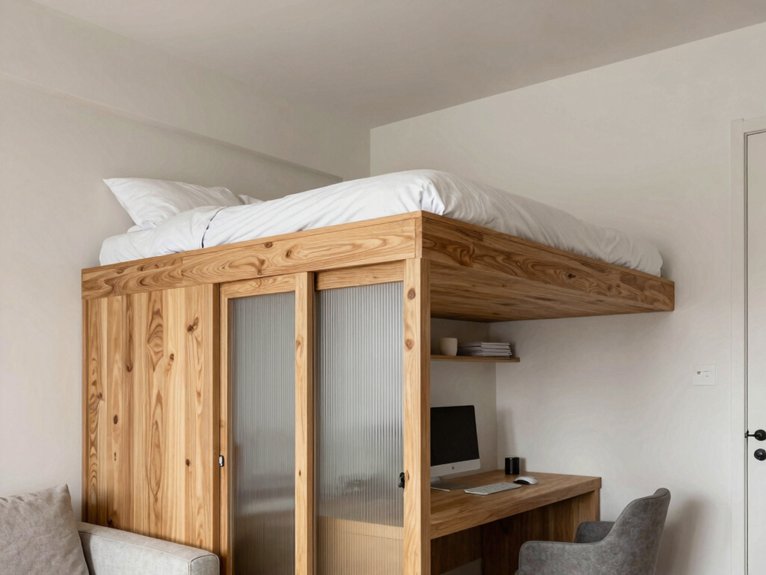
- I love vertical storage for books and bins.
- A simple curtain gives quick privacy.
- A rug below helps zones feel steady.
- Ladder safety matters; choose wide steps.
- Under-bed seating can host family movie night.
In my place, that setup felt like magic.
Loft Bed With Half Wall
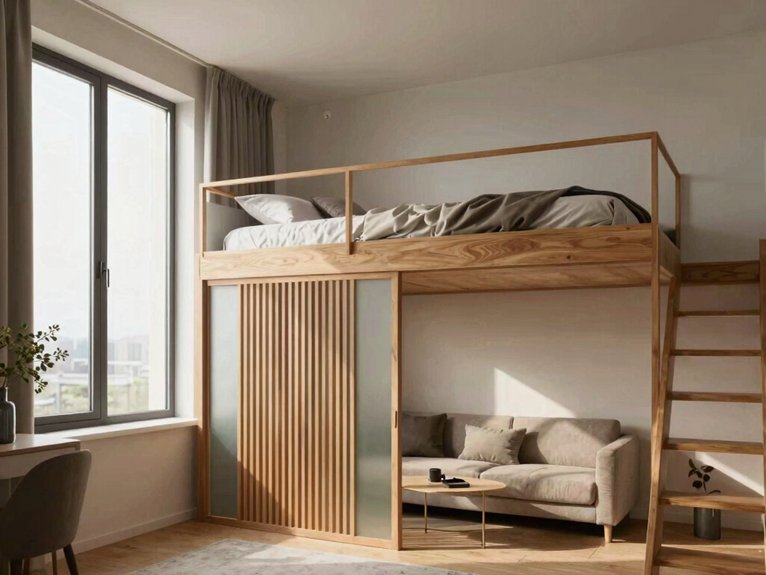
The half wall changed everything for my loft bed setup. You get raised sleeping above a cozy living zone, and the half wall gives partial privacy without boxing you in. I added a pine ledge, a sliding curtain, and a slim wardrobe under the platform. It feels like a tiny team win.
| Feature | Benefit | Tip |
|---|---|---|
| Half wall | Hides the mattress | Keep it knee- to chest-high |
| Built-ins | Stores clothes | Use drawers under the loft |
| Curtains | Adjustable privacy | Pull them closed at night |
With 10-foot ceilings, you’ll breathe easy and still keep the light.
Half Walls for Studio Separation
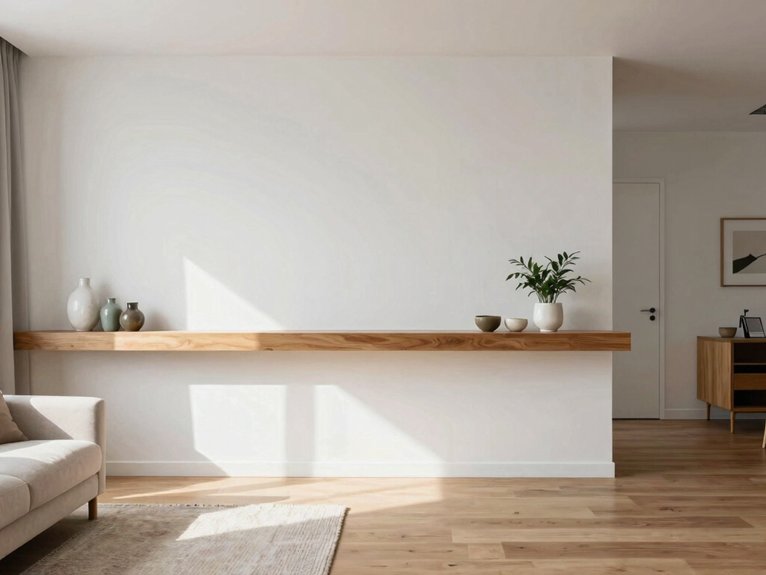
When you want privacy without making your studio feel like a cave, a 3–4 ft half wall can hide your bed while still letting daylight spill over into both zones.
You can add a built-in niche, a narrow shelf, or even a short pony wall, and I’ve found that pairing it with a tall wardrobe or bookcase at one end gives you extra storage and a neat layered look.
It’s a solid choice for rentals too, since it feels more permanent than a curtain but still keeps the room open enough that you won’t keep bumping into walls like a sleepy sock monster.
Privacy Without Closing Off
If you want privacy without making your studio feel boxed in, I’m a big fan of a half wall.
It gives you daylight privacy and acoustic softening, so your bed nook feels calm, not hidden away. I’ve seen one topped with a slim shelf and a linen curtain, and it worked like magic.
- hide the bed
- keep airflow moving
- add book storage
- paint the back for contrast
- bolt on outlets for lamps
You can build it freestanding or anchor drywall to studs.
My family loved the cozy “guest suite” vibe, minus the hotel bill.
Light Flow And Separation
Half walls are one of my favorite studio tricks because they let light drift right over the top while still giving your bed its own little zone. You get visual separation without losing natural light, which matters a lot in one-window apartments.
I like adding open shelves or a little niche for books and baskets; suddenly the wall works harder than my uncle at moving day. Keep it 3 to 4 feet high, then top it with a curtain, slats, or glass if you want more privacy. Paint it, wallpaper it, or use breeze blocks for a look that feels like home.
Glass Wall Room Dividers
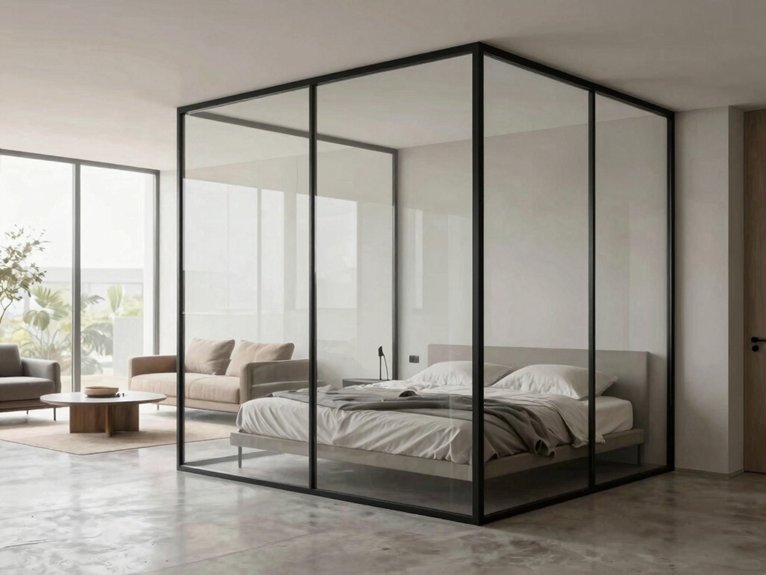
I’ve always loved how a glass wall can feel like a magic trick for a room. You get a real sense of your own corner, yet you still belong to the whole studio. Choose tempered, laminated, frosted, or tinted panels for the vibe you want.
- Sliding systems save floor space.
- Frosted glass softens prying eyes.
- Steel frames add an industrial feel.
- Lower cabinets can hold shoes.
- Pros handle uneven floors and safe installs.
I’d think about glass maintenance and acoustic performance, too, because quiet mornings matter. My family likes frameless sliders; they open fast, like a polite disappearing act.
Glass Wall and Curtain Pairings
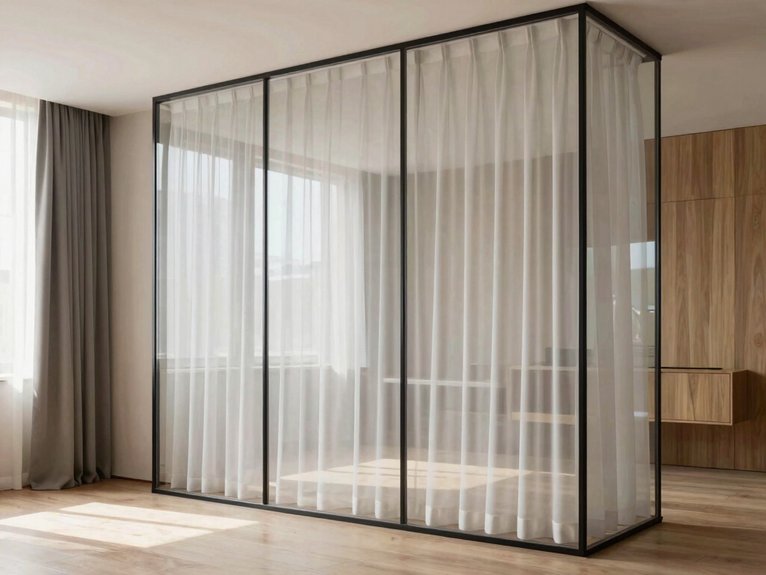
Glass walls already do a lot of heavy lifting, and adding a curtain beside one can make the setup feel even smarter. I’ve seen a steel-framed tempered panel with a ceiling sheer turn a studio into a cozy shared zone, not a fishbowl. You get solar control by day and privacy at night.
Try frosted or tinted laminated glass with a blackout curtain on a suspended slider for better acoustical layering. I like a track with no bottom rail; it feels clean and lets the floor breathe. In rentals, clip-on rails and removable hooks keep peace with your landlord, and with your family.
Industrial Steel Frame Dividers
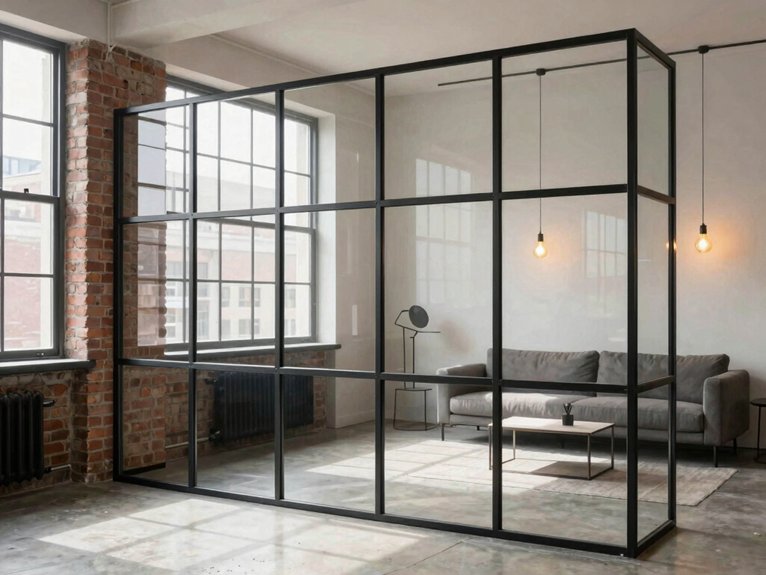
Steel-frame dividers have this neat loft-with-a-purpose vibe that I keep coming back to. I like them because you can still share light, yet claim your own corner.
- Black powder-coat feels bold and cozy.
- Thin mullions keep views open.
- Welded joints should look clean and sturdy.
- Ask for thermal breaks and anti corrosion coatings.
- Add acoustic insulation if my kid’s cartoons need softening.
I’d pick freestanding frames for rental life, or fixed ones if you’ve got pro help for wonky floors. I’ve seen sheer curtains on a track turn one room into two, then back again.
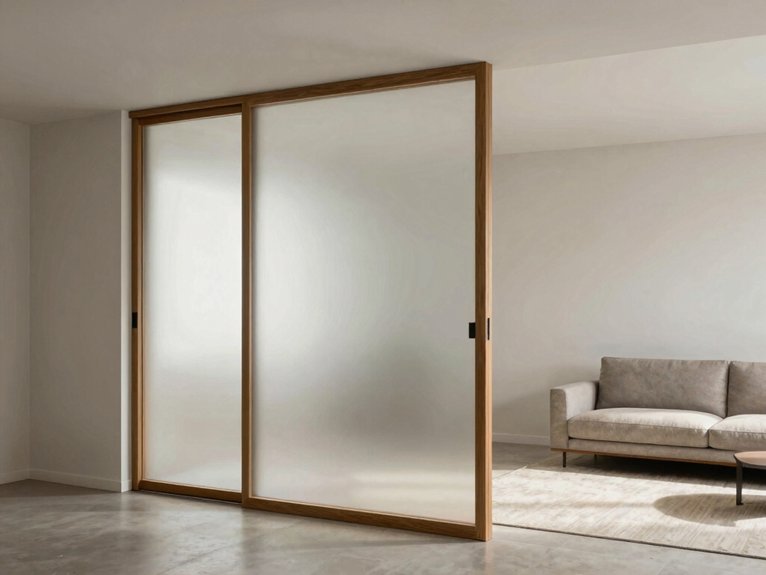
Sliding Door Dividers for Studios
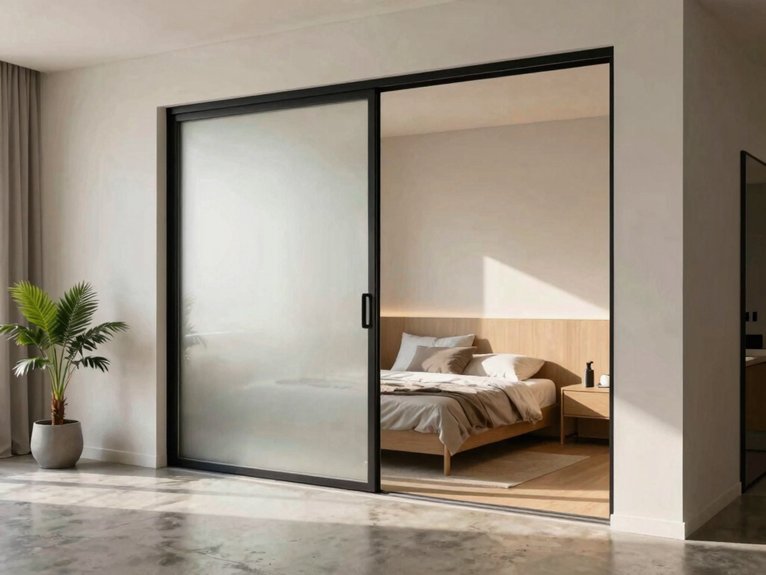
If the steel-frame look gave your room that loft feel, sliding door dividers take it one step farther by letting you split a studio without wasting a single inch on door swing. You can choose suspended sliders or wall-hugging systems, and frameless panels keep light moving, so your space still feels like one happy crew.
| Option | Best for |
|---|---|
| Clear glass | Bright zones |
| Frosted glass | Extra privacy |
| Black frame | Industrial style |
| White frame | Clean look |
| Two to eight panels | Bigger layouts |
I’ve seen my family love this setup; it’s tidy, calm, and not at all wobbly.
Foldable Screens for Flexible Privacy
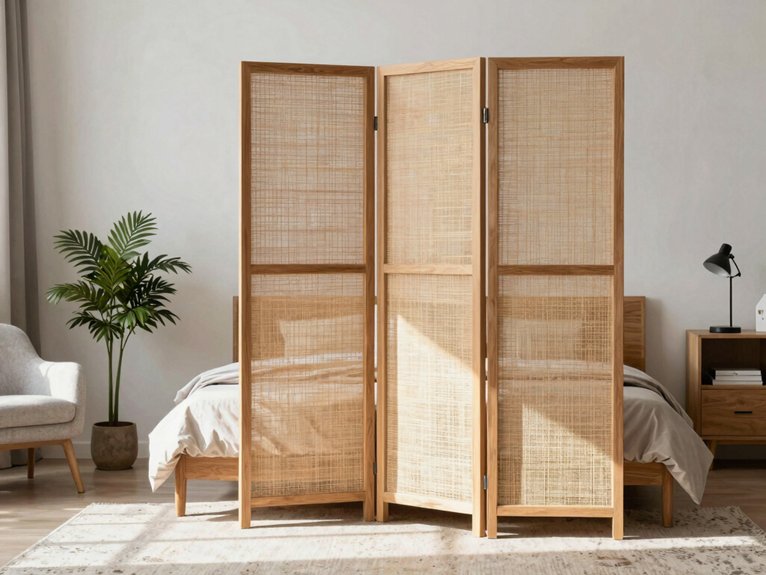
Foldable screens can set up in seconds, and that’s exactly why I keep liking them more each time I see one in a real home. You can fold yours flat, stash it by the closet, and pull it out when you need a little “don’t mind me” space.
I’ve seen portable rattan, wood, and shoji-style panels work well in studios, and some even feel soft like acoustic panels.
- Three-panel versions make quick bedroom corners.
- Heavier screens block more sight.
- Light hinges let you angle them.
- Rental-friendly? Absolutely.
- Behind a sofa, they can hide clutter.
Movable Pegboard Room Dividers
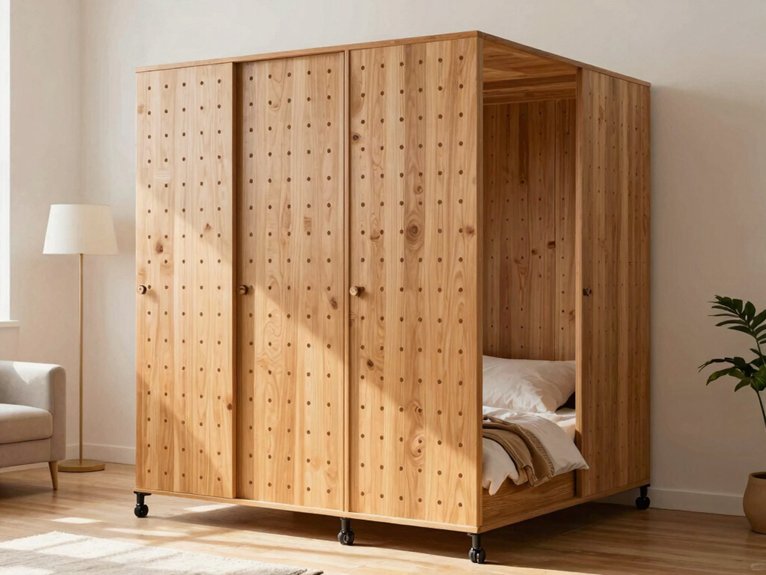
When I want a room divider that works hard and still feels easy to live with, I keep coming back to a movable pegboard on wheels. You can roll it between your bed and couch, then hang hooks, shelves, baskets, or even pegboard lighting for a cozy glow. I’ve seen one built from a 4’x8′ sheet, a plywood base, and casters for under $150, which is pretty friendly on a studio budget.
Add mobile planters, paint the back, or clip on fabric for color. It keeps light moving and makes my place feel like it actually knows me.
Clothing Rack Dividers With Curtains
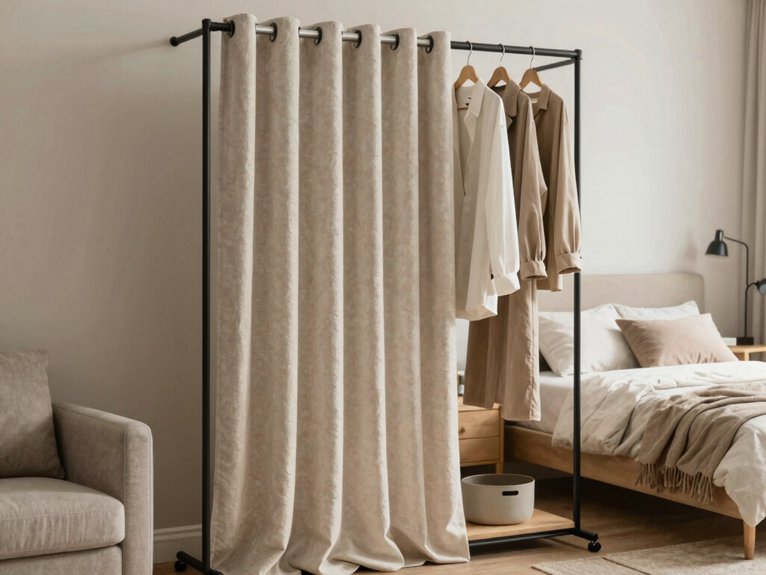
You can turn a simple clothing rack into a clever privacy wall, and I’ve seen how a sheer curtain makes the whole setup feel softer without blocking all the light.
If you need more privacy at night, a double-rod rack or two parallel racks can hold clothes and a blackout curtain, which is essentially the “please don’t look over here” version of room decorating.
I like using clip rings or a tension rod on top, because they keep gaps away and make it easy to slide the curtain open when you’re not pretending your studio is a palace with secret rooms.
Clothing Rack Privacy
I’ve found that a freestanding clothing rack can do a lot more than hold shirts—it can carve out real privacy fast.
In my studio, you can turn it into a portable wardrobe and tweak curtain styling for a cozier feel. For about $30–$150, you can hang a sheer panel for soft separation or blackout curtains for real bedroom privacy.
- Clip rings help with heavier fabric.
- A tension rod keeps panels steady.
- Two curtain panels can frame sofa and bed.
- Wheeled racks make moving easy.
- Hanging baskets add storage without blocking light.
Curtain Softening Layer
A curtain can soften a clothing rack divider in a way that feels calm instead of boxy, and I love that trick in small spaces.
I’ve used a sturdy freestanding rack, rated for 100+ lbs, with a sheer panel for light flow and a blackout panel when my family needed privacy and nobody wanted a parade. You can drape 52″–54″ by 84″–96″ panels from the crossbar, or use a tension rod, no drilling drama. Add layered texture with plants or clips, and try acoustic drapery for a quieter feel. Wheels help, too.
Plant Dividers for a Softer Look
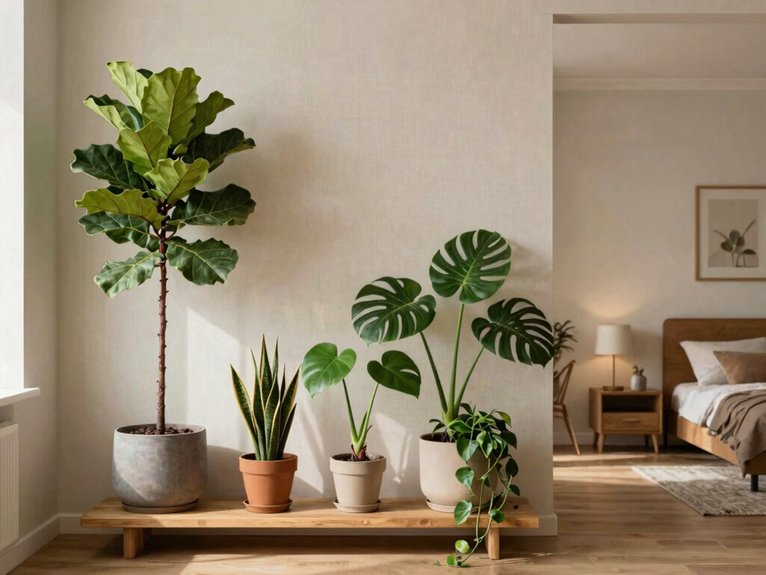
Green dividers can make a room feel calm instead of crowded, and I’m a big fan of that.
In my own family’s studio, I’ve used plants to carve out a cozy nook that still feels open.
Try these ideas:
- Line up Majesty Palms or Fiddle Leaf Figs for a 4–6 ft living screen.
- Hang pothos or string of hearts from a ceiling rod for a renter-friendly green curtain.
- Use a vertical mosswall with hanging terrariums for a soft, wow-worthy backdrop.
- Pick an open-backed plant shelf for light and storage.
- Cluster snake plants or bamboo by the bed for slim privacy.
Sofa as a Room Divider
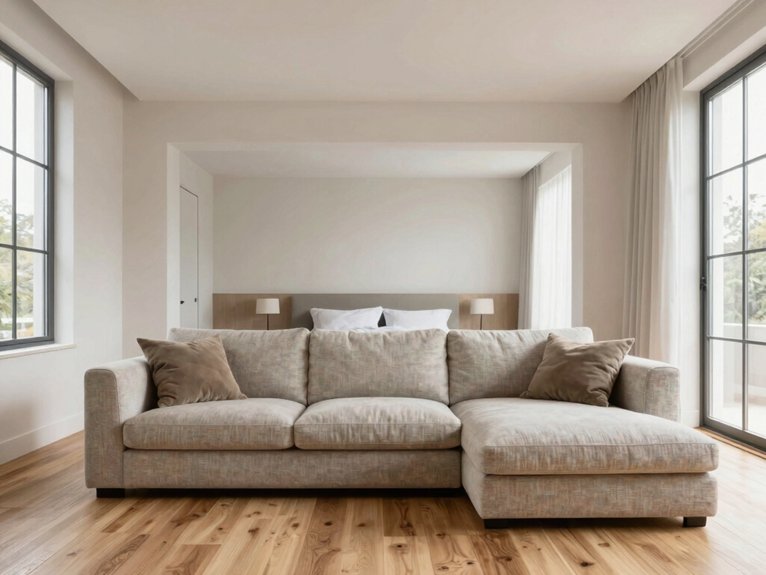
One smart sofa can do a lot of heavy lifting in a studio. I’ve seen a long, 84-inch sofa turn my cousin’s place into a cozy almost-bedroom. Put it with the back facing your bed, and you get a clear split that still lets light slide around the sides.
Good sofa placement matters, especially with a sectional or slim sofa on casters. I like adding a low bookcase or narrow console behind it for lamps and plants. These privacy strategies help you feel tucked in, not trapped. In my family’s tiny spaces, that little shift made home feel friendlier.
Rugs That Define Studio Zones
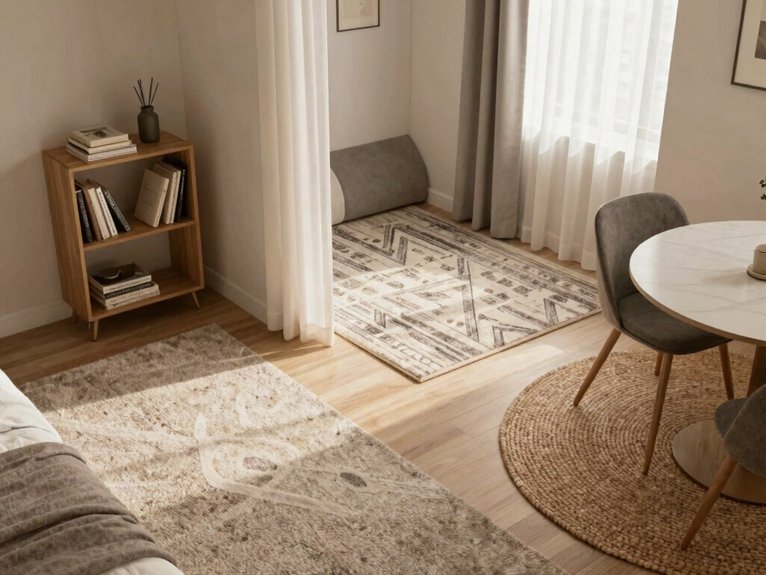
I’ve found that one large rug can do more for a studio than a piece of furniture ever could. You’ll feel the room settle. Choose at least an 8×10 in a 300–500 sq ft studio, and let it mark the living zone from your bed.
- Use low-pile flatweave near the kitchen.
- Try plush pile in the lounge.
- Keep sofa front legs on the rug.
- Layer a 4×6 patterned rug for focus.
- Add textured runners and color blocking for calm borders.
I’ve seen my own family relax when each zone finally feels like it belongs.
L-Shaped Desk Divider Ideas
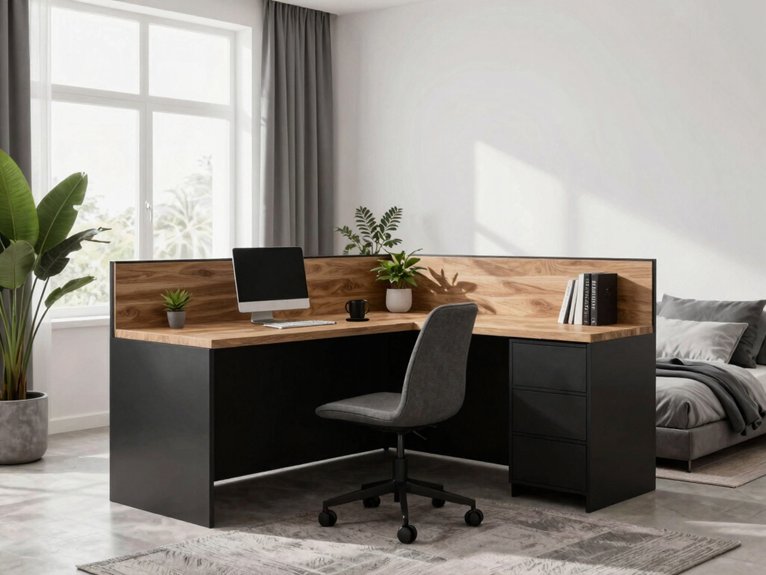
Slide an L-shaped desk between the sofa and the bed, and the whole studio starts to make sense fast. I’ve done this in my own tiny place, and it felt like instant belonging.
Put the long side toward the living area and the short side near the bed to block sightlines and keep an ergonomic layout. I like desks with shelves, like IKEA Platsa, because they hide clutter and act like a mini wall.
Add corner cable management, then style the back with plants or a slim lamp. A sheer curtain keeps light moving. Keep circulation open—no trapdoor vibes.
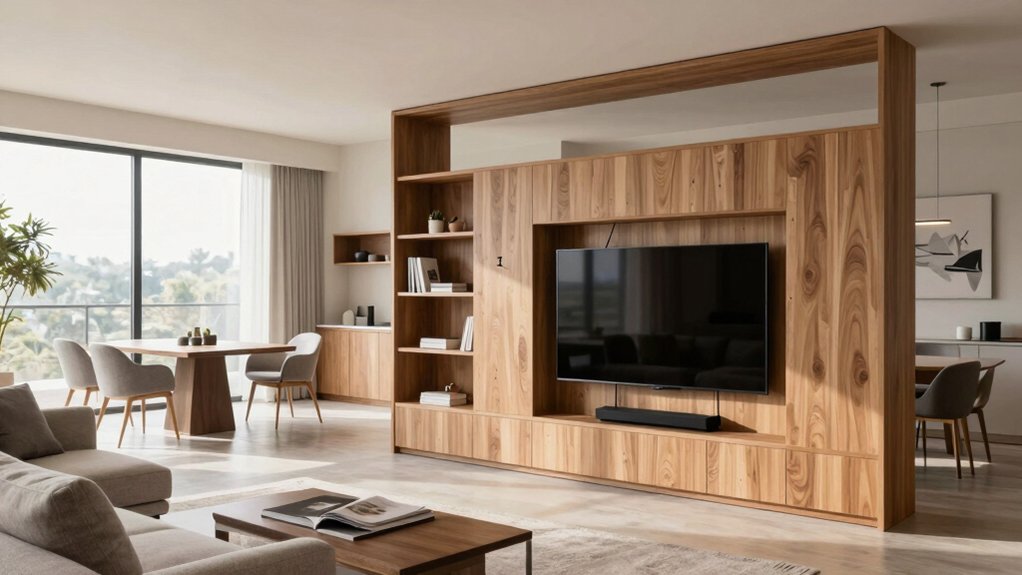
Custom Furniture in the Room Center
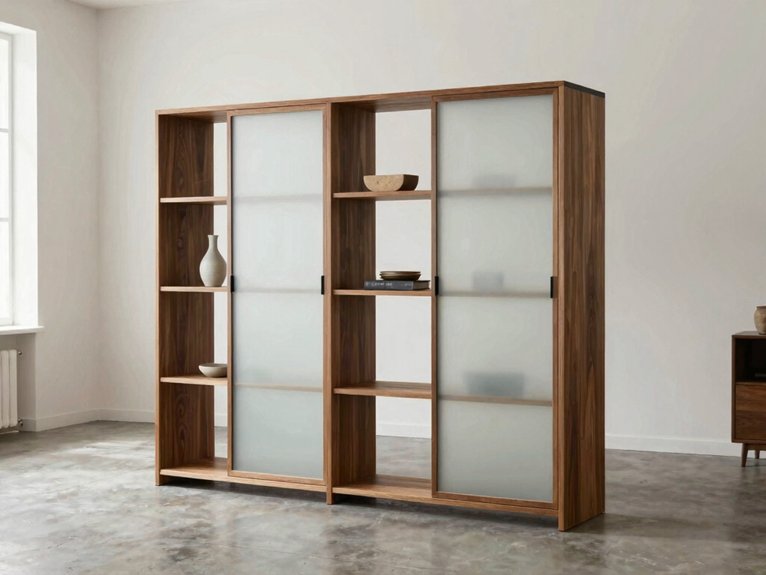
If the L-shaped desk gave you a clean split between sleep and work, a custom piece in the middle can take that idea and make it feel built-in. In my family’s studio, a walnut block with shelves, a desk, and a media nook made the room feel like ours. You can use central lighting, hide cords with access panels, and still keep sightlines open.
- creates zones
- saves wall space
- adds storage
- supports flow
- feels welcoming
Keep 36–42 inches around it. Choose it for rooms at least 350 sq ft, so it won’t play giant.
DIY Cabinet and Glass Dividers
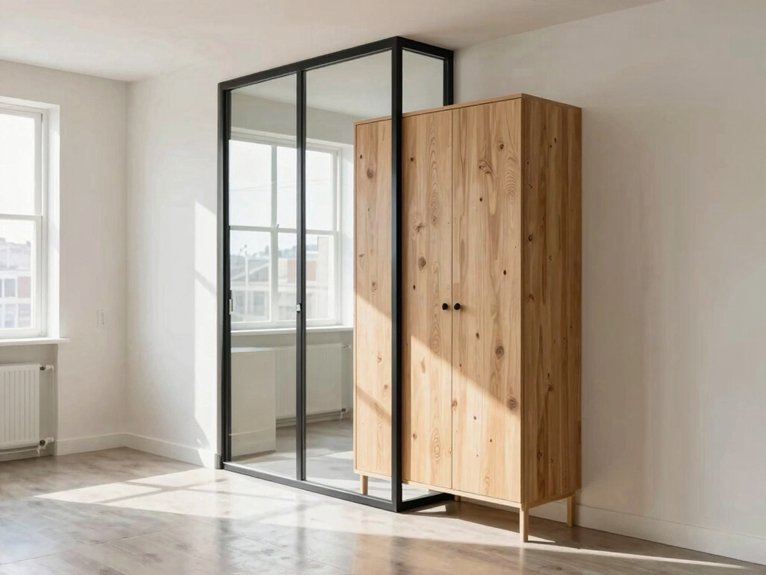
Stacking cabinets and topping them with glass can turn a plain room edge into a smart divider that still feels open. I’ve used IKEA Ivar and Platsa units back-to-back at the bed’s foot, and they work like a tiny wall with storage.
Add 6–10 mm tempered glass in aluminum channel profiles, and you keep light moving. I like clear or frosted panels; my family says they feel less “fortress,” which is fair.
Use glass hardware, rubber gaskets, and discreet brackets. For rentals, clamp rails on and paint the backs. Mix open shelves with closed cabinets so both sides stay useful.
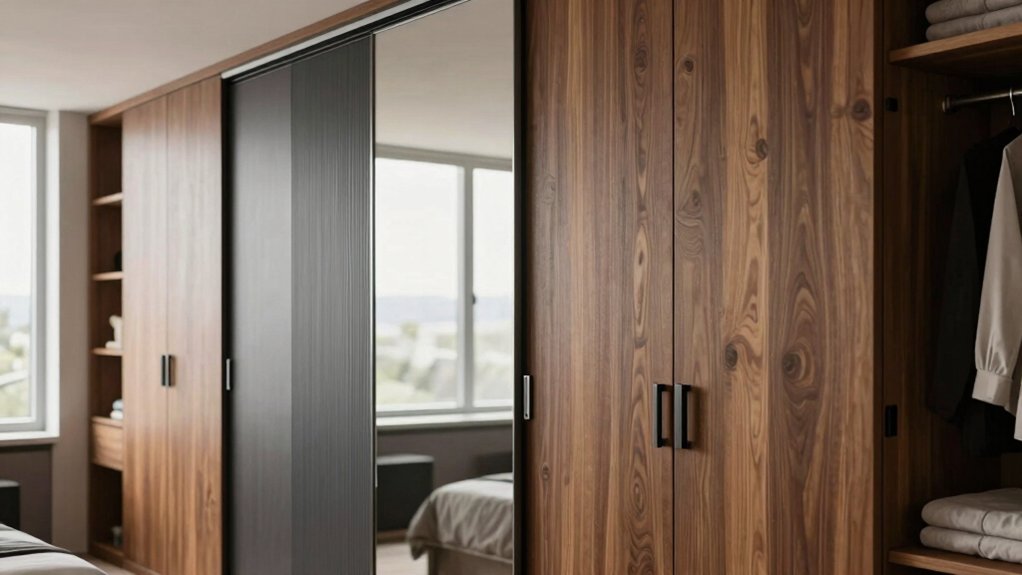
Turn a Closet Into a Bed Niche
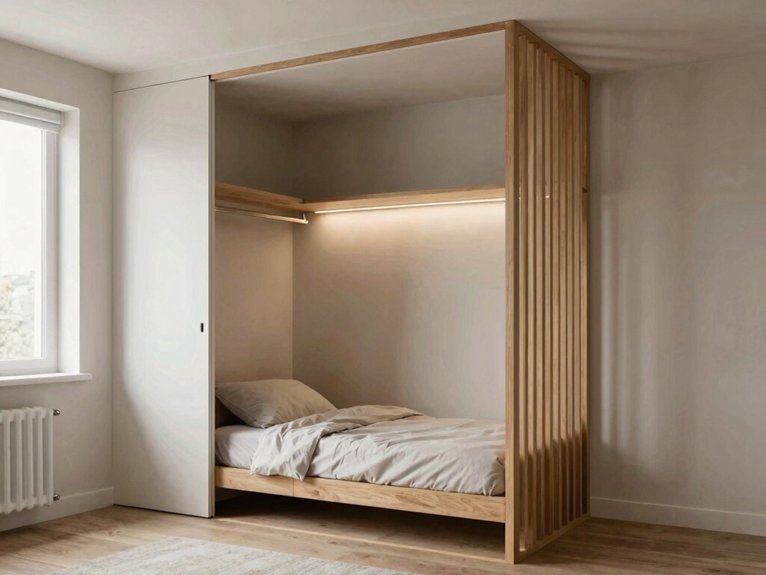
I’d turn that closet into a cozy bed niche by taking off the doors, clearing out the inside, and fitting in a twin or full mattress on a low platform with drawers underneath—because, honestly, every inch in a small room has to earn its keep.
Add a ceiling-mounted curtain or a sliding track door for privacy, then tuck in 8–12-inch shelves or a slim headboard for books, a lamp, and the stuff that always ends up on the floor.
I’ve found that recessed LED lights and a thin back wall or frosted upper panels keep the space bright and airy, which matters when you want a snug nook, not a cave with a pillow.
Build A Closet Niche
I love turning a closet into a bed niche because it feels like a tiny secret room with a very big purpose. You can fit a twin in 24″–30″ depths, or a full with a shallow platform at 30″–36″. I’ve done this in a family studio, and it truly helps everyone feel tucked in.
- Add drawers under the platform for blankets.
- Use shallow wall shelves for a lamp and phone.
- Keep ventilation strategies in mind: leave 6″–12″ clear.
- Try a slim fan or perforated backboard.
- For rental friendly builds, use IKEA Pax pieces and a freestanding platform.
Add Curtains Or Doors
Curtains or doors can turn a plain closet into a bed niche that feels calm, private, and a little bit magical. I’ve seen this work with my own family, and it really helps you feel tucked in, not boxed in. Try ceiling-mounted tracks, tension rods, or suspended sliders. Use sheer panels by day and blackout panels at night. Here’s a quick guide:
| Option | Best for | Note |
|---|---|---|
| corded curtains | easy opening | simple and smooth |
| magnetic curtains | rental setups | no drilling needed |
| IKEA closet doors | a cleaner look | saves floor space |
| DIY wood panels | custom fit | sturdy and neat |
| wallpaper backdrop | cozy style | adds depth |
Include Storage And Lighting
Turn that closet into a bed niche that actually works day to day, not just in a cute-in-theory way. I’ve made tiny spaces feel welcoming with smart storage and layered light. Remove the doors, fit a low platform, and use under platform drawers or IKEA Platsa/IVAR units so your socks aren’t staging a rebellion. I add niche lighting, plus reading lamps and LED strips, because fumbling in the dark isn’t a vibe.
- Keep it low
- Hide clutter
- Light it well
- Add contrast
- Use curtains for privacy
You’ll sleep better, and your studio will feel like yours.
Canopy Beds With Fabric Privacy
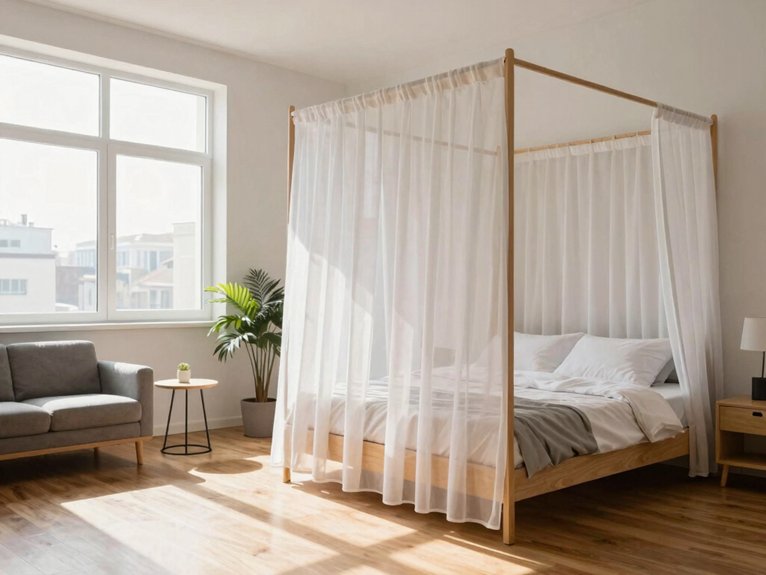
A canopy bed with fabric privacy can work wonders when you want one sleeping spot to feel like its own little room. I’ve seen it make my family’s studio feel calmer fast. Use sheer panels for daylight, or blackout drapes when you need real sleep. | Type | Benefit |
| — | — |
|---|---|
| Sheer | Bright, airy feel |
| Blackout | Strong privacy |
| Seasonal fabrics | Fresh style changes |
| Magnetic closures | Quick open/close |
You can clip curtains to the frame, so renters stay happy too. Try two panels on each side, then tie them back for open time. Add a soft lamp, and suddenly your bed says, “I belong here.”
Best Studio Room Divider Ideas by Budget
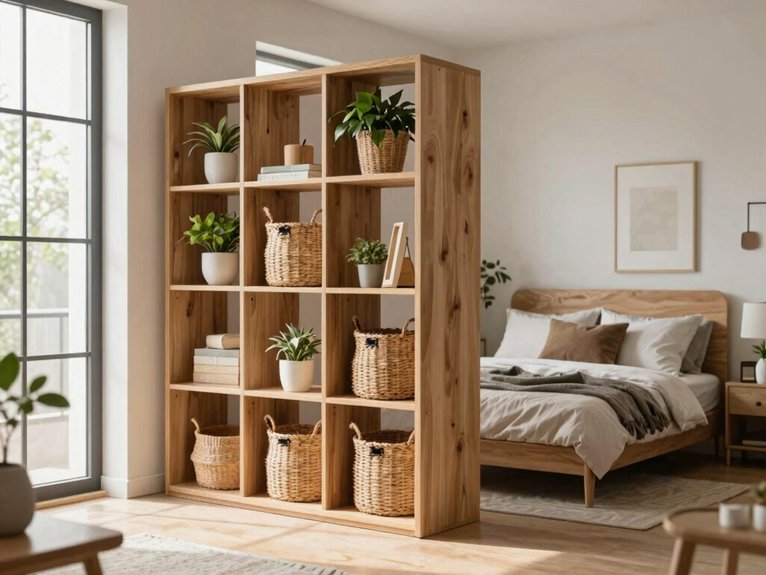
If you’re working with a tight budget, I’d start with curtains—they’re cheap, easy to move, and a sheer panel can cost just $20 to $50, while blackout curtains can turn a studio into a private bedroom without much drama.
For a mid-range fix, I like open bookcases such as IKEA Kallax, since they store your stuff and still let daylight through, and my family has always appreciated anything that keeps the room from feeling like a shoebox.
If you’ve got more to spend, framed glass partitions or loft beds with built-in storage give you real separation and a smarter layout, though they do come with a price tag that can make your wallet sigh a little.
Low-Cost Divider Options
Budget-friendly room dividers can do a lot more than just hide a bed, and I’ve learned that the hard way while trying to make one studio feel like two grown-up spaces.
You can carve out your own corner without emptying your wallet.
- Curtain tracks with sheer panels: $20–$150, bright and easy.
- IKEA Kallax: about $70–$120, storage plus light.
- Clothing rack with curtain or hanging planters: under $50–$150, rental-safe.
- Foldable room screens: $50–$300, move them fast.
- Painted cabinets with open shelves: about $150–$600, sturdy and neat.
I love that these choices still feel open, not lonely.
Higher-End Divider Solutions
When you’ve got a little more money to play with, the whole room-divider game changes fast. I’ve seen steel partitions and frameless sliders make a studio feel like you finally “get” the place. | Option | Cost | Feeling | |—|—:|—| | Steel-and-glass partition | $2k–$6k | Private, calm | | Frameless sliders | $3k–$10k | Bright, flexible | | Built-in loft or bed wall | $2.5k–$12k+ | Cozy, grown-up | I’d choose frosted glass for shared calm, or a custom platform bed if you want true one-bedroom vibes. My family loved the extra breathing room. It’s elegant, sure, but not show-offy.
Frequently Asked Questions
How Can I Divide a Studio Without Blocking Natural Light?
You can divide your studio with sheer curtains or open shelving, so light flows through while you create cozy zones. You’ll keep privacy, invite warmth, and make your space feel like it truly belongs.
What Room Divider Works Best for Renters?
For renters, you’ll usually like portable screens or tension rods best—they’re easy to move, won’t damage walls, and help you feel at home while creating privacy and a cozy, shared sense of space.
Which Divider Options Add Storage to a Small Studio?
You’ll love shelving partitions and a storage headboard; they add shelves, style, and snug separation. Choose cube bookcases or a slim wardrobe divider, and you’ll create cozy community, clutter control, and comfort in one smart swap.
How Do I Make a Divider Feel Decorative and Not Bulky?
You’ll want slim, airy pieces that invite connection, not clutter. Choose lightweight screens or decorative panels with open patterns, warm finishes, and soft colors so your divider feels intentional, stylish, and welcoming.
Can Room Dividers Improve Privacy Without Making the Studio Cramped?
Yes, you can boost privacy without shrinking your space. Think of dividers as soft whispers, not walls. You’ll feel more at home with soundproof curtains or vertical greenery that screen views, soften noise, and keep things airy.